Popular Posts

Popular Posts

Pages

Total Pageviews

Wednesday, May 4, 2011

Left and Right in politics

LEFT AND RIGHT IN POLTICS.
In politics, the portion of the political spectrum associated in general with egalitarianism and popular or state control of the major institutions of political and economic life. The term dates from the 1790s, when in the French revolutionary parliament the socialist representatives sat to the presiding officer's left. Leftists tend to be hostile to the interests of traditional elites, including the wealthy and members of the aristocracy, and to favour the interests of the working class (see proletariat). They tend to regard social welfare as the most important goal of government. Socialism is the standard leftist ideology in most countries of the world; communism is a more radical leftist ideology.
left wing
The liberal or radical faction of a political group, as in Many consider him a leader of the Democratic Party's left wing. This expression originated in the seating practice of European legislatures, whereby those holding liberal views were assigned to the left side of the house. [First half of 1800s]
right wingn.
A former political party founded in 1948 by Southern Democrats to consolidate opposition to civil rights policies of the regular Democratic Party.
Civil Rights


Tuesday, May 3, 2011

Some records in cricket

Viv's slow start, and Ryan's awesome averageAlso, a first-class baby, Tendulkar's nineties, Murali's ducks, and a triple in the second innings.


May 3, 2011
 
Muttiah Muralitharan: the world record-holder for most ducks
 
Hammad Azam of Pakistan played his first ODI as an allrounder in the West Indies last week, but didn't contribute with bat or ball. How many people have done nothing in their first one-day international? asked Khurram Malik from Pakistan

Hammad Azam, who had a quiet debut for Pakistan in St Lucia last week, is far from unique. A total of 71 players - many of them wicketkeepers - neither batted nor bowled in their first one-day international, although 26 of them did take at least one catch, including Mohammad Salman, who made his debut in the same match as Azam. The most famous name on the list is the first man to suffer this fate: Viv Richards neither batted nor bowled - and didn't take a catch either - as West Indies beat Sri Lanka by nine wickets at Old Trafford in the first World Cup in 1975.
 
After 32 innings in 33 one-day internationals, Ryan ten Doeschate of Netherlands has a batting average of 67.00. Has anyone had a better average than this at that point in their career? asked Chris Laughton from Colchester

Excellent as Ryan ten Doeschate's one-day batting average is, he has to give best to Australia's Mike Hussey, who averaged 84.33 after 32 ODI innings. He holds the record for the best average from the 11th innings to his 72nd (55.98), at which point Michael Bevan takes over until the 196th innings (53.58). After that Jacques Kallis is on top until the 300th innings (45.45), being briefly supplanted for 228 innings by Sourav Ganguly (43.30). From innings 301 onwards it's Sachin Tendulkar all the way: he currently averages 45.16 after 442 visits to the crease. As a matter of interest, ten Doeschate's Netherlands team-mate Tom Cooper had the best average of anyone after two ODI innings - 167.00.

 
Is it true that Barney Gibson of Yorkshire is the youngest player ever to appear in English first-class cricket? asked Mick Simpson from Bradford

Yes, Barney Gibson from Pudsey was only 27 days past his 15th birthday when he played for Yorkshire against Durham MCCU in Durham last week. He settled any nerves by taking a catch in the tenth over, and held on to another one later on. Gibson became, by more than three months, the youngest player known to have appeared in first-class cricket in England, beating a record from 1867, when the appropriately named Charles Young played for Hampshire against Kent when 15 years 131 days old. Just six other Englishmen are known to have played a first-class match before turning 16, among them WG Grace's brother GF (Fred), in 1866. Only one - Roy Gabe-Jones of Glamorgan in 1922 - was in the 20th century.


Sachin Tendulkar has reached the nineties a record 26 times in international cricket without reaching a hundred. But which player has been stranded in the nineties most often without ever making a hundred? asked Keith D'Souza from Nigeria

You're right, Sachin Tendulkar has been stranded in the nineties on 26 occasions in all international cricket, in addition to his 99 centuries. He is way ahead on this list, with Rahul Dravid next on 14, one ahead of Jacques Kallis. As for the second part of your question, there are 13 men who have scored two nineties in internationals without ever managing a century (some are current players who may yet get off this list). Arguably pride of place should go to the West Indian Deryck Murray, who was twice out in the nineties in Tests, and also made 95 for the Rest of the World in one of the "Tests" later deemed unofficial in England in 1970. The others with two international nineties but no hundreds are the Australians Tommy Andrews, Alec Bannerman and Shane Warne, Geoff Miller of England (two 98s in Tests, one not out, both of them made before he'd even scored a first-class hundred), India's Chetan Chauhan, the Pakistanis Asim Kamal (both in Tests, including 99 on debut) and Azhar Ali, Adam Bacher of South Africa, Thilina Kandamby (both in ODIs, and both not out) and Chamara Kapugedera of Sri Lanka, another West Indian in Derek Sealy, and Zimbabwe's Andy Blignaut.


Has anyone ever scored a triple-century in the second innings of a Test? asked David Pelham from London

The only man to do this is Hanif Mohammad, who made 337 in the second innings to stave off defeat after Pakistan followed on 473 runs behind against West Indies in Bridgetown in 1957-58. Someone who came agonisingly close was Martin Crowe, who made 299 in New Zealand's second innings against Sri Lanka in Wellington in 1990-91. There have been only 28 scores of 200 or more in the second innings in all Tests, with Don Bradman, Sunil Gavaskar and Gordon Greenidge making two apiece. Only five of those double-centuries came in the fourth innings of the Test: George Headley's 223 for West Indies against England in Kingston in 1929-30 remains the highest.


Muttiah Muralitharan recently retired from international cricket having bagged 59 ducks all told. Has anyone made more? asked Jude Franco from India

Muttiah Muralitharan's haul of 59 ducks in all forms of international cricket - 33 in Tests, 25 in ODIs and one in a Twenty20 international - is indeed a record. Courtney Walsh, the leader in Tests alone with 43 zeroes, had 11 in one-day internationals as well, to make a combined total of 54. The name of the only other man with more than 50 international ducks is something of a surprise: Sanath Jayasuriya bagged 15 in Tests, 34 in ODIs and four in Twenty20 internationals. Glenn McGrath retired with 49 international ducks to his name.

Steven Lynch is the editor of the Wisden Guide to International Cricket. If you want to ask Steven a question, use our feedback form. The most interesting questions will be answered here each week. Ask Steven is also now on Facebook


Symbols of various religons.

http://www.religioustolerance.org/1world.jpg
Symbols of 14 religons.

Left or Right side of the Road?

The terms right-hand traffic and left-hand traffic refer to regulations requiring all bidirectional traffic to keep either to the right or the left side of the road, respectively. This is so fundamental to traffic flow that it is sometimes referred to as the rule of the road. This basic rule eases traffic flow and reduces the risk of head-on collisions. Though originally most traffic drove on the left worldwide, today about 66.1% of the world's people live in right-hand traffic countries and 33.9% in left-hand traffic countries. About 72% of the world's total road distance carries traffic on the right, and 28% on the left.
Blue ...Left sided drive. Red...Right sided.
Left-hand traffic
 
A sign on Australia's Great Ocean Road reminding foreign motorists to keep left.All traffic is generally required to keep left unless overtaking.

Oncoming traffic is seen coming from the right.

Right-turning traffic must cross oncoming traffic.

Most traffic signs facing motorists are on the left side of the road.

Traffic on roundabouts (traffic circles or rotaries) goes clockwise.

Pedestrians crossing a two-way road look first for traffic from their right.

The lane designated for normal driving and turning left is on the left

Most dual carriageway (divided highway) exits are on the left

Other vehicles are overtaken (passed) on the right, though in some circumstances overtaking on the left is permitted.

Most vehicles have the driving seat on the right.

A left turn at a red light may be allowed after stopping.

On roads without a footpath pedestrians may be advised to walk on the right.

 Right-hand traffic

All traffic is generally required to keep right unless overtaking.

Oncoming traffic is seen coming from the left.

Left-turning traffic must cross oncoming traffic.

Most traffic signs facing motorists are on the right side of the road.

Traffic on roundabouts (traffic circles or rotaries) goes anticlockwise.

Pedestrians crossing a two-way road look first for traffic from their left.

The lane designated for normal driving and turning right is on the right.

Most dual carriageway (divided highway) exits are on the right

Other vehicles are generally overtaken (passed) on the left, though in some circumstances overtaking on the right is permitted.

Most vehicles have the driving seat on the left.

A right turn at a red light may be allowed after stopping.

On roads without a footpath pedestrians may be advised to walk on the left.
 
History. In 1998, archaeologists found a well-preserved track leading to a Roman quarry near Swindon, England. The grooves in the road on the left side (viewed facing down the track away from the quarry) were much deeper than those on the right side. These grooves suggest that the Romans drove on the left, at least in this particular location, since carts would exit the quarry heavily loaded, and enter it empty.
 
Some historians, such as C. Northcote Parkinson, believed that ancient travellers on horseback generally rode on the left side of the road. As more people are right-handed, a horseman would thus be able to hold the reins with his left hand and keep his right hand free—to offer in friendship to passing riders or to defend himself with a sword, if necessary.

In the late 18th century, the shift from left to right that took place in countries such as the United States was based on teamsters' use of large freight wagons pulled by several pairs of horses. The wagons had no driver's seat, so a postilion sat on the left rear horse and held his whip in his right hand. Seated on the left, the driver preferred that other wagons pass him on the left so that he could be sure to keep clear of the wheels of oncoming wagons. He did that by driving on the right side of the road.


Monday, May 2, 2011

Paper for currency


Most banknotes are made using the mould made process in which a watermark and thread is incorporated during the paper forming process. The thread is a simple looking security component found in most banknotes. It is however often rather complex in construction comprising fluorescent, magnetic, metallic and micro print elements. By combining it with watermarking technology the thread can be made to surface periodically on one side only. This is known as windowed thread and further increases the counterfeit resistance of the banknote paper. This process was invented by Portals, part of the De La Rue group in the UK. Other related methods include watermarking to reduce the number of corner folds by strengthening this part of the note, coatings to reduce the accumulation of dirt on the note, and plastic windows in the paper that make it very hard to copy.


Sunday, May 1, 2011

Swiss Banks and their secrecy.

Bank secrecy (or bank privacy) is a legal principle in some jurisdictions under which banks are not allowed to provide to authorities personal and account information about their customers unless certain conditions apply (for example, a criminal complaint has been filed[1]). In some cases, additional privacy is provided to beneficial owners through the use of numbered bank accounts or otherwise. Bank secrecy is prevalent in certain countries, such as Switzerland, Singapore, Lebanon and Luxembourg, as well as offshore banks and other tax havens under voluntary or statutory privacy provisions.


Created by the Swiss Banking Act of 1934, which led to the famous Swiss bank, the principle of bank secrecy is always considered one of the main aspects of private banking. It has also been accused by NGOs and governments of being one of the main instruments of underground economy and organized crime, in particular following the class action suit against the Vatican Bank in the 1990s, the Clearstream scandal and the terrorist attacks of September 11, 2001. Former bank employees from banks in Switzerland (UBS, Julius Baer) and Liechtenstein (LGT Group) have testified that their former institutions helped clients evade billions of dollars in taxes by routing money through offshore havens in the Caribbean and Switzerland. One of these, Rudolf M. Elmer, wrote, "It is a global problem...Offshore tax evasion is the biggest theft among societies and neighbor states in this world"The Swiss Parliament ratified on June 17, 2010 an agreement between the Swiss and the United States governments allowing UBS to transmit to the US authorities information concerning 4,450 American clients of UBS suspected of tax evasion.

Saturday, April 30, 2011

PAPER

Paper is a thin material mainly used for writing upon, printing upon, drawing or for packaging. It is produced by pressing together moist fibers, typically cellulose pulp derived from wood, rags or grasses, and drying them into flexible sheets.

Paper is a versatile material with many uses. Whilst the most common is for writing and printing upon, it is also widely used as a packaging material, in many cleaning products, in a number of industrial and construction processes, and even as a food ingredient – particularly in Asian cultures.

Paper spread from China through the Islamic world to medieval Europe in the 13th century, where the first water-powered paper mills were built.[3] In the 19th century, industrial manufacture greatly lowered its cost, enabling mass exchange of information and contributing to significant cultural shifts. In 1844, Canadian inventor Charles Fenerty and German F.G. Keller independently developed processes for pulping wood fibers.[4] This ended the nearly 2000-year exclusive use of pulped rags.
 
File:PaperAutofluorescence.jpg
Microscopiv picture of paper under fluoroscent light.
USES OF PAPER:
For representing value: paper money, bank note, cheque, security (see Security paper), voucher and ticket

For storing information: book, notebook, magazine, newspaper, art, zine, letter

For personal use: diary, note to remind oneself, etc.; for temporary personal use: scratch paper

For communication: between individuals and/or groups of people.

For packaging: corrugated box, paper bag, envelope, wrapping tissue, Charta emporetica and wallpaper

For cleaning: toilet paper, handkerchiefs, paper towels, facial tissue and cat litter

For construction: papier-mâché, origami, paper planes, quilling, Paper honeycomb, used as a core material in composite materials, paper engineering, construction paper and paper clothing

For other uses: emery paper, sandpaper, blotting paper, litmus paper, universal indicator paper, paper chromatography, electrical insulation paper (see also dielectrics and permittivity) and filter paper

Friday, April 29, 2011

Revolvers

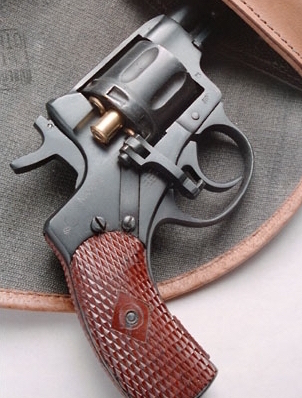
A revolver is a repeating firearm that has a cylinder containing multiple chambers and at least one barrel for firing, with the modern revolver being invented by Samuel Colt. As the user cocks the hammer, the cylinder revolves to align the next chamber and round with the hammer and barrel, which gives this type of firearm its name. The hammer-cocking happens either directly (via the shooter pulling it back) or indirectly (via the first portion of the trigger pull in double-action revolvers.) In modern revolvers, the revolving cylinder typically chambers five or six rounds, but some models hold 10 rounds or more. Revolvers are most often handguns, but other weapons may also have the design of a revolver. These include some models of grenade launchers, shotguns, and some rifles.

File:Revolver modèle 1882 IMG 3070.jpg

Details of a Schmidt M1882, showing the hammer, chambers for the ammunition in the cylinder, and the mechanism to rotate the cylinder. Revolver of the Gendarmerie of Vaud, on display at Morges castle museum.
File:Nagant-holstered.jpg
A fixed-cylinder Nagant M1895 with gate open for loading

Thursday, April 28, 2011

Perfumes

Perfume (English: /ˈpɝː.fjuːm/, French parfum pronounced: [paʁ.fœ̃]) is a mixture of fragrant essential oils and aroma compounds, fixatives, and solvents used to give the human body, animals, objects, and living spaces a pleasant scent.[1] The odoriferous compounds that make up a perfume can be manufactured synthetically or extracted from plant or animal sources.


Perfumes have been known to exist in some of the earliest human civilizations either through ancient texts or from archaeological digs. Modern perfumery began in the late 19th century with the commercial synthesis of aroma compounds such as vanillin or coumarin, which allowed for the composition of perfumes with smells previously unattainable solely from natural aromatics alone.

Basic framework Perfume oils usually contain tens to hundreds of ingredients and these are typically organized in a perfume for the specific role they will play. These ingredients can be roughly grouped into four groups:

Primary scents: Can consist of one or a few main ingredients for a certain concept, such as "rose". Alternatively, multiple ingredients can be used together to create an "abstract" primary scent that does not bear a resemblance to a natural ingredient. For instance, jasmine and rose scents are commonly blends for abstract floral fragrances. Cola flavourant is a good example of an abstract primary scent.

Modifiers: These ingredients alter the primary scent to give the perfume a certain desired character: for instance, fruit esters may be included in a floral primary to create a fruity floral; calone and citrus scents can be added to create a "fresher" floral. The cherry scent in cherry cola can be considered a modifier.


Blenders: A large group of ingredients that smooth out the transitions of a perfume between different "layers" or bases. These themselves can be used as a major component of the primary scent. Common blending ingredients include linalool and hydroxycitronellal.


Fixatives: Used to support the primary scent by bolstering it. Many resins, wood scents, and amber bases are used as fixatives.


The top, middle, and base notes of a fragrance may have separate primary scents and supporting ingredients. The perfume's fragrance oils are then blended with ethyl alcohol and water, aged in tanks for several weeks and filtered through processing equipment to, respectively allow the perfume ingredients in the mixture to stabilize and to remove any sediment and particles before the solution can be filled into the perfume bottles


Wednesday, April 27, 2011

April 25; World Malaria Day

World Malaria Day - which was instituted by the World Health Assembly at its 60th session in May 2007 - is a day that recognises the global effort to provide effective control of malaria. The day is commemorated every year on April 25 to create awareness about an ancient disease and the devastating impact it has on the lives of more than 3 billion people.

Malaria is a parasitic disease characterised by high fever, chills and rigors accompanied by headache, nausea and vomiting, muscle pain and anaemia. The disease is a major health problem in India as in most of the tropics and subtropics.

Avoid mosquito bites by wearing protective clothing over the arms and legs, using mosquito nets and screens, and insect repellents (cream, lotion, spray or vaporizer).

Anti-malarial drugs can be prescribed for visitors to areas where malaria is prevalent. Treatment should begin two weeks before entering the area, and continued for 4 weeks after leaving the area.

Sleep in rooms that are properly screened with gauze over the windows and doors. There should be no holes in the gauze and no unscreened entry points to the room. Air-conditioned rooms are good, too.

Wear light colours while going out afternoon as light colours are less attractive to mosquitoes.

Use bednets when sleeping in areas infested with mosquitoes.

Use insecticides and flying insect sprays to reduce the number of mosquitoes in areas where you will be spending a significant amount of time.

When possible, avoid camping or spending prolonged amounts of time in areas where standing water is present.

Keep pots and pans emptied of water. Open vessels for drinking water should be covered. Mosquitoes use areas of standing water to lay their eggs.

If you know you will be traveling in areas where malaria is prevalent, ask your doctor for antimalarial drugs.

Pregnant women should avoid travelling to malarious regions as it increases the risk of abortion, premature birth, still-birth and maternal death.

Ronald RossThe Nobel Prize in Physiology or Medicine 1902 was awarded to Ronald Ross "for his work on malaria, by which he has shown how it enters the organism and thereby has laid the foundation for successful research on this disease and methods of combating it".

Ronald RossThe Nobel Prize in Physiology or Medicine 1902 was awarded to Ronald Ross "for his work on malaria, by which he has shown how it enters the organism and thereby has laid the foundation for successful research on this disease and methods of combating it".
Ronald Ross