Popular Posts

Popular Posts

Pages

Total Pageviews

Tuesday, July 26, 2011

Igor Sikorsky Inventor of the modern helicopter (1939)

Igor-Sikorsky.jpg
Igor Sikorsky.
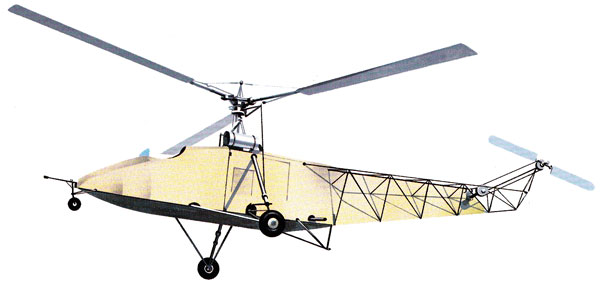
Vought Sikorsky VS-300

Vought-Sikorsky VS-300 Early Helicopter

Sikorsky VS300
The first, tentative and tethered hover of the 1940 prototypeSikorsky VS-300 which, in May 1940, progressed to free flight. Igor Sikorsky himself, though aged fifty-nine at the time and casually attired, did all the early test flying. The skeletal VS-300 went through many forms and was not as advanced as some of the best contemporary German machines but it possessed two very large advantages: it was American and it introduced a most elegant solution to the problem of overcoming rotor torque with the now classic tail rotor.
Igor Sikorsky, who emigrated to the United States in 1919, was in the 1930s engaged in the design of the only possible form of long-distance airliners then feasihie, the Clipper flying boats. The company for whom he worked was United Aircraft Corporation (UAC). In about 1931 an early interest in helicopters returned and Sikorsky began to experiment in that little-known field. By 1938, possibly as a result of news of the flights of the Focke-Achgelis Fw 61, the UAC board appointed him to the post of engineering manager of the Vought-Sikorsky Division with a remit to develop a practical helicopter. The result, after a great deal of hard, mainly empirical, development work, was the open-framed VS-300, which first flew in free flight in May 1940 with Sikorsky himself at the controls, famously clad in an overcoat and trilby hat. The VS-300 lacked the elegant engineering of the German Flettner or Focke-Achgelis designs but it flew - just.
It is often pointed out that Sikorsky invented nothing new with the VS-300; this may be true, but he assembled the best-known techniques to produce his first practical helicopter. The main difference between the VS-300 and the German machines was Sikorsky's use of a single, three-bladed rotor with a collective pitch head and the small anti-torque propeller set at 90 degrees at the rear of the fuselage, a configuration that was to become universal. In May 1941, after no fewer than seventeen major modifications, the VS-300 was demonstrated to the US Army and Navy. An army captain, Franklin Gregory, an experienced autogyro pilot, flew theVS- 300. He found it very hard to control, describing the machine as a 'bucking bronco and difficult but possible to master, given new piloting techniques and intensive development of the helicopter's control systems.


Monday, July 25, 2011

Laszlo Jose Biro Invented the ball point pen (1938)..by Mary Bellis


A Brief History of Writing Instruments
Ballpoint Pens 
 

"No man was more foolish when he had not a pen in his hand, or more wise when he had" - Samuel Johnson.
A Hungarian journalist named Laszlo Biro invented the first ballpoint pen in 1938. Biro had noticed that the type of ink used in newspaper printing dried quickly, leaving the paper dry and smudge-free. He decided to create a pen using the same type of ink. The thicker ink would not flow from a regular pen nib and Biro had to devise a new type of point. He did so by fitting his pen with a tiny ball bearing in its tip. As the pen moved along the paper, the ball rotated picking up ink from the ink cartridge and leaving it on the paper. This principle of the ballpoint pen actually dates back to an 1888 patent owned by John J. Loud for a product to mark leather. However, this patent was commercially unexploited. Laszlo Biro first patented his pen in 1938, and applied for a fresh patent in Argentina on June 10, 1943. (Laszlo Biro and his brother Georg Biro emigrated to Argentina in 1940.) The British Government bought the licensing rights to this patent for the war effort. The British Royal Air Force needed a new type of pen, one that would not leak at higher altitudes in fighter planes as the fountain pen did. Their successful performance for the Air Force brought the Biro pens into the limelight. Laszlo Biro had neglected to get a U.S. patent for his pen and so even with the ending of World War II, another battle was just beginning..
Historical Outline - The Battle of Ballpoint Pens
The first pen-writing instrument was the quill pen dipped into dark paint. There became a need to lengthen the time between dips, eliminate splatter, eliminate smearing and improve pen handling.
  • Early 1800s: The first designs for pens that could hold their own ink patented.
  • 1884: L.E. Waterman, a New York City insurance salesman, designed the first workable fountain pen, the fountain pen becomes the predominant writing instrument for the next sixty years. Four fountain pen manufactures dominate the market: Parker, Sheaffer, Waterman and Wahl-Eversharp.

  • 1938: Invention of a ballpoint pen by two Hungarian inventors, Laszlo Biro and George Biro. The brothers both worked on the pen and applied for patents in 1938 and 1940. The new-formed Eterpen Company in Argentina commercialized the Biro pen. The press hailed the success of this writing tool because it could write for a year without refilling.
  • May 1945: Eversharp Co. teams up with Eberhard-Faber to acquire the exclusive rights to Biro Pens of Argentina. The pen re-branded the “Eversharp CA” which stood for Capillary Action. Released to the press months in advance of public sales.
  • June, 1945: Less than a month after Eversharp/Eberhard close the deal with Eterpen, Chicago businessman, Milton Reynolds visits Buenos Aires. While in a store, he sees the Biro pen and recognizes the pen’s sales potential. He buys a few pens as samples. Reynolds returns to America and starts the Reynolds International Pen Company, ignoring Eversharp’s patent rights.
  • October 29, 1945: Reynolds copies the product in four months and sells his product Reynold's Rocket at Gimbel’s department store in New York City. Reynolds’ imitation beats Eversharp to market. Reynolds’ pen is immediately successful: Priced at $12.50, $100,000 worth sold the first day on the market.
  • December, 1945: Britain was not far behind with the first ballpoint pens available to the public sold at Christmas by the Miles-Martin Pen Company.
The Ballpoint Pen Becomes a Fad
Ballpoint pens guaranteed to write for two years without refilling, claimed to be smear proof. Reynolds advertised it as the pen "to write under water." Eversharp sued Reynolds for copying the design it had acquired legally. The previous 1888 patent by John Loud would have invalidated everyone's claims. However, no one knew that at the time. Sales skyrocketed for both competitors. Nevertheless, the Reynolds’ pen leaked, skipped and often failed to write. Eversharp’s pen did not live up to its own advertisements. A very high volume of pen returns occurred for both Eversharp and Reynolds. The ballpoint pen fad ended - due to consumer unhappiness.
  • 1948: Frequent price wars, poor quality products, and heavy advertising costs hurt each side. Sales did a nosedive. The original asking price of $12.50 dropped to less than 50 cents per pen.
  • 1950: The French Baron called Bich, drops the h and starts BIC and starts selling pens.
  • 1951: The ballpoint pen dies a consumer death. Fountain pens are number one again. Reynolds folds.
  • January, 1954: Parker Pens introduces its first ballpoint pen, the Jotter. The Jotter wrote five times longer than the Eversharp or Reynolds pens. It had a variety of point sizes, a rotating cartridge and large-capacity ink refills. Best of all, it worked. Parker sold 3.5 million Jotters @ $2.95 to $8.75 in less then one year.
The Ballpoint Pen Battle is Won
  • 1957: Parker introduces the tungsten carbide textured ball bearing in their ballpoint pens. Eversharp was in deep financial trouble and  tried to switch back to selling fountain pens. Eversharp sold its pen division to Parker Pens and Eversharp's assets finally liquidated in the 1960’s.
  • Late 1950's: BIC ® held 70 percent of European market.
  • 1958: BIC buys 60 percent of the New York based Waterman Pens.
  • 1960: BIC owns 100 percent of Waterman Pens. BIC sells ballpoint pens in U.S. for 29 - 69 cents.
The Ballpoint Pen War is Won
  • Today: The highly popular modern version of Laszlo Biro's pen, the BIC Crystal, has a daily world wide sales figure of 14,000,000 pieces. Biro is still the generic name used for the ballpoint pen in most of the world. The Biro pens used by the British Air Force in W.W.II worked. Parker black ballpoint pens will produce more than 28,000 linear feet of writing -- more than five miles, before running out of ink.

Sunday, July 24, 2011

Percy Shaw Inventor of the cats eyes - a major factor in improved road safety (1934)

In 1934, Percy Shaw patented Catseye road studs. Catseyes are the road reflectors which help drivers see the road in the fog or at night. In 1947, British, Labor Junior Transport Minister Jim Callaghan introduced catseyes on British roads.

Percy Shaw

Manufacturer and inventor, Percy Shaw was born on 15 April 1890 in Halifax, England. After attending the Boothtown boarding school, Percy Shaw began working as a laborer at a blanket mill at the age of thirteen, however, he studied shorthand and bookkeeping at night school. He started a repair business with his father fixing rollers, which evolved into a path and driveway building business. He designed a miniature motorized roller to aid him in building driveways and paths.

Catseye Road Studs

The area in which Percy Shaw lived was prone to fog and the local roads were often hazardous for motorists. Shaw decided to invent reflecting studs that would be set into the surface of unlit roads. He was inspired by the reflection of car headlights in road signs.
Percy Shaw patented his Maltese cross-shaped road studs (U.K patent #436,290 and #457,536) and trademarked the name Catseye. He formed the Reflecting Roadstuds Ltd to manufacture the new Catseye road studs, however, sales were sluggish until the Ministry of Transport mandated Catseyes for British roads.

Saturday, July 23, 2011

Frank Whittle The jet engine (1930)

Frank Whittle.

Sir Frank Whittle's jet engine transformed travel. The jet engine has allowed millions of people now to do something that was barely thinkable just 70 years ago - crossing the Atlantic at speed. The Wright’s may have invented the first real aeroplane, but the credit for the invention of the jet engine goes to Sir Frank Whittle.
In the 1920’s, a young RAF man, Frank Whittle, had presented to the Air Ministry a design for a jet engine. They were unimpressed and rejected his idea. Regardless of this set-back, Whittle still patented his "turbojet engine" in 1930. His design appeared to solve the problem that had baffled inventors for some years - how do you create a chamber strong enough to house an engine that would create a lot of heat and vast directed thrust ? Many combustion chambers had simply been too weak to cope and had exploded under the strain.
Whittle’s engine had ten combustion chambers which produced impressive thrust : rather than having just one large chamber which would produce a volatile and potentially uncontrollable reaction, his engine effectively divided up the combustion created into the ten chambers but still did not decrease the power of the engines.
Increasing fears about problems in Europe, lead to the government having second thoughts about Whittle’s jet engine. In 1936, he went to Cambridge University, but he left and set up a company called Power Jets Ltd.
In 1937, using newly available alloys that were strong and light, he produced the first viable jet engine to be successfully tested in a laboratory. Now it had to be put onto a plane and the respective safety measures taken - as with all new planes.
Sir Frank Whittle in front of one of his jet engines
In 1941, a new jet fighter-prototype flew. Its successor, the Gloster Meteor, entered service with the RAF in 1944. However, the Gloster Meteor was not the first jet fighter. This claim goes to the Heinkel He 178 which first flew on August 24th 1939 - just days before World War Two started.
When the war finished, it seemed a logical move to apply this new invention to passenger planes. Journeys became quicker and the more powerful jet engine allowed passenger planes to get bigger so that more people could be carried on them.
The first proper jet engined passenger airliner is considered to be the De Haviland Comet. This came into operation in a blaze of publicity. Within two years, it was withdrawn from service after a series of tragic accidents which killed many. This, however, was not due to its jet engines but to a fault in its fuselage which lead to the pane breaking up in flight.
Boeing then took over the lead in jet-powered airliners. The Boeing 707 entered service in 1958. It was safe and allowed people to travel distances at speeds that would had been impossible just 10 years earlier. Whittle’s invention has transformed the world.


Friday, July 22, 2011

Alexander Fleming Discovered penicillin and paved the way for antibiotics (1928)


Penicillin is one of the earliest discovered and widely used antibiotic agents, derived from the Penicillium mold. Antibiotics are natural substances that are released by bacteria and fungi into the their environment, as a means of inhibiting other organisms - it is chemical warfare on a microscopic scale.

Sir Alexander Fleming

  • Alexander Fleming
  • born August. 6, 1881 , Darvel, Scotland
  • died March 11, 1955 , London, England
In 1928, Sir Alexander Fleming observed that colonies of the bacterium Staphylococcus aureus could be destroyed by the mold Penicillium notatum, proving that there was an antibacterial agent there in principle. This principle later lead to medicines that could kill certain types of disease-causing bacteria inside the body.
At the time, however, the importance of Alexander Fleming's discovery was not known. Use of penicillin did not begin until the 1940s when Howard Florey and Ernst Chain isolated the active ingredient and developed a powdery form of the medicine.

History of Penicillin

Originally noticed by a French medical student, Ernest Duchesne, in 1896. Penicillin was re-discovered by bacteriologist Alexander Fleming working at St. Mary's Hospital in London in 1928. He observed that a plate culture of Staphylococcus had been contaminated by a blue-green mold and that colonies of bacteria adjacent to the mold were being dissolved. Curious, Alexander Fleming grew the mold in a pure culture and found that it produced a substance that killed a number of disease-causing bacteria. Naming the substance penicillin, Dr. Fleming in 1929 published the results of his investigations, noting that his discovery might have therapeutic value if it could be produced in quantity.

Dorothy Crowfoot Hodgkin

Hodgkin used x-rays to find the structural layouts of atoms and the overall molecular shape of over 100 molecules including penicillin. Dorothy's discovery of the molecular layout of penicillin helped lead scientists to develop other antibiotics.

Dr. Howard Florey

It was not until 1939 that Dr. Howard Florey, a future Nobel Laureate, and three colleagues at Oxford University began intensive research and were able to demonstrate penicillin's ability to kill infectious bacteria. As the war with Germany continued to drain industrial and government resources, the British scientists could not produce the quantities of penicillin needed for clinical trials on humans and turned to the United States for help. They were quickly referred to the Peoria Lab where scientists were already working on fermentation methods to increase the growth rate of fungal cultures. One July 9, 1941, Howard Florey and Norman Heatley, Oxford University Scientists came to the U.S. with a small but valuable package containing a small amount of penicillin to begin work.
Pumping air into deep vats containing corn steep liquor (a non-alcoholic by-product of the wet milling process) and the addition of other key ingredients was shown to produce faster growth and larger amounts of penicillin than the previous surface-growth method. Ironically, after a worldwide search, it was a strain of penicillin from a moldy cantaloupe in a Peoria market that was found and improved to produce the largest amount of penicillin when grown in the deep vat, submerged conditions.

Andrew J. Moyer..

By November 26, 1941, Andrew J. Moyer, the lab's expert on the nutrition of molds, had succeeded, with the assistance of Dr. Heatley, in increasing the yields of penicillin 10 times. In 1943, the required clinical trials were performed and penicillin was shown to be the most effective antibacterial agent to date. Penicillin production was quickly scaled up and available in quantity to treat Allied soldiers wounded on D-Day. As production was increased, the price dropped from nearly priceless in 1940, to $20 per dose in July 1943, to $0.55 per dose by 1946.
As a result of their work, two members of the British group were awarded the Nobel Prize. Dr. Andrew J. Moyer from the Peoria Lab was inducted into the Inventors Hall of Fame and both the British and Peoria Laboratories were designated as International Historic Chemical Landmarks.

Andrew J Moyer Patent

On May 25, 1948, Andrew J Moyer was granted a patent for a method of the mass production of penicillin.

Resistance to Penicillin

Four years after drug companies began mass-producing penicillin in 1943, microbes began appearing that could resist it.
The first bug to battle penicillin was Staphylococcus aureus. This bacterium is often a harmless passenger in the human body, but it can cause illness, such as pneumonia or toxic shock syndrome, when it overgrows or produces a toxin.
Sir Howard Florey
Sir Alexander Fleming.

Thursday, July 21, 2011

John Logie Baird Invented the television - its first public demonstration was at Selfridges in London (1925)


John Logie  Baird


John Logie Baird was born on August 13th, 1888, in Helensburgh, Dunbarton, Scotland and died on June 14th, 1946, in Bexhill-on-Sea, Sussex, England. John Baird received a diploma course in electrical engineering at the Glasgow and West of Scotland Technical College (now called Strathclyde University), and studied towards his Bachelor of Science Degree in electrical engineering from the University of Glasgow, interrupted by the outbreak of W.W.I.

John Baird - Mechanical Television System

Baird is best remembered for inventing a mechanical television system. During the 1920's, John Baird and American Clarence W. Hansell patented the idea of using arrays of transparent rods to transmit images for television and facsimiles respectively.
Baird's 30 line images were the first demonstrations of television by reflected light rather than back-lit silhouettes. John Baird based his technology on Paul Nipkow's scanning disk idea and later developments in electronics.

John Baird Milestones

The television pioneer created the first televised pictures of objects in motion (1924), the first televised human face (1925) and a year later he televised the first moving object image at the Royal Institution in London. His 1928 trans-atlantic transmission of the image of a human face was a broadcasting milestone. Color television (1928), stereoscopic television and television by infra-red light were all demonstrated by Baird before 1930. He successfully lobbied for broadcast time with the British Broadcasting Company, the BBC started broadcasting television on the Baird 30-line system in 1929. The first simultaneous sound and vision telecast was broadcast in 1930. In July 1930, the first British Television Play was transmitted, "The Man with the Flower in his Mouth."
In 1936, the British Broadcasting Corporation adopted television service using the electronic television technology of Marconi-EMI (the world's first regular high resolution service - 405 lines per picture), it was that technology that won out over Baird's system.

Wednesday, July 20, 2011

Clarence Birdseye Started the idea of frozen food (1924)

CLARENCE BIRDSEYE (1886-1956)
Retail Frozen Foods
ClarenceClarence Birdseye found a way to flash-freeze foods and deliver them to the public---one of the most important steps forward ever taken in the food industry.
Born in Brooklyn in 1886, Birdseye was a biology major at Amherst College when quit school to work as a naturalist for the US government. He was posted to the Arctic, where he observed first-hand the ways of the native Americans who lived there. Birdseye saw that the combination of ice, wind and temperature almost instantly froze just-caught fish straight through. More importantly, he found that when the fish were cooked and eaten, they were scarcely different in taste and texture than they would have been if fresh.
Birdseye the biologist saw that the fish were frozen too quickly for ice crystals to form and ruin their cellular structure. Birdseye the businessman saw that the public back home would gladly pay for such frozen foods, if he could deliver them. He returned to New York, and in 1924 founded Birdseye Seafoods, Inc.

PressIn the early 1900s, many people were experimenting with mechanical and chemical methods to preserve food. After years of work on his own process, Birdseye invented a system that packed dressed fish, meat or vegetables into waxed-cardboard cartons, which were flash-frozen under high pressure (patent #1,773,079, 1930).
Birdseye now turned to marketing. He tested refrigerated grocery display cases in 1930, and entered a joint venture to manufacture them in 1934. In 1944, Birdseye's company began leasing refrigerated boxcars to transport the frozen foods by rail nationwide. This made national distribution a reality, and Birdseye a legend.
Today, we especially appreciate that Birdseye's process, still basically in use, preserves foods' nutrients as well as their flavor. In fact, we can say that Clarence Birdseye has indirectly improved both the health and convenience of virtually everyone in the industrialized world.