Popular Posts

Popular Posts

Pages

Total Pageviews

Sunday, May 20, 2012

Facts and Information about Aurora Borealis

Facts and Information about Aurora Borealis


Increase your knowledge of Facts about Aurora Borealis with some brief, but essential information & fast facts about this fascinating subject. Important facts, data and info containing details of the description, name origins and cause of Aurora Borealis, also known as the Northern Lights. Details of the colors, cause and definition of Aurora Borealis, the Northern Lights. A Detailed Fact Sheet covering a whole host of topics including facts about Aurora Borealis, the Northern Lights!
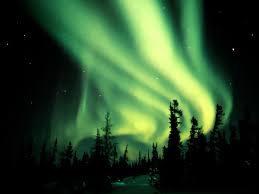
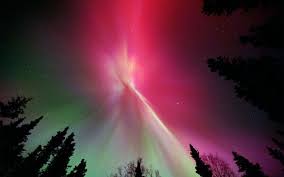


Aurora Borealis


The Definition of Aurora Borealis


The name 'Aurora Borealis' is Latin and aptly describes the phenomenon that is the Aurora Borealis! A basic definition of Aurora Borealis is luminous arches or streams of light which appear in the in Northern regions of the earth. The Latin words 'Aurora Borealis' are roughly translated as ' Northern Lights' - hence the alternative name! Aurora pertains to the lights ( the red dawn ) and Borealis pertains to the North. The term Aurora Borealis was named by the Italian scientist Galileo Galilei (1564-1642). It is interesting to note that 'Aurora' was the name given to the Roman goddess of dawn.
 
The Legends and Myths surrounding Aurora Borealis


Long ago the appearance of the Aurora Borealis, or the Northern Lights caused a range of emotions in the people who witnessed then - alarm, fear, wonder, dread and excitement to name but a few! People did not understand what caused these amazing spectacles of lights in the sky. The phenomena of the Northern Lights were explained by different stories - the legend and myth of bygone days:


The lights were God or Goddesses appearing to mortals


The lights were spirits or souls dancing in the sky


The red colour was associated with legend or myths relating to blood - murder, death, armies, wars and suicide


The Cause of Aurora Borealis


The Aurora Borealis, or Northern Lights, is caused when material thrown off the surface of the sun collides with the atmosphere of the Earth. The emission of light from atoms is excited by electrons accelerated along the planet's magnetic field lines


The Sun and the Aurora Borealis - Additional Information about the Cause of the Aurora Borealis


The sun emits high energy ion particles. A cloud consisting of ion particles is called a plasma - also known as the solar wind. The ion plasma cloud, the solar wind, interacts with the edge of the earth's magnetic field and some of the particles are trapped by it. These particles are drawn magnetically down into the ionosphere, above the earth's surface. The particles collide with the gases in the ionosphere and produce the colors and the phenomenon called the Aurora Borealis - the Northern Lights.


Definition of Terms!


Various terms are used to explain the Aurora Borealis. A fast reminder of the definitions are helpful and a definition of each associated term follows:


Ionosphere - A region of the earth's atmosphere where ionization caused by incoming solar radiation affects the transmission of radio waves. It extends from a height of 43 miles (70 kilometers) to 250 miles (400 kilometers) above the surface


Ionization - to convert wholly or partly into ions


Ion - An atom or a group of atoms that has acquired a net electric charge


Solar Wind - A stream of high-speed, ionized particles ejected primarily from the sun's corona


Plasma - An electrically neutral, highly ionized gas composed of ions, electrons, and neutral particles


Radiation - Energy radiated or transmitted as rays, waves, in the form of particles


Atmosphere - The gaseous mass a celestial body, especially the one surrounding the earth, and retained by the gravitational field


The Colors of Aurora Borealis


The array of colours in the Aurora Borealis consist of red, blue, violet, and green. Red is the dominant color.


Aurora Borealis Forecast


The appearance of the Aurora Borealis can be forecast by following events on the sun in relation to the speed of the gaseous matter being thrown off its surface. Various types of forecasts and predictions regarding the appearance of the Aurora Borealis, the Northern Lights, are published on several websites on the Internet. The best months to view the phenomena are between October and March. The NASA Space Weather Bureau www.spaceweather.com provides a forecast of viewing the Aurora Borealis, the Northern Lights


Location to view Aurora Borealis


Locations in the Northern hemisphere including Scandinavia, Canada, Northern America, Northern Europe and Siberia. Auroras occur around the magnetic poles in both the Northern and Southern hemispheres.


Fast Facts & Info about Aurora Borealis, also known as the Northern Lights


Aurora Borealis - luminous arches or streams of light


The Aurora Borealis appears in the Northern hemisphere


'Aurora' was the name given to the Roman goddess of dawn!


The Aurora Borealis are caused by the emission of light from atoms excited by electrons accelerated along the planet's magnetic field lines


Aurora Borealis can effect Earth's communications


Interesting information about the Aurora Borealis - the Northern Lights


The Aurora Borealis


The solar wind can cause interference with radio, television and satellite communications


The size of Solar Flares are events classified as follows:


C-class events - Small solar flares are described as c-class events and have no effect on communications


M-class events - Medium sized solar flares are described as m-class events and can disrupt the Earth's radio communications


X-class events - Large, or extreme, sized solar flares are described as x-class events and can disrupt the Earth's radio communications


The Aurora Borealis does not effect Airplanes as they fly at altitudes well below the Aurora Borealis


The Aurora Borealis is not effected by changes in the temperature of the Earth


Saturday, May 19, 2012

The Great Wall Myth

The Great Wall Myth

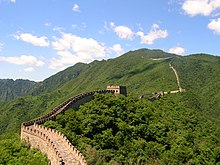
the great wall of china 1 The Great Wall Of China   World Cultural Heritage


It is common mistake to say that The Great wall of China is visible from outer space. It is too thin to be noticed from such a great distance. There are no man made structures that are visible from space or moon. Man made objects start to disappear after 300 miles up. From that distance you can barely see the outline of the Great China Wall. If we consider that distance from Earth to Moon is around 384,403 kilometers/238,857 miles then we can draw reasonable conclusion that it would be impossible to see any man-made structures from such a distance. Astronaut Alan Bean said: "The only thing you can see from the moon is a beautiful sphere, mostly white (clouds), some blue (ocean), patches of yellow (deserts), and every once in a while some green vegetation. No man-made object is visible on this scale. In fact, when first leaving earth's orbit and only a few thousand miles away, no man-made object is visible at that point either."


Friday, May 18, 2012

Ancient India ..An advanced civilisation

Ancient India Facts


India is a country that will mesmerize you with its intriguing history and fascinating past. Though life has become very complex in modern times, the interesting facts of India continue to awe people all over the world. The country is no ordinary country. In fact, it had the components of a prosperous nation since ancient times only. The rich history of India is full of such interesting facts that one is bound to sit and analyze this fascinating country's history with much enthusiasm. For an amazing collection of facts on ancient India, scroll down.

Indians established Harappan culture in Indus Valley Civilization, at a time when many cultures comprised of nomadic forest dwellers over 5000 years ago.


The game of chess was invented in India.


The birth of Algebra, Trigonometry and Calculus happened in India.


The Decimal and Place Value system originated and developed in India.


In the 13th century, a poet saint named Gyandev introduced the game of Snakes and Ladders. Known as Mokshapat during those times, the game had a significant meaning. The snakes stood for vices, while the ladders represented good virtues. The essence of the game was that the ladders or good virtues take people to heaven while snakes or vices take people to a cycle of re-births.


In 700 BC, the world's first university was established in India, in Takshila. It was one of the biggest achievements in the field of education, as more than 10,500 students came from all over the world to receive education in over 60 different subjects. The University of Nalanda was another milestone that was achieved in the field of education in 4th century BC.


The earliest school of medicine known to mankind was Ayurveda and it originated in India. It was consolidated 2500 years ago by Charaka, the Father of Medicine.


As many as 6000 years back, the art of navigation was developed in the River Indus, which was known as Sindh then. In fact, the word 'navigation' is a derivation of the Sanskrit word, 'Navgatih'.


The correct time taken by the earth to revolve around the sun was calculated by the famous astronomer Bhaskaracharya. His calculation showed that the earth takes around 365.258756484 days to go around the sun once.


In the 6th century, the famous Indian Budhayana mathematician calculated the value of "Pi" and also explained the concept of Pythagoras Theorem.


In the 11th century, Quadratic Equations were introduced by Sridharacharya. Indians used numbers that were way too big than European numbers. While the latter limited themselves to 106, the Indians went a step ahead and used numbers as big as 1053.


Surgery existed in India even 2600 years ago, when Sushruta, known as the Father of Surgery, conducted many complex surgeries. The valuable ancient scriptures have detailed information on Cataract, Artificial Limbs, Cesareans, Fractures, Urinary Stone Surgery, Plastic Surgery and Brain Surgeries.


Anesthesia was used in ancient India and one finds detailed knowledge of the human anatomy and its functions.


Two major religions, Buddhism and Jainism were established in India in 500 and 600 BC.


The oldest city in the world that is inhabited even today is Varanasi or Benaras.


The art of Yoga that is now popular worldwide originated in India only and was performed by highly revered sages, in the ancient times.


How does an MRI work?


How Does an MRI Work


Invention of MRI or magnetic resonance imaging was a revolution in medical diagnosis. This technique of imaging used in diagnosis of various ailments is based on the principles of nuclear magnetic resonance (NMR). It may all sound complicated, but with a little bit of interest, you will realize how an MRI machine generates images of our body.


MRI or magnetic resonance imaging, is a medical imaging technique, which facilitates detailed visualization of the internal structure of our body. It also helps in assessing some functions of the body to a certain extent. The technology, which was introduced in the last quarter of the 20th century, has undergone a dramatic change and gained immense popularity in the field of medicine today. The huge machine referred to as an MRI scanner is an object of fascination for many individuals, who are often left wondering how it works.


The Components of an MRI Machine


Before we move on to the working mechanism of MRI (Magnetic Resonance Imaging), let's take a brief look at the various components of the MRI scanner. The major components of an MRI machine include the primary magnet and the gradient magnets. The primary magnet, made from an electrical coil with power running through it, develops a magnetic field of around 1.5 to 3 Tesla. The gradient magnets, which are much smaller than the primary magnet, help in altering the magnetic field precisely. Other than these, the MRI scanner also includes the horizontal tube, wherein the person is made to lie for examination, and last, but the most important - the computer software and hardware components, which help in setting the parameters prior to the examination, and collecting the data in the form of multiple images.


How Does an MRI Scanner Work?


The MRI scanner is a giant cube, with a horizontal tube attached to it. The patient to be examined is made to lie on his back on this horizontal tube, and then, he is slowly slid into the machine. Whether the entire body of the individual will be sent in or just half of it, depends on which part of the body is to be examined. In case of brain MRI scan, sliding the upper torso of the patient inside the scanner would be enough for the diagnosis. As soon as the body part to be scanned reaches at the isocenter of the magnetic field, the scan begins.


How Does an MRI Generate Images of the Body?


A large part of the human body is composed of water molecules, each of which contains two hydrogen nuclei (or protons). When the patient is sent inside the scanner, the 'magnetic moments' of the protons present in the body align with the direction of the magnetic field. A radio frequency electromagnetic field is turned on for a few seconds, which makes the protons change their alignment relative to the field. As soon as the electromagnetic field is turned off, the protons return to their original alignment. The alterations in the alignment creates a signal which is detected by the scanner. The strength of the magnetic field determines the frequency at which the protons resonate.


Additional magnetic fields are created using the gradient magnets to determine the position of the protons, and the energy released by them. The damaged tissues can be detected as they take time in returning to the state of equilibrium. The parameters are set using the computer and contrast is created between different types of tissues. MRI with contrast is carried out by injecting contrast agents in the body, in order to enhance the appearance of the blood vessels, and to detect tumors and inflammation in the body. The computer takes a note of protons and the energy released by them to generate the image of the body part being examined.


Although MRI can be used to image any part of the body, it is most often used in neurological examinations, checking for tumors, abnormalities in blood vessels etc. MRI scan cost depends on which part of the body is being examined. A safe procedure owing to the exclusion of ionizing radiation, MRI has gained wide popularity in the medical field, across the world.

Wednesday, May 16, 2012

THE Girl who Excelled in EXCEL


Rebecca Rickwood (15) from Stilton, and attends Sawtry College, recently won a Microsoft Excel world championship in San Diego, and is the best in the world in her category. She also won $5000 USD as part of her prNext year, the 2012 Worldwide Competition on Microsoft Office will be held in Las Vegas, Nevada, USA


Teenage computer whizz Rebecca Rickwood showed she can excel in Excel after winning a worldwide championship.


Talented Rebecca, of Caldecote Road, in Stilton, near Peterborough, has taken home the title of World Champion in Microsoft Excel from the competition in San Diego, in the USA.


To scoop the crown, the 15-year-old beat more than 228,000 students from 57 countries around the globe in a hard fought contest of skill, determination and speed.


A thrilled Rebecca, who is a pupil at Sawtry Community College, had travelled across the Atlantic last Saturday and said she was delighted just to take part in the event.


But after knuckling down to take part on Monday, she then found out on Tuesday she had won, before returning home yesterday with the title and $5,000 prize.


She said: “I took the exams and entered the competition but I didn’t think about it.


“I was so shocked to hear that I had won and was going to San Diego for the finals.


“I’m really excited. I really didn’t think I would win. When I was waiting with all the other students to hear the result I was really nervous.


“I heard my name read out in first place and I just couldn’t believe it. I’m ecstatic, I can’t believe I won and now I’m world champion. It’s a day I’ll never forget.”


She travelled to the US with parents Adam and Tracy (both 46) and brother Matthew (13), who are delighted with her win.


Rebecca added: “We had a good time out there. We didn’t get to see much of San Diego itself, but it was still really good.


“My friends and family are all very happy for me.”


Rebecca had earned her right to attend the world finals in May after she achieved the top nationwide score in the Microsoft Office Specialist Excel certification exam.


She sat the exam at college and since then, she has continued to hone her skills by studying at lunch and in the evenings at her school, supported by teacher Pam Kitchen.


She said: “I’m absolutely delighted for Rebecca.


“She really is a wonderful student who is extremely talented but, also, a very modest person.


“What was most impressive was her hard work and dedication during lunchtimes and after school. We told her to go out to San Diego and be herself and are obviously thrilled to have her coming back to us as world champion.”


Kevin Ryan, marketing manager with Prodigy Learning, who are responsible for the competition in the UK, said: “We realised Rebecca was extremely talented and one to watch from her scores in the UK championships in May.


“But the world competition is another level; it’s highly competitive and notoriously difficult to win, particularly for someone so young.


“Rebecca really has done her country proud. I believe she has a very bright future ahead indeed.”


FACTFILE on... Rebecca’s triumph


THIS year was the 10th annual Worldwide Competition on Microsoft Office.


It features the Microsoft Excel 2007 category, won by Rebecca, but also in Microsoft Word 2010, Microsoft Excel 2010, Microsoft Word 2007 and Microsoft PowerPoint 2007.


It aims to show a student’s ability in the programme with Rebecca tested on formulas, formatting, databases and speed in Excel.


Tuesday, May 15, 2012

A collection of interesting facts regarding inventions.

– that a workman who left the soap mixing machine on too long was responsible for making Ivory Soap? He was so embarrassed by his mistake that he threw the mess in a stream. Imagine his dismay when the evidence of his error floated to the surface! Result: Ivory soap, the soap that floats.


– that the Band-Aid® Bandage was invented by a Johnson & Johnson employee whose wife had cut herself? Earl Dickson’s wife was rather accident prone, so he set out to develop a bandage that she could apply without help. He placed a small piece of gauze in the center of a small piece of surgical tape, and what we know today as the Band-Aid bandage was born!


– that the inventor of the World Wide Web, British-born Tim Berners-Lee, never made money on his invention, which revolutionized the computer world? In 1989 he envisioned a way to link documents on the Internet using “hypertext” so “surfers” could jump from one document to another through highlighted words. Berners-Lee decided not to patent his technology since he feared that, if he did patent it, use of the Web would be too expensive and would therefore not become used worldwide. He therefore passed up a fortune so the world could learn and communicate.


– that Robert Adler has the dubious distinction of being the Father of the Couch Potato? Back in 1955 Adler was employed by what was then Zenith Radio Corp., where he was charged to invent something that would allow viewers to turn down the TV volume without leaving their chairs. After a series of flops (such as a wired contraption that people tripped over), Adler hit on the idea of using sound waves. Thus the Remote Control was born . . . and some viewers haven’t moved since!


– that in 1879 Auguste Bartholdi received a design patent for the Statue of Liberty?


– that Galileo invented the thermometer in 1593?


– that the first ballpoint pen was invented by Hungarian journalist Lasalo Biro and his chemist brother, Georg, in 1938?


– that power steering was invented by independent inventor Francis W. Davis? As chief engineer in the 1920s of the truck division of the Pierce Arrow Motor Car Company, he saw how hard it was to steer heavy vehicles. So that he would be able to keep the profits from his future invention, Davis left his job, rented a small engineering shop in Waltham, Mass., and developed a hydraulic power steering system that led to power steering.


– that it was melting ice cream that inspired the invention of the outboard motor? It was a lovely August day and Ole Evinrude was rowing his boat to his favorite island picnic spot. As he rowed, he watched his ice cream melt and wished he had a faster way to get to the island. At that moment the idea for the outboard motor was born!


– that two musicians were responsible for the invention of color print film? Fascinated by photography, Leopold Godowsky and Leopold Mannes worked together to produce an easy-to-use, practical color film. They worked full time as music teachers and gave concerts while experimenting during their off hours in Mannes’ kitchen. Their success earned them full-time, well-paying jobs at Kodak and their efforts resulted in Kodachrome film, which was introduced in 1935.


– that the telescope was accidentally discovered in 1698 when Dutch eye glass maker Hans Lippershey looked through two lenses – one held in front of the other – and realized that the image was magnified?


– that one person who claimed to be the inventor of the television is Russian emigre Vladimir Zworykin? In 1929 David Sarnoff, founder of RCA, asked Zworykin what it would take to develop TV for commercial use. He said: a year and a half and $100,000. In reality, it took 20 years and $50 million! Before his death in 1982 at the age of 92, Zworykin said of his invention: “The technique is wonderful. It is beyond my expectations. But the programs! I would never let my children even come close to this thing.”


– that the formulas for Cola-Cola and Silly Putty have never been patented? These trade secrets are shared only with selected trustworthy company employees, and while there have been many attempts to duplicate these products, so far, no one has been successful.


– that Benjamin Franklin invented bifocals because he hated wearing two pairs of glasses?


– that several people are credited with the invention of the flush toilet? Most people have heard of Thomas Crapper (1837-1910), the sanitary engineer who invented the valve-and-siphon arrangement that made the modern toilet possible. Another claimant to “the throne” was British inventor Alexander Cumming who patented a toilet in 1775. Then there’s a nameless Minoan (a native of ancient Crete) who lived 4,000 years ago who supposedly was ahead of his time and created the first flush toilet!


– that after Parker Brothers executives turned down the game of Monopoly because it had “52 fundamental errors” (including taking too long to play), a copy of the game wound up in the home of the company president who stayed up until 1 a.m. to finish playing it? He was so impressed by the game that the next day he wrote to inventor Charles Darrow and offered to buy it!


– that the first rickshaw was invented in 1869 by an American Baptist minister, the Rev. E. Jonathan Scobie, to transport his invalid wife around the streets of Yokohama?


– that to encourage use of his new invention, the shopping cart, market owner Sylvan Goldman hired fake shoppers to push the carts around his store in Oklahoma City? Seems his customers were reluctant to give up their hand-carried baskets.


– that the trademarked name “Baby Ruth” was inspired by President Grover Cleveland’s daughter, Ruth, and not by Babe Ruth?


– that J.B. Dunlop, one inventor of the pneumatic tire, was a veterinary surgeon?


– that Thomas Edison’s patent application on his phonograph was approved by the Patent Office in just seven weeks? In contrast, if took Gordon Gould, the inventor of the laser, 30 years to obtain his patent – finally awarded in 1988!


– that the first Apple computer was born in Steve Jobs’ parents’ garage? College students Jobs and his partner Steve Wozniak worked furiously in that garage assembling computers for fellow students and were totally unprepared for their first commercial order for 50 computers. To raise the needed $1300 for parts, Jobs sold his old VW bus and Wozniak sold his Hewlett Packard calculator. The next year – 1977 – Apple sales hit $800,000 and went on to become a Fortune 500 company in a record five years!


– that “patent leather” got its name because the process of applying the polished black finish to leather was once patent

Monday, May 14, 2012

Interesting Facts..> Geography

Guinea has the wettest capital on Earth, with 3.7 metres of rain a year.


Clipperton Island wins our prize for the most unusual looking country.


Only two countries in the world are doubly landlocked: Liechtenstein and Uzbekistan.


Sick of crowds? Move to Greenland! Greenlanders have 38 square kilometres of land per person.


If you thought Antarctica was inhospitable, think again - its land area is only ninety-eight percent ice. Reassuringly, the other 2% is categorised as "barren rock".


The Mall in Washington, D.C. is 1.4 times larger than Vatican City.


The four largest nations are Russia, China, USA, and Canada.


Brazil takes up 47.8% of South America.


Canada lays claim to more water than any other nation.


Almost the entire Cook Islands are covered by forest.


Contrary to the popular rhyme, the rain falls mainly on Guinea.


Australia has more than 28 times the land area of New Zealand, but its coastline is not even twice as long.

Sunday, May 13, 2012

Ten of Those Minor Inventions

Who invented the wire coat hanger in 1903?


Albert J. Parkhouse. He was an employee of the Timberlake Wire and Novelty company in Jackson Michigan. After hearing many employees complain about insufficient coat hooks he bent a piece of wire into two ovals with each end of the wire twisted to form a hook.


Who invented the first workable adding machine in the 1800s?


William Seward Burroughs. The first machines his company sold in 1887 were almost impossible to use properly. They were recalled, corrections made and by 1895 the company he cofounded sold 284 machines. He passed away in 1898 at the age of 43.


What did the Swiss Jost Burgi invent in the 16th century that made the day for clock watchers?


The minute hand.. He invented it in 1577 for the astronomer Tycho Brahe who wanted an accurate clock for star gazing.


Who was credited with being the first person to wear a wrist watch?


Blaise Pascal. This young French genius (1623-1662) attached his pocket watch to his wrist with a piece of string. He is also credited with inventing an early calculator.


What product that typists often use did Bette Nesmith Graham invent?


White Out. In the 1950s she noticed that painters covered their mistakes with paint. This led her to think why not paint over typing errors. This mother of "The Monkees" Michael Nesmith went on to make a fortune with a company originally called Mistake Out. She died in 1980 just months after selling the company for 47 million dollars.


What is the name of the card filing system that rotates on a cylinder?


Rolodex. Arnold Neustadter started selling Rolodex in the 1950s. This Brooklyn born inventor died in 1996.


What multipurpose office and home product did Richard Drew invent in 1930?


Scotch tape. He also invented masking tape in 1925 while working for the 3M company. Another 3M employee John A. Borden invented the tape dispenser in 1932.


Who invented the telephone pager in 1949?


Al Gross. Also known as a beeper, it first saw use in New York City's Jewish hospital. This Canadian born (Toronto) US citizen also invented the walkie talkie.


In what country was the first ballpoint manufacturing factory opened?


Argentina. Hungarian brothers Ladislas and Georg Biro fled to Argentina when World War II broke out but by 1943 they had enough money to set up a factory. The pens were not very useful yet as they had to be held straight up and still left smudges on the paper.


In what country was the double oval standard (or GEM) paperclip designed?


England. The first patent for the "Gem" clip was issued to William Middlebrook in 1899. After over 100 years it is still proving to be the most popular type of paperclip!


Saturday, May 12, 2012

Interesting Science Facts You Maybe Don't Know

Interesting Science Facts You Maybe Don't Know


It's time to refresh our brains with another list of fascinating factlets. These mini-facts are all science based and should be news to some readers.


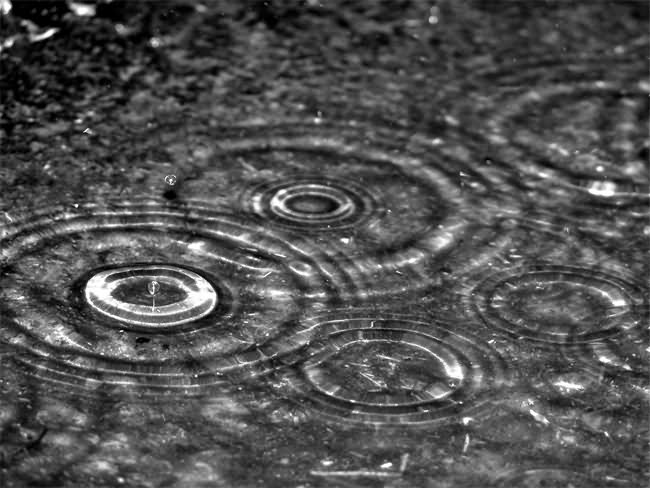
1. Raindrops are not shaped like a teardrop (as they are almost always depicted in drawings) – they are actually spherical.


2. When something "sublimes" it turns directly into a gas from a solid – bypassing the liquid state. This is what would happen if you throw dry-ice into a fire.


3. Gorillas sleep in nests – they weave together soft foliage and bent branches from trees. Males tend to like sleeping on the ground while females like to have their nests in trees.

4. Champagne doesn't fizz because of carbon dioxide – it fizzes because of dirt or dust. In a completely smooth glass with no dust molecules in it, champagne would be completely still.

5. Most digestion occurs, not in the stomach, but in the small intestine. This may be the reason that a person can be bulimic whilst still staying fat.

6. The red juice that comes out of rare steak is not blood – it is myoglobin a close relative of blood. Almost all the blood has been removed from a steak by the time it hits the market.


7. Plastic bags are better than paper bags for the environment. The manufacturing process that makes paper bags requires far more energy than that which produces plastic. Recycling paper bags takes more energy than recycling plastic, and paper bags take up more space in a landfill. Because landfills are usually airtight beneath the surface, paper and plastic are equally bad at biodegrading.

8. Polar bears are fascinating creatures. Their fur is transparent (not white), their skin is black (not white), and when kept in warm humid environments, their fur can turn green from algae.

9. Pet allergies are usually not allergies to fur but allergies to the animal's dead skin, saliva, or waste matter. Regularly cleaning pets can dramatically reduce allergies.


10. The tongue map is a lie – you can taste all tastes on all parts of the tongue. The tongue map is derived from a discredited German paper from 1901.

11. When you hold a shell to your ear to hear the sea, the sound you hear is actually your own blood rushing through your veins! You can use any cup shaped object to hear this effect.


12. When you are alive, your brain is pink. When you die, it turns grey. While we describe the brain as "gray matter" and "white matter", this is not a true description of its color.

13. Mercury, the fascinating liquid metal is not the only liquid metal. Gallium is solid at room temperature but will melt if held in your hand, caesium (Cs), and francium (Fr) – the second rarest naturally occurring element, can also be liquid at or near room temperature.


14. Dolphins don't drink water – if they drank sea water it would make them ill and potentially kill them. They get all of their liquid needs through the foods they eat.


If you like this article Subscribe to MediaDump new content, follow us on Facebook and Twitter and check most popular posts from around the web:


Friday, May 11, 2012

Fun facts about engineering, science and technology

1. 220 million tons of old computers and other technological hardware are trashed in the United States each year.


2. A diamond will not dissolve in acid. The only thing that can destroy it is intense heat.


3. According to Moore's Law, microchips double in power every 18 to 24 months.


4. Albert Einstein won the Nobel Prize for physics in 1921.


5. Although the famous first flight at Kitty Hawk took place on December 17, 1903, the secretive Wright Brothers did not demonstrate the technology to the broader public until August 8, 1908.


6. As of early 2009, there have been 113 space shuttle flights since the program began in 1981.


7. Bill Clinton's inauguration in January 1997 was the first to be webcast.


8. Chuck Yeager blasted through the sound barrier at Edwards Air Force Base in 1947.


9. Einstein received the Nobel Prize for Physics in 1921 for his explanation of the photoelectric effect, the phenomenon by which electrons are knocked out of matter by electromagnetic radiation such as light.


10. In 1901, the Spanish engineer Leonar do Torres-Quevedo was responsible for the earliest developments in the remote control with his Telekine that was able to do "mechanical movements at a distance."