Popular Posts

Popular Posts

Pages

Total Pageviews

Friday, April 6, 2012

Invention of the sewing machine.


Hand sewing is an art form that is over 20,000 years old. The first sewing needles were made of bones or animal horns and the first thread was made of animal sinew. Iron needles were invented in the 14th century. The first eyed needles appeared in the 15th century.


Birth of Mechanical Sewing


The first possible patent connected to mechanical sewing was a 1755 British patent issued to German, Charles Weisenthal. Weisenthal was issued a patent for a needle that was designed for a machine, however, the patent did not describe the rest of the machine if one existed.


Several Inventors Attempt to Improve Sewing


The English inventor and cabinet maker, Thomas Saint was issued the first patent for a complete machine for sewing in 1790. It is not known if Saint actually built a working prototype of his invention. The patent describes an awl that punched a hole in leather and passed a needle through the hole. A later reproduction of Saint's invention based on his patent drawings did not work.


In 1810, German, Balthasar Krems invented an automatic machine for sewing caps. Krems did not patent his invention and it never functioned well.


Austrian tailor, Josef Madersperger made several attempts at inventing a machine for sewing and was issued a patent in 1814. All of his attempts were considered unsuccessful.


In 1804, a French patent was granted to Thomas Stone and James Henderson for "a machine that emulated hand sewing." That same year a patent was granted to Scott John Duncan for an "embroidery machine with multiple needles." Both inventions failed and were soon forgotten by the public.


In 1818, the first American sewing machine was invented by John Adams Doge and John Knowles. Their machine failed to sew any useful amount of fabric before malfunctioning.


Barthelemy Thimonnier - First Functional Machine & a Riot
The first functional sewing machine was invented by the French tailor, Barthelemy Thimonnier, in 1830. Thimonnier's machine used only one thread and a hooked needle that made the same chain stitch used with embroidery. The inventor was almost killed by an enraged group of French tailors who burnt down his garment factory because they feared unemployment as a result of his new invention.


Walter Hunt & Elias Howe


Elias Howe


In 1834, Walter Hunt built America's first (somewhat) successful sewing machine. He later lost interest in patenting because he believed his invention would cause unemployment. (Hunt's machine could only sew straight steams.) Hunt never patented and in 1846, the first American patent was issued to Elias Howe for "a process that used thread from two different sources."


Elias Howe's machine had a needle with an eye at the point. The needle was pushed through the cloth and created a loop on the other side; a shuttle on a track then slipped the second thread through the loop, creating what is called the lockstitch. However, Elias Howe later encountered problems defending his patent and marketing his invention.


For the next nine years Elias Howe struggled, first to enlist interest in his machine, then to protect his patent from imitators. His lockstitch mechanism was adopted by others who were developing innovations of their own. Isaac Singer invented the up-and-down motion mechanism, and Allen Wilson developed a rotary hook shuttle.


Isaac Singer Vs Elias Howe - Patent Wars

Sewing machines did not go into mass production until the 1850's, when Isaac Singer built the first commercially successful machine. Singer built the first sewing machine where the needle moved up and down rather than the side-to-side and the needle was powered by a foot treadle. Previous machines were all hand-cranked. However, Isaac Singer's machine used the same lockstitch that Howe had patented. Elias Howe sued Isaac Singer for patent infringement and won in 1854. Walter Hunt's sewing machine also used a lockstitch with two spools of thread and an eye-pointed needle; however, the courts upheld Howe's patent since Hunt had abandoned his patent.


If Hunt had patented his invention, Elias Howe would have lost his case and Isaac Singer would have won. Since he lost, Isaac Singer had to pay Elias Howe patent royalties. As a side note: In 1844, Englishmen John Fisher received a patent for a lace making machine that was identical enough to the machines made by Howe and Singer that if Fisher's patent had not been lost in the patent office, John Fisher would also have been part of the patent battle.


After successfully defending his right to a share in the profits of his invention, Elias Howe saw his annual income jump from three hundred to more than two hundred thousand dollars a year. Between 1854 and 1867, Howe earned close to two million dollars from his invention. During the Civil War, he donated a portion of his wealth to equip an infantry regiment for the Union Army and served in the regiment as a private.


Thursday, April 5, 2012

Life-Changing Science Discoveries

Life-Changing Science Discoveries


Try to imagine life without antibiotics. We wouldn’t live nearly as long as we do without them. Here’s a look at some discoveries that have changed the world. It’s impossible to rank their importance, so they’re listed in the order they were discovered.

The Copernicum System


In 1543, while on his deathbed, Polish astronomer Nicholas Copernicus published his theory that the Sun is a motionless body at the center of the solar system, with the planets revolving around it. Before the Copernicum system was introduced, astronomers believed the Earth was at the center of the universe.
Gravity
newton
Isaac Newton, an English mathematician and physicist, is considered the greatest scientist of all time. Among his many discoveries, the most important is probably his law of universal gravitation. In 1664, Newton figured out that gravity is the force that draws objects toward each other. It explained why things fall down and why the planets orbit around the Sun.
MICHAEL FARADAY AND ELECTRICITY

If electricity makes life easier for us, you can thank Michael Faraday. He made two big discoveries that changed our lives. In 1821, he discovered that when a wire carrying an electric current is placed next to a single magnetic pole, the wire will rotate. This led to the development of the electric motor. Ten years later, he became the first person to produce an electric current by moving a wire through a magnetic field. Faraday's experiment created the first generator, the forerunner of the huge generators that produce our electricity.
Evolution


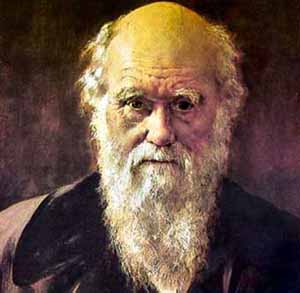
When Charles Darwin, the British naturalist, came up with the theory of evolution in 1859, he changed our idea of how life on earth developed. Darwin argued that all organisms evolve, or change, very slowly over time. These changes are adaptations that allow a species to survive in its environment. These adaptations happen by chance. If a species doesn't adapt, it may become extinct. He called this process natural selection, but it is often called the survival of the fittest.
Louis Pasteur


Before French chemist Louis Pasteur began experimenting with bacteria in the 1860s, people did not know what caused disease. He not only discovered that disease came from microorganisms, but he also realized that bacteria could be killed by heat and disinfectant. This idea caused doctors to wash their hands and sterilize their instruments, which has saved millions of lives.

Theory of Relativity


Albert Einstein’s theory of special relativity, which he published in 1905, explains the relationships between speed, time and distance. The complicated theory states that the speed of light always remains the same—186,000 miles/second (300,000 km/second) regardless of how fast someone or something is moving toward or away from it. This theory became the foundation for much of modern science.


The Big Bang Theory


Georges LemaƮtre

Nobody knows exactly how the universe came into existence, but many scientists believe that it happened about 13.7 billion years ago with a massive explosion, called the Big Bang. In 1927, Georges LemaƮtre proposed the Big Bang theory of the universe. The theory says that all the matter in the universe was originally compressed into a tiny dot. In a fraction of a second, the dot expanded, and all the matter instantly filled what is now our universe. The event marked the beginning of time. Scientific observations seem to confirm the theory.


Penicillin

Antibiotics are powerful drugs that kill dangerous bacteria in our bodies that make us sick. In 1928, Alexander Fleming discovered the first antibiotic, penicillin, which he grew in his lab using mold and fungi. Without antibiotics, infections like strep throat could be deadly.
DNA


On February 28, 1953, James Watson of the United States and Francis Crick of England made one of the greatest scientific discoveries in history. The two scientists found the double-helix structure of DNA. It’s made up of two strands that twist around each other and have an almost endless variety of chemical patterns that create instructions for the human body to follow. Our genes are made of DNA and determine how things like what color hair and eyes we’ll have. In 1962, they were awarded the Nobel Prize for this work. The discovery has helped doctors understand diseases and may someday prevent some illnesses like heart disease and cancer.

Periodic Table


The Periodic Table is based on the 1869 Periodic Law proposed by Russian chemist Dmitry Mendeleev. He had noticed that, when arranged by atomic weight, the chemical elements lined up to form groups with similar properties. He was able to use this to predict the existence of undiscovered elements and note errors in atomic weights. In 1913, Henry Moseley of England confirmed that the table could be made more accurate by arranging the elements by atomic number, which is the number of protons in an atom of the element.


X-Rays


Wilhelm Roentgen, a German physicist, discovered X-rays in 1895. X-rays go right through some substances, like flesh and wood, but are stopped by others, such as bones and lead. This allows them to be used to see broken bones or explosives inside suitcases, which makes them useful for doctors and security officers. For this discovery, Roentgen was awarded the first-ever Nobel Prize in Physics in 1901.

Quantum Theory


Danish physicist Niels Bohr is considered one of the most important figures in modern physics. He won a 1922 Nobel Prize in Physics for his research on the structure of an atom and for his work in the development of the quantum theory. Although he help develop the atomic bomb, he frequently promoted the use of atomic power for peaceful purposes.


Atomic Bomb


The legacy of the atomic bomb is mixed: it successfully put an end to World War II, but ushered in the nuclear arms race. Some of the greatest scientists of the time gathered in the early 1940s to figure out how to refine uranium and build an atomic bomb. Their work was called the Manhattan Project. In 1945, the U.S. dropped atomic bombs on the Japanese cities of Hiroshima and Nagasaki. Tens of thousands of civilians were instantly killed, and Japan surrendered. These remain the only two nuclear bombs ever used in battle. Several of the scientists who worked on the Manhattan Project later urged the government to use nuclear power for peaceful purposes only. Nevertheless, many countries continue to stockpile nuclear weapons. Some people say the massive devastation that could result from nuclear weapons actually prevents countries from using them.


HIV/AIDS


In 1983 and 1984, Luc Montagnier of France and Robert Gallo of the United States discovered the HIV virus and determined that it was the cause of AIDS. Scientists have since developed tests to determine if a person has HIV. People who test positive are urged to take precautions to prevent the spread of the disease. Drugs are available to keep HIV and AIDS under control. The hope is that further research will lead to the development of a cure.


Sunday, March 18, 2012


Edward B. Lewis                       


The Nobel Prize in Physiology or Medicine 1995 was awarded jointly to Edward B. Lewis, Christiane Nüsslein-Volhard and Eric F. Wieschaus "for their discoveries concerning the genetic control of early embryonic development".
 
Edward B. Lewis, Christiane Nüsslein-Volhard and Eric F. Wieschaus


for their discoveries concerning "the genetic control of early embryonic development".


Summary


The 1995 laureates in physiology or medicine are developmental biologists who have discovered important genetic mechanisms which control early embryonic development. They have used the fruit fly, Drosophila melanogaster, as their experimental system. This organism is classical in genetics. The principles found in the fruit fly, apply also to higher organisms including man.


Using Drosophila Nüsslein-Volhard and Wieschaus were able to identify and classify a small number of genes that are of key importance in determining the body plan and the formation of body segments. Lewis investigated how genes could control the further development of individual body segments into specialized organs. He found that the genes were arranged in the same order on the chromosomes as the body segments they controlled. The first genes in a complex of developmental genes controlled the head region, genes in the middle controlled abdominal segments while the last genes controlled the posterior ("tail") region. Together these three scientists have achieved a breakthrough that will help explain congenital malformations in man.


What controls the development of the fertilized egg?


The fertilized egg is spherical. It divides rapidly to form 2, 4 , 8 cells and so on. Up until the 16-cell stage the early embryo is symmetrical and all cells are equal. Beyond this point, cells begin to specialize and the embryo becomes asymmetrical. Within a week it becomes clear what will form the head and tail regions and what will become the ventral and dorsal sides of the embryo. Somewhat later in development the body of the embryo forms segments and the position of the vertebral column is fixed. The individual segments undergo different development, depending on their position along the "head-tail" axis. Which genes control these events? How many are they? Do they cooperate or do they exert their controlling influence independently of each other?


This year's laureates have answered several of these questions by identifying a series of important genes and how they function to control the formation of the body axis and body segments. They have also discovered genes that determine which organs that will form in individual segments. Although the fruit fly was used as an experimental system, the principles apply also to higher animals and man. Furthermore, genes analogous to those in the fruit fly have been found in man. An important conclusion is that basic genetic mechanisms controlling early development of multicellular organisms have been conserved during evolution for millions of years.


Brave decision by two young scientists


Christiane Nüsslein-Volhard and Eric Wieschaus both finished their basic scientific training at the end of the seventies. They were offered their first independent research positions at the European Molecular Biology Laboratory (EMBL) in Heidelberg. They knew each other before they arrived in Heidelberg because of their common interest: they both wanted to find out how the newly fertilized Drosophila egg developed into a segmented embryo. The reason they chose the fruit fly is that embryonic development is very fast. Within 9 days from fertilization the egg develops into an embryo, then a larvae and then into a complete fly.


Fig. 1. Regions of activity in the embryo for the genes belonging to the gap, pair-rule, and segment-polarity groups. The gap genes start to act in the very early embryo (A) to specify an initial segmentation (B). The pair-rule genes specify the 14 final segments (C) of the embryo under the influence of the gap genes. These segments later acquire a head-to-tail polarity due to the segment polarity genes.


They decided to join forces to identify the genes which control the early phase of this process. It was a brave decision by two young scientists at the beginning of their scientific careers. Nobody before had done anything similar and the chances of success were very uncertain. For one, the number of genes involved might be very great. But they got started. Their experimental strategy was unique and well planned. They treated flies with mutagenic substances so as to damage (mutate) approximately half of the Drosophila genes at random (saturation mutagenesis). They then studied genes which, if mutated would cause disturbances in the formation of a body axis or in the segmentation pattern. Using a microscope where two persons could simultaneously examine the same embryo they analyzed and classified a large number of malformations caused by mutations in genes controlling early embryonic development. For more than a year the two scientists sat opposite each other examining Drosophila embryos resulting from genetic crosses of mutant Drosophila strains. They were able to identify 15 different genes which, if mutated, would cause defects in segmentation. The genes could be classified with respect to the order in which they were important during development and how mutations affected segmentation. Gap genes (Fig 1) control the body plan along the head-tail axis. Loss of gap gene function results in a reduced number of body segments. Pair rule genes affect every second body segment: loss of a gene known as "even-skipped" results in an embryo consisting only of odd numbered segments. A third class of genes called segment polarity genes affect the head-to-tail polarity of individual segments.


The results of Nüsslein-Volhard and Wieschaus were first published in the English scientific journal Nature during the fall of 1980. They received a lot of attention among developmental biologists and for several reasons. The strategy used by the two young scientists was novel. It established that genes controlling development could be systematically identified. The number of genes involved was limited and they could be classified into specific functional groups. This encouraged a number of other scientists to look for developmental genes in other species. In a fairly short time it was possible to show that similar or identical genes existed also in higher organisms and in man. It has also been demonstrated that they perform similar functions during development.


The fly with the extra pair of wings


Already at the beginning of this century geneticists had noted occasional malformations in Drosophila. In one type of mutation the organ that controls balance (the halteres), was transformed into an extra pair of wings (Fig. 2). In this type of bizarre disturbance of the body plan, cells in one region behave as though they were located in another. The Greek word homeosis was used to describe this type of malformations and the mutations were referred to as homeotic mutations.


Fig. 2. Comparison of a normal and a four-winged fruit fly. The third thoractic segment has developed as a duplicate of the second due to a defectic homeotic gene. In the normal fly only the second segment develops wings.


The fly with the extra pair of wings interested Edward B. Lewis at the California Institute of Technology in Los Angeles. He had, since the beginning of the forties, been trying to analyze the genetic basis for homeotic transformations. Lewis found that the extra pair of wings was due to a duplication of an entire body segment. The mutated genes responsible for this phenomenon were found to be members of a gene family ( bithorax-complex) that controls segmentation along the anterior-posterior body axis (Fig. 3). Genes at the beginning of the complex controlled anterior body segments while genes further down the genetic map controlled more posterior body segments (the colinearity principle). Furthermore, he found that the regions controlled by the individual genes overlapped, and that several genes interacted in a complex manner to specify the development of individual body segments. The fly with the four wings was due to inactivity of the first gene of the bithorax complex in a segment that normally would have produced the halteres, the balancing organ of the fly (Fig 3). This caused other homeotic genes to respecify this particular segment into one that forms wings.


Edward Lewis worked on these problems for decades and was far ahead of his time. In 1978 he summarized his results in a review article and formulated theories about how homeotic genes interact, how the gene order corresponded to the segment order along the body axis, and how the individual genes were expressed. His pioneering work on homeotic genes induced other scientists to examine families of analogous genes in higher organisms. In mammalians, the gene clusters first found in Drosophila have been duplicated into four complexes known as the HOX genes. Human genes in these complexes are sufficiently similar to their Drosophila analogues they can restore some of the normal functions of mutant Drosophila genes.


Fig. 3. The principle of colinearity in Drosophila (A-C) and mouse (Mus musculus, D-F) embryos. The horizontal bars indicate in which areas the homeotic genes 1-9 are active along the body axis. Gene 1 is active in the head region (left in A and F, respectively); gene 9 is active in the tail region (right). Gene 7 of the bithorax complex was inactive in the fly with four wings. The bar showing its normal range of activity is indicated with an asterisk.


The individual genes within the four HOX gene families in vertebrates occur in the same order as they do in Drosophila , and they exert their influence along the body axis (Fig 3 D-F) in agreement with the colinearity principle first discovered by Lewis in Drosophila. More recent research has suggested that the segments where shoulders and the pelvis form is determined by homeotic genes.


Congenital malformations in man


Most of the genes studied by Nüsslein-Volhard, Wieschaus and Lewis have important functions during the early development of the human embryo. The functions include the formation of the body axis, i.e. the polarity of the embryo, the segmentation of the body, and the specialization of individual segments into different organs. It is likely that mutations in such important genes are responsible for some of the early, spontaneous abortions that occur in man, and for some of the about 40% of the congenital malformations that develop due to unknown reasons. Environmental factors such as very high doses of vitamin A during early pregnancy are also known to disturb the regulation of HOX-genes, thus inducing severe congenital malformations.


In some cases have mutations been found in human genes related to those described here for Drosophila. A human gene related to the Drosophila gene paired will cause a condition known as Waardenburg's syndrome. It is a rare disease which involves deafness, defects in the facial skeleton and altered pigmentation of the iris. Another developmental gene mutation causes a complete loss of the iris, a condition known as aniridia.


Saturday, March 17, 2012

Remarkable Facts

Remarkable Facts


•Living US presidents cannot be featured on US currency.


•The only mammals that cannot jump are elephants.


•Symbolics.com is the first ever internet domain registered in 1985.


•A pound of potato chips costs 200 times more than a pound of raw potatoes.


•Cats have over 100 vocal sounds whereas dogs have about 10.


•Lima beans contain cyanide.


•The people in Bali only have one of four names: Wayan, Made, Nyoman, and Ketut


•Frogs use their eyes to help them eat their food.


•Some in Japan bath in coffee grounds that were fermented with pineapple pulp to improve their skin and reduce wrinkles.


•Human eye can detect 10 million colors.


•A snail can sleep for three years


•Moderate dancing burns 250 to 300 calories an hour.


•February 1865 is the only month in recorded history not to have a full moon.


•Impotence is grounds for divorce in 26 U.S. states.


•There are more pyramids in Peru than in Egypt.


•The length of your thumb and nose is same.


•The state official motto of Alaska is " North to the Future".


•The most popular pets in the United States are cats.


•Twitchers are the [eople who chase after rare birds.


•The word "Checkmate" in chess comes from the Persian phrase "Shah Mat," which means "the king (shah) is dead (mat)."


•Butterflies smell with their feet.


•Infants spend more time dreaming than adults do.


•Pigs can't look up in the sky and Horses can't vomit.


•In Germany, an official approval is needed before a new born is named.


•


1996 Nobel Prize in Medicine and Physiology.


Peter C. DohertyRolf M. ZinkernagelThe Nobel Prize in Physiology or Medicine 1996 was awarded jointly to Peter C. Doherty and Rolf M. Zinkernagel "for their discoveries concerning the specificity of the cell mediated immune defence"


Peter C. DohertyRolf M. Zinkernagel
 

THE SPECIFICITY OF CELL-MEDIATED IMMUNE RESPONSE

The main goal of the research conducted by Peter Doherty and Rolf Zinkernagel was to study how the immune system, particularly T-cells which are involved in cellular immune response, could protect mice from a virus that causes LCM or Lymphocytic Choriomeningitis. Doherty and Zinkernagel injected LCM-immune T-cells into immunosuppressed, virus-infected recipients. The T-cells home equally well to lymphoid tissue of mice from the same strain and mice from another strain. Surprisingly, they found that the T-cells continue to multiply only in the mice from the same strain. This means that replication is not triggered by the virus, but is dependent on the thymus-derived lymphocytes exposed to histocompatible, virus-infected target cells.


In a similar study, they also found that the T-lymphocytes, despite their reactivity with the virus, were not able to kill the virus-infected cells from a different strain of mice. This means that being infected with the virus is not the only factor considered by the T-cells for them to attack the virus-infected cells. The virus-infected cells must also be histocompatible with the T-cells. This means that T-cells from a strain of mice will not attack virus-infected cells of another strain of mice because they are not histocompatible.


The next logical question is how does the T-lymphocyte recognize histocompatible virus-infected cells? The answers to their question were proteins encoded by the Major Histocompatibility Complex that are expressed on the surface of cells which displays self antigens. This histocompatibility antigen enables the T-cells to recognize self molecules. Integrating all the results that they were able to gather, they concluded that the cellular immune response needs to simultaneously recognize both foreign molecules and self molecules via histocompatibiliy antigens.


Succeeding researches conducted by other scientists showed that if a cell is infected by a virus, a small part of that virus is displayed bound to the cell’s histocompatibility antigen on the cell’s surface. The complex formed by the virus and histocompatibility antigen serves as the signal for the T-cell receptors to recognize the virus-infected cells.


CLINICAL RELEVANCE


The most immediate impact of this discovery was on the field of research. As mentioned above, the discovery of the virus-histocompatibility antigen complex was triggered by this discovery. Our increased knowledge concerning the specificity of cellular immune response enables us to strengthen beneficial immune reactions. On the other hand, that same knowledge also enables us to diminish or change unwanted immune reactions towards the body's own tissue, such as those occurring in rheumatic diseases. This discovery also triggered the development of new vaccines that will protect us against all these infectious diseases.


Tuesday, March 13, 2012

Basic general knowledge.


1. 
Grand Central Terminal, Park Avenue, New York is the world's
A.largest railway station
B.highest railway station
C.longest railway station
D.None of the above
Answer & Explanation
Answer: Option A


Grand Central Terminal (GCT)—colloquially called Grand Central Station, or shortened to simply Grand Central—is a commuter railterminal station at 42nd Street and Park Avenue in Midtown Manhattan in New York City, United States. Built by and named for the New York Central Railroad in the heyday of American long-distance passenger trains, it is the largest train station in the world by number of platforms:[3] 44, with 67 tracks along them. They are on two levels, both below ground, with 41 tracks on the upper level and 26 on the lower, though the total number of tracks along platforms and in rail yards exceeds 100. When the Long Island Rail Road's new station opens in 2016 (see East Side Access), Grand Central will offer a total of 75 tracks and 48 platforms. The terminal covers an area of 48 acres (19 ha).


Entomology is the science that studies
A.Behavior of human beings
B.Insects
C.The origin and history of technical and scientific terms
D.The formation of rocks
Answer: Option B
Explanation:
Entomology: The branch of zoology concerned with the study of insects.


Eritrea, which became the 182nd member of the UN in 1993, is in the continent of
A.AsiaB.Africa
C.EuropeD.Australia
Answer: Option B


For which of the following disciplines is Nobel Prize awarded?
A.Physics and Chemistry
B.Physiology or Medicine
C.Literature, Peace and Economics
D.All of the above
Answer: Option D


Galileo was an Italian astronomer who
A.developed the telescope
B.discovered four satellites of Jupiter
C.discovered that the movement of pendulum produces a regular time measurement
D.All of the above
Answer: Option D


Habeas Corpus Act 1679
A.states that no one was to be imprisoned without a writ or warrant stating the charge against him
B.provided facilities to a prisoner to obtain either speedy trial or release in bail
C.safeguarded the personal liberties of the people against arbitrary imprisonment by the king's orders
D.All of the above
Answer: Option D


With which sport is the Jules Rimet trophy associated?
A.BasketballB.Football
C.HockeyD.Golf
Answer: Option B
Explanation:
It is associated with football (soccer if you're yanks). The Jules Rimet trophy was the original trophy awarded to the winners of the World Cup. Although originally being named Victory, the trophy was later named after the then president of FIFA, Jules Rimet.