Popular Posts

Popular Posts

Pages

Total Pageviews

Sunday, June 26, 2011

Madras and Chennai...Origin of the names...From Wikipaedia and the internet


The city's former name, Madras, is derived from Madraspattinam, a fishing village north of Fort St. George. There is some argument among researchers about the exact origin of the name Madraspattinam. It has been suggested that the Portuguese, who arrived in the area in the 16th century, may have named the village Madre de Deus. Another possibility is that the village's name came from the prominent Madeiros family (variously known as Maderaor Madra in succeeding years) of Portuguese origin, which consecrated the Madre de Deus Church in the Santhome locality of Chennai in 1575. It is uncertain whether the name 'Madraspattinam' was in use before European influence.

The name Chennai is a shortened form of Chennaipattinam, the name of the town that grew around Fort St. George, which was built by the English in 1640. There are two versions about the origin of the name Chennai: according to one version, Chennaipattinam was named after Damarla Chennappa Nayakudu, Nayaka of Kalahasthi and Vandavasi father of Damarla Venkatadri Nayakudu, from whom the English acquired the town in 1639. The first official use of the name Chennai is said to be in a sale deed, dated August 1639, to Francis Day of the English East India Company. According to the second account, Chennapattinam was named after the Chenna Kesava Perumal Temple; the word chenni in Tamil means face, and the temple was regarded as the face of the city.
It is widely believed that Madras was renamed as it is an English name. However, Madras is an exonym and the origin of the name of the madras still remains a puzzle
Sometime after the English gained possession of the area in the 17th century, the two towns, Madraspattinam and Chennapattinam, were merged, and the English referred to the united town as Madraspattinam. The state government officially changed the name to Chennai in 1996, at a time when many Indian cities were being renamed.
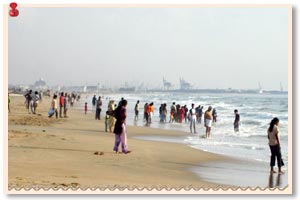

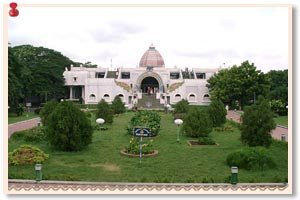
Marina Beach
Marina Beach
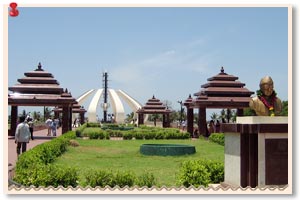
MGR Memorial
MGR Memorial
Valluvar Kottam
Valluvar Kottam
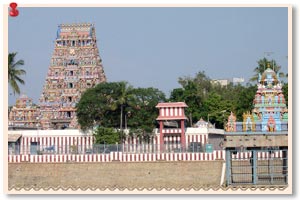
Kapaleeswarar Temple Chennai
Kapalieeswar Temple.

Saturday, June 25, 2011

Brief History of Tamil Nadu...From the internet.


History of Tamil Nadu - Cholas Kingdom in Tamilnadu


Ancient History of Tamil Nadu is from 1st to 9th centuries Cholas Kingdom was in Tamil Nadu state between 1st and 4th centuries. Karikala Chola was the first and very popular king in Chola dynasty. The Dam called Kallanai across the Cauvery River in Tamilnadu was built by Karikala Chola , Kallanai Dam considered to be an engineering wonder of that time. 
kallanai dam
The Cholas ruled Thanjavur and Tiruchirapalli districts of Tamilnadu, not only in Tamilnadu, Chola kingdom was influenced upto SriLanka (cylon), in the south region and thousands of kilometers across the northern region. Chola kingdom plays major role in ancient history of Tamil Nadu.
During Cholas periods the Chola kings build beautiful temples in tamilnad. Brahadeswarer's Temple in Tamilnadu is also called Big temple of Tanjore (Big temple Thanjavur) is the live example of the excellent architecture of the Chola kingdom . This temple Tamilnadu explains Ancient History of Tamil Nadu.

Big temple

Pallava Kingdoms in Tamilnadu.

The very popular Pallava kings in Ancient History of Tamil were Mahendravarman-l and his son Narasimhavarman. They built several temples expressing Dravidian architecture. According to the History of Tamil Nadu, the last Pallava King was Aparajitha. The chola king Aditya Chola defeated Aparajitha at the end of 9th century..
pallava temple
 Cholas Kingdoms in Tamilnadu
During 9th to 14th centuries the Cholas again came for power in South India.The chola king Rajaraja Chola and his son Rajendra Chola extended their rule to central India , Orissa and some parts of West Bengal.
Ancient History of Tamil shows that in 9 th century Rajaraja Chola captured the eastern Chalukya kingdom by defeating the Cheras and he ruled some parts in srilanka by defeating the Pandyas. The great chola king Rajendra Chola showed his power of rule beyond the andaman and Nicobar islands , Lakshadweep, Sumatra, Java, Malaya and Pegu island. Mahipala, the king of Bihar and Bengal was defeated by Rajendra Chola. To make this victory as visual he built a new capital called Gangaikonda Cholapuram . Tamil history states that after 13th century Chola kingdom started loosing their power of rule in Tamilnadu.

After cholas, during 14th century Pandyas kingdom again emerged the power of rule in Tamilnadu, But the life of this pandya kinfdom was short then Muslim Khilji mugamathu invaders from the north in 1316. 

History of Tamil Nadu – Bahmani Kingdoms in Tamilnadu.

The tamil history states that later Madurai city was completely destroyed along with Chola and Pandya dynasties destruction. Then Bahmani Kingdom was established in the northern Decca of Tamilnadu.

After Bahmani Kingdom there was a great change in tamil history, Hindus start to build a powerful new kingdom, called the Vijayanagara empire withHampi as capital.

Rule of Vijayanagara empire.

Vijayanagara empire

This Vijayanagara empire had all the strongholds of Cholas, cheras , pandyas and other local Hindu rulers to check the Muslims. Vijayanagara Empire formed Governors called Nayaks were put to run different territories of the empire. Among these different ancient kingdoms in Tamilnadu, the Vijayanagar Empire was the most powreful dynasty in the south region.DANCES OF TAMIL NADU.

History of Tamil Nadu – Battle of Talikota.


But unfortunately in 1564 there was Talikota battle between Vijayanagar empire and Deccan sultans,finally Deccan sultans won in the battle of Talikota.
The empire, dismantled into different places in south India and the power was given to the hands of Nayaks. The ruling parties of Tamil Country wereTelugu Nayaks which was peaceful and prosperous. The Nayaks of Madurai and Thanjavur reconstructed some of the oldest temples in TamilnaduIndia.


Friday, June 24, 2011

Origin of the scoring system in tennis.

In the beginning, both rackets and tennis scoring were used for lawn tennis. With rackets scoring, a game comprised 15 aces, which could be won only by the server who remained "hand in" until the loss of a rally. Tennis scoring was adopted for the first Wimbledon Championships in 1877 and became the standard. 

The origins of the 15, 30, 40 and so on are not known, but have medieval and French roots. One possible explanation is that the scoring system is based on the presence of a clock face at the end of the tennis court. A quarter move of the appropriate hand was made after each rest, with the score being called as 15, 30, or 45 as the case might be. As the hand was moved to 60, making the complete circuit, this was the game. 
The term "deuce" is derived from the French "deux", an advantage of two points having to be gained. 
"Love" is generally taken as being derived from the French "l"oeuf", the egg, symbolising nothing. The term "love" can also be said to come from the English phrase "neither for love nor for money", indicating nothing. (Taken from the book entitled The Guinness Book of Tennis Facts & Feats and Fifteen Love).
 

Tennis Scoring System: Greenbow Sports Tennis Post Scoreboard - Tennis Scoring System ...

Tennis Scoring System:  ... tennis is the most realistic 3d tennis game you can play real tennis
Tennis Scoring System: Tennis Rules and Court Dimensions
Tennis Scoring System: When Sega recently announced Virtua Tennis 4 , you knew it was only ...
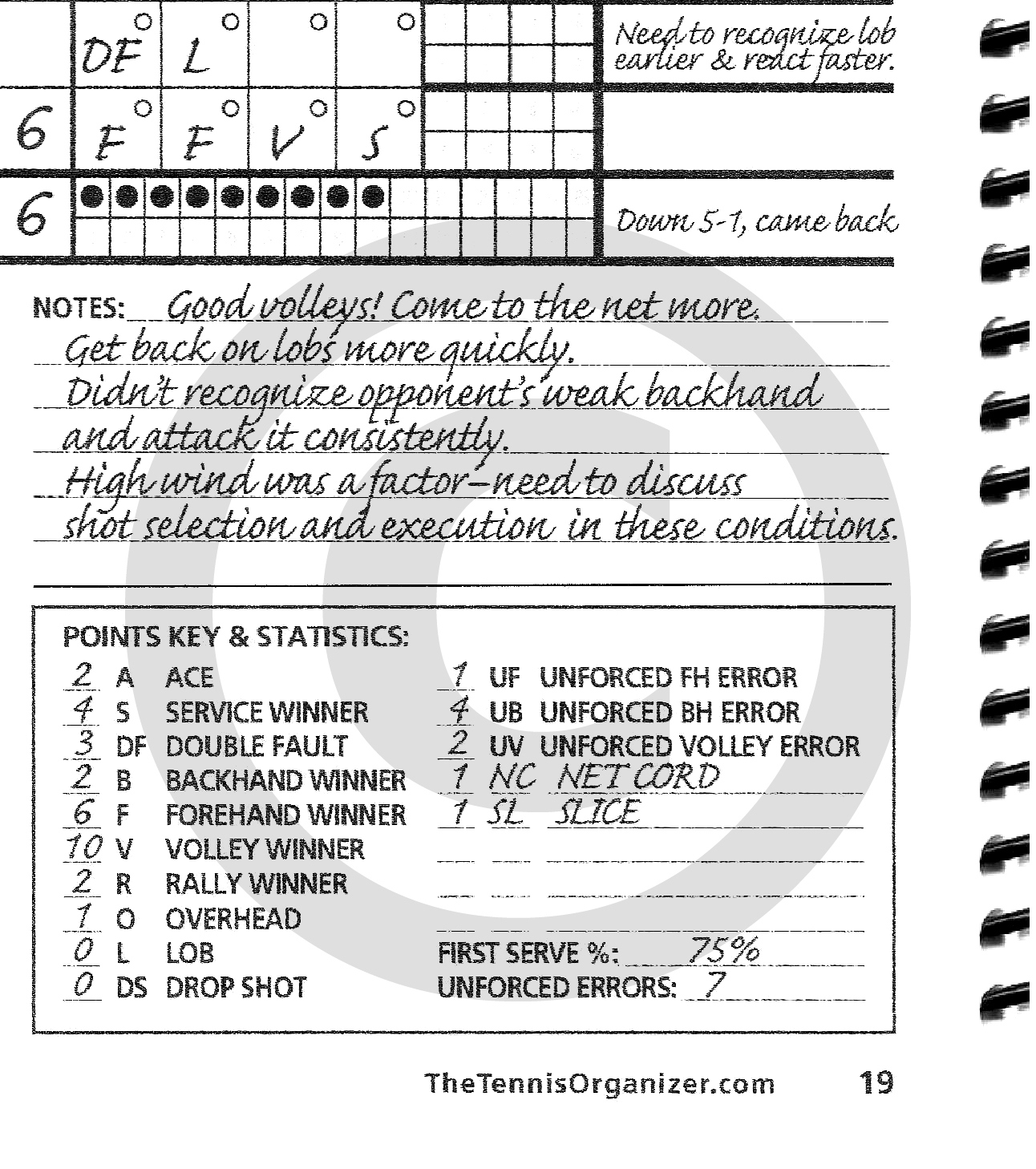
Tennis Scoring System: The Tennis Organizer ~ Best Tennis Score Book & Score Sheet Charting!

Thursday, June 23, 2011

General Science - General Knowledge Questions and Answers

General Science - General Knowledge Questions and Answers: "1.
Brass gets discoloured in air because of the presence of which of the following gases in air?


A. Oxygen
B. Hydrogen sulphide
C. Carbon dioxide
D. Nitrogen


Answer: Option B


2. 
Which of the following is a non metal that remains liquid at room temperature?
A.PhosphorousB.Bromine
C.ChlorineD.Helium
Answer: Option B


Tamil Language and arts...from Wikipedia


An idol in Madurai representing the Tamil language as a goddess; The caption on the pedestal reads Tamil Annai ("Mother Tamil").
Tamils have strong feelings towards the Tamil language, which is often venerated in literature as "Tamil̲an̲n̲ai", "the Tamil mother". It has historically been, and to large extent still is, central to the Tamil identity. Like the other languages of South India, it is a Dravidian language, unrelated to the Indo-European languages of northern India. The language has been far less influenced by Sanskrit than the other Dravidian languages, and preserves many features of Proto-Dravidian, though modern-day spoken Tamil in Tamil Nadu, freely uses loanwords from Sanskrit and English Tamil literature is of considerable antiquity, and is recognised as a classical language by the government of India. Classical Tamil literature, which ranges from lyric poetry to works on poetics and ethical philosophy, is remarkably different from contemporary and later literature in other Indian languages, and represents the oldest body of secular literature in South Asia.

Dancing Siva or Nataraja is a typical example of Chola bronze

The Brihadeshswara Temple at Thanjavur, also known as the Great Temple, built by Rajaraja Chola 

Ancient Tamil works, such as the Cilappatikaram, describe a system of music, and a 7th-century Pallava inscription at Kudimiyamalai contains one of the earliest surviving examples of Indian music in notation.Contemporary dance forms such asBharatanatyam have recent origins but are based older temple dance forms known as Catir Kacceri as practiced by courtesans and a class of women known as Devadasis[88]
Young Bharatanatyam dancer
One of the Tamil folk dances is karakattam. In its religious form, the dance is performed in front of an image of the goddessMariamma. The kuravanci is a type of dance-drama, performed by four to eight women. The drama is opened by a woman playing the part of a female soothsayer of the kurava tribe(people of hills and mountains), who tells the story of a lady pining for her lover. Thetherukoothu, literally meaning "street play", is a form of village theater or folk opera. It is traditionally performed in village squares, with no sets and very simple props. 

Wednesday, June 22, 2011

ADICHANALLUR>>Findings of ASI suggest older civilisation than Indus Valley Civilisation.


ADICHANALLUR has a history of excavation. The urn-burial site was brought to light when a German, Dr. Jagor, conducted a haphazard excavation at the place in 1876. An Englishman called Alexander Rea, who was the Superintending Archaeologist, excavated the urn-burial site between 1889 and 1905. A Frenchman called Louis Lapique had also conducted an excavation in 1904.
In his article entitled "Prehistoric antiquities in Tinnevelly", which appeared in the Archaeological Survey of India's annual report in 1902-03, Rea called the Adichanallur site "the most extensive prehistoric site as yet discovered in southern if not in the whole of India... . The site was first brought to notice in 1876 when it was visited by Dr. Jagor of Berlin, accompanied by the Collector of Tinnevelly and the District Engineer."
Excavations by Dr. Jagor had yielded "upwards of 50 kinds of baked earthenware utensils of all sizes and shapes, a considerable number of iron weapons and implements, chiefly knives or short sword blades and hatchets, and a great quantity of bones and skulls". Rea says "these articles were taken away by Dr. Jagor for the Berlin Museum".
In his first excavations, Rea discovered about 1,872 objects, and about 4,000 more later. He said: "The objects yielded by these burial sites are finely made pottery of various kinds in great number; many iron implements and weapons; vessels and personal ornaments in bronze; a few gold ornaments; a few stone beads; bones; and some household stone implements used for grinding curry or sandalwood." Traces of cloth, urns with mica pieces, and husks of rice and millet were found in pots inside the urns. Lamp stands, hanging lamps, bell-mouthed jars, `chatties', necklaces, wire bangles, swords, spears and arrows were found.
Importantly, several gold diadems with a hole on each end for tying them around the forehead were found. Rea also discovered a number of bronze figurines of the buffalo, the goat or the sheep, the cock, the tiger, the antelope and the elephant.
He had this to say about how the dead were interred in the urns at Adichanallur: "In those urns which contained complete skeletons, and which were thus preserved by the lid remaining intact, the position of the bones made it obvious that the body had been set inside in a squatting or sitting position. On its decay, the leg and arm bones fell over and rested against one side of the urn, while the skull, ribs, and vertebrae dropped down to the bottom. This was the position in which every complete skeleton, without exception, was found; and the urns in which they were placed were all devoid of earth."
G. Thirumoorthy, Assistant Archaeologist with the ASI, who led the first phase of the excavation in 2004, said of Rea's excavation: "Above all, his excavation was important for the bronze objects discovered because they are quite unique in the proto-history of South India. Besides, he discovered a figurine of a Mother-Goddess. All this showed that the Tamil culture was rich then."
Rea's discovery of gold diadems is intriguing, for gold does not occur at Adichanallur or any nearby place. The gold could have been brought from outside because of trade contacts, Thirumoorthy said.
Also intriguing is the fact that, although Rea found a number of bronze objects and several gold diadems, no bronze or gold objects have so far been found in excavations conducted by the ASI from 2004. Besides, the trenches dug by Rea have not been located so far, although they are said to be in the centre of the mound.
Rea systematically documented all the objects that he discovered and handed them over to the Government Museum in Chennai, where they were on discoverd.pl
AdichanallurThe centrepiece of the discoveries is this potsherd with the motifs of a woman, a stalk of paddy, a crane, a deer and a crocodile.ay.
 THE Iron-Age urn-burial site at Adichanallur, about 24 km from Tirunelveli town in southern Tamil Nadu, has attracted nationwide attention for three important findings: an inscription in a rudimentary Tamil-Brahmi script on the inside of an urn containing a full human skeleton; a potsherd (fragment of broken earthenware) with stunningly beautiful motifs; and the remains of living quarters (rampart wall, potters' kilns, a smith's shop and so on) close to the site.
Adichanallur2
T. Satyamurthy, Superintending Archaeologist, ASI, Chennai Circle, with G. Thirumoorthy (centre), Assistant Archaeologist, and P. Aravazhi, a member of the team of Tarcheologists, at the site.he Archaeological Survey of India (ASI) started digging the site Thein February 2004, about 100 years after the last excavation activity there. It is an extraordinarily large urn-burial site spread over 114 acres (45.6 hectares) on a low, rocky hillock on the right bank of the Tamiraparani river, close to a lake and surrounded by paddy fields and banana plantations. The first phase of excavation in 2004, stretched between February 4 and July 5. In the six trenches that were dug then, the ASI ran into a range of spectacular finds. Each trench was a square, 10 metres by 10 metres. T. Satyamurthy, Superintending Archaeologist of the ASI, Chennai Circle, is the overrall director of the excavation.
adichanallur3

The urn in the foreground, found at Adichanallur, resembles burial urns found at Malwa in Madhya Pradesh, suggesting trade contacts between the two regions.
A total of 157 burial urns were found, 57 of them intact and 15 with complete human skeletons inside. Many of the urns, especially those that contained human skeletons, were covered with another urn, in what is called a "twin-pot" system. They had been buried after cutting the rock in circular pits, into which the urns were lowered in a three-tier formation. The earliest burials formed the lowermost tier, which left enough space above to accommodate future burials.
adichanallur4
Iron knives were among the artefacts unearthed.
Among the artefacts discovered at the burial site were a profusion of red ware, black ware, black-and-red ware, copper bangles, copper ear-rings, iron spear-heads, terracotta lids with tiered knobs, terracotta vessels that could be used both as lids and as bowls, globular vessels and long-necked utensils. There were vases, pots with exquisite decorations, broken daggers and swords made of iron. There were also Neolithic celts, iron implements, urns with clan marks and urns with hooks inside.
adichanallur
A range of red ware, black ware, and black-and-red ware excavated and now on display at the ASI office in Chennai.
The urns with skeletons had inside them empty miniature vessels, rice, paddy and husk. The miniature vessels were of three types: bowls, small vases and pots. Made of polished blackware, they are thought to have had religious significance. These small vessels invariably had their lids on. The lids were decorated with dotted, floral or geometrical designs and were painted. Some lids had tiered knobs that looked like chess pieces.
adichanallur6
An urn containing skeletons, covered with another urn in what is called a twin-pot system. Archaeologists point to the care with which te dead were buried.
What is fascinating is the discovery of urns with clan/tribe marks. Some urns had ornamentation such as thumb-nail impressions running all round the neck. The clan marks included three lines separating out from the top, with knobs, and garland-like designs.One urn had the skeletons of a mother and a child. Some skulls had disintegrated, the bones had become fragile. Some urns were broken, and were filled with earth, obviously the handiwork of treSatyamurthy called the Adichanallur burial site "the earliest site in Tamil Nadu" and was sure that its history would go back to 1,000 B.C. "In our excavation, we have come across a culture earlier to the megalithic period. It is a well-stratified culture. The pottery is typologically different from that of megalithic pottery," he said. (According to archaeologists, the Iron Age in South India stretched between 1,000 B.C. and 300 B.C. The Iron Age and the megalithic age were contemporaneous in South India. The Iron Age signifies the beginning of civilisation).
The centrepiece of these discoveries is the potsherd with motifs in appliqué designs. It was found inside an urn which had a human skeleton. At the centre of the motifs is a tall, slender woman with prominent breasts and wearing a knee-length dress. Her hands are clinging to her sides and the palms seem to be spread out. Next to her is a sheaf of standing paddy and a crane is seated on the paddy stalk. There is a beautiful, young deer with straight horns and upturned tail. There is also a crocodile, and a knob mark. The appliqué designs were made using clay. A small thin rope was used to bring about the serrated effect in each motif.
asure-hunters. Three copper bangles and some copper chisels were also found at the site.

Thirumoorthy said: "Adichanallur shows the importance given to the dead in Tamil society. The excavation reveals the mode of burial practice, the disposal of the dead, the religious beliefs prevalent then, and the socio-economic conditions of the people who lived here at that time."

adichanallur

The question that haunts the archaeologists who have excavated the cairn (stone)-burial sites or urn-burial sites of the megalithic period in the South is: Where were the living quarters of the people who were buried at Amirthamangalam near Ponneri, or Perumbair near Chengalpattu?
The second phase of excavation, which began in February 2005, is currently under way on the north and northwestern slopes of the urn-burial site. If the aim of this excavation was to locate the habitational site of the people whose bodies were buried a few hundred metres away, it has succeeded in that objective
adichanallur
The chance finding of an rudimentary Tamil-Brahmi script. It was written on the inside of an urn that held a human skeleton has the potential to upset theories about the date of origin of the Tamil-Brahmi script. Satyamurthy found the script under chance circumstances. After visiting the Adichanallur, he was returning to Chennai on a train. He was examining photographs of the urns with skeletons to see whether the skeletons had a primary or secondary burial. It was then that he noticed some letters written on the inside of the urn. He cut short his journey and returned to Adichanallur to examine the inside of the urn closely.
According to M.D. Sampath, retired Director, Epigraphy, ASI, Mysore, the script has seven letters. He said: "It may be suggested that the writing is in Tamil-Brahmi in a rudimentary form. Attempts have been made to blow up the writing so as to decipher the same. It may be tentatively read as follows: Ka ri a ra va [na] ta.
"Though the exact meaning is not clear, it is quite likely that the expression seems to suggest the name of the engraver of the record or the maker of the pottery or the person whose skeletal remains are found interred inside the urn. The reading is subject to improvement. It is necessary to compare it with the graffiti and other scribbling found on the potsherds at different stratigraphical levels. The script seems to be archaic, perhaps coeval with the early megalithic period."
Dr. Sampath pointed out that "this was "a rare occurrence" that the script was written inside the urn. Normally, such writings were seen outside the urns. The technique of inverted firing used in the baking of black and red ware must have been adopted in baking this urn also. "How this method has been used here is a question that needs an answer from archaeologists," he said.
Satyamurthy has proposed, on the basis of "preliminary thermo-luminescence dating," that the pots found inside the urn along with the script might date back to circa 500 B.C. He said this method of dating "takes the site to the period from 1,500 B.C. to 500 B.C. So the script is also likely to be dated to 5th century B.C. even if we take the latest date into consideration." This date is, however, subject to confirmation by carbon-14 dating, which is a more accurate method.
It is called Tamil-Brahmi because the language is Tamil but the script is Brahmi. The Brahmi script was predominantly used for the Prakrit language from the period of Emperor Asoka (circa 270 B.C.).
Iravatham Mahadevan, an authority on the Tamil-Brahmi script, says in his seminal work "Early Tamil Epigraphy, From the Earliest Times to the Sixth Century A.D.", that "The Brahmi script reached Upper South India (Andhra-Karnataka regions) and the Tamil country at about the same time during the 3rd century B.C. in the wake of southern spread of Jainism and Buddhism." Mahadevan writes, "The earliest inscriptions in the Tamil-Brahmi script may be dated from about the end of the 3rd century or early 2nd century B.C. on palaeographic grounds and stratigraphic evidence of inscribed pottery. The earliest inscriptions in the Tamil country written in the Tamil-Brahmi script are almost exclusively in the Tamil language."
Satyamurthy, however, has proposed that the script inside the urn may belong to 5th century B.C.

© 2005 - 2011 Archaeologyindia.com. All rights reserve

Tuesday, June 21, 2011

Arikamedu Pondicherry |One of the oldest civilisations in India..Tamil

Arikamedu Pondicherry This is a historic site which has revealed ancient Roman artifacts that are evidence of the thriving trade that existed between this region and ancient Europe. The site is located about 4 kilometers from Puducherry along the right bank of the Ariyankuppam River. Among the artifacts found here are Roman pottery and grey painted ware. The area seems to have been a busy commercial hub, dealing predominantly in stone beads, glass beads and ceramics. The research and further excavations are going on. Some of the artifacts found here can be seen at the Puducherry museum.

General Information about Arikamedu :

Location: Puducherry (city).


State: Puducherry (Union Territory of INDIA)


Capital: Puducherry (city).


Language: Tamil, French, Telugu, Malayalam

Temperature: Max 41˚C, Min 30˚C (summer), Max 26˚C, Min 14˚C (winter)


Best Season: October to March"

Arikamedhu is the beautiful outcome of the extensive excavations carried out in Pondicherry. This place was once a bustling centre of the Indo Roman trade. The exquisite remnants of wine jars and Roman coins prove this place to be a successful trading hub. Arikamedhu is assumed to be the settlements of Romans nearly 2000 years ago proving the rich ancient history Pondicherry can boast of. The remains of 18th century built French Jesuit Mission House are also visible here. This bustling and once lively trading centre is now visited mostly by historians and archaeological enthusiasts who explores in search of more vivid history of the area. This is the reason why a lot of tourists flock to this place and enjoy the mesmerizing beauty. The place is simply bewitching and attracts all those interested in history and inquisitive to know about the era bygone. This is a must visit for everyone.

Tamilian Civilisation..One of the oldest in India
Big Image

Monday, June 20, 2011

General Knowledge/ Current Affairs Questions May 2010 Latest Updates

General Knowledge Who was the famous Indian musician in charge of the opening music at the Summer Olympics in Atlanta in 1996?
Answer: Ustad Zakir Hussain
NDTVMovies.com

Who was the first Indian to participate in the Olympic Games?
Answer: Norman G Pritchard


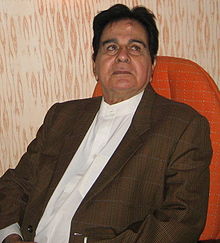
Which famous Indian actor was honored with the Dadasaheb Phalke Award in 1994?
Answer: Dilip Kumar.

 Who was the first Indian to join the Indian Civil Services?
Answer: Satyendranath Tagore.

63. Who was the first Indian to be honored with the Param Vir Chakra?
Answer: Major Som Nath Sharma

Thomas Midgley...Leaded petrol

Leaded Petrol


Picture 2-70
Thomas Midgley discovered the CFC Freon as a safe refrigerant to replace the highly toxic refrigerants such as ammonia in common use. This resulted in extensive damage to the Ozone Layer. His other famous idea was to add tetraethyl lead to gasoline to prevent “knocking” thus causing worldwide health issues and deaths from lead poisoning. He is considered to be the man that – “had more impact on the atmosphere than any other single organism in Earth’s history.”


Thomas Midgley discovered the CFC Freon as a safe refrigerant to replace the highly toxic refrigerants such as ammonia in common use. This resulted in extensive damage to the Ozone Layer. His other famous idea was to add tetraethyl lead to gasoline to prevent “knocking” thus causing worldwide health issues and deaths from lead poisoning. He is considered to be the man that – “had more impact on the atmosphere than any other single organism in Earth’s history.”


Inventions - General Knowledge Questions and Answers

Inventions - General Knowledge Questions and Answers: "1.
Who invented the BALLPOINT PEN?

A. Biro Brothers
B. Waterman Brothers
C. Bicc Brothers
D. Write Brothers"