Popular Posts

Popular Posts

Pages

Total Pageviews

Friday, June 10, 2011

Antony Van Leewenhoek... discovery of microbes


Antony Van Leewenhoek
Its hard to imagine doctors and surgeons performing operations without washing their hands or equipment, but at one point in time it was standard practice. Before the discovery of bacteria, thousands died from mysterious illnesses that were often attributed to other causes. In the late 1600's Antony Van Leeuwenhoek had observed microscopic organisms with microscopes he had perfected. His findings and suggestions that these one-celled organisms existed were originally met with skepticism from the Royal Society of London, but were later tested and proven to be true. Today, we owe what we understand about bacteria to Van Leeuwenhoek, his initial work has lead to our modern advances in health care, biology, and how the world works. Bacteria play a vital role in our world from disease prevention and cure to unlocking the origin of life itself, and without our knowledge of these invisible life forms life for us would be very different, if possible at all.


In a letter of September 7, 1674, Leeuwenhoek described observations on lake water, including an excellent description of the green charophyte alga Spirogyra: "Passing just lately over this lake, . . . and examining this water next day, I found floating therein divers earthy particles, and some green streaks, spirally wound serpent-wise, and orderly arranged, after the manner of the copper or tin worms, which distillers use to cool their liquors as they distil over. The whole circumference of each of these streaks was about the thickness of a hair of one's head. . . all consisted of very small green globules joined together: and there were very many small green globules as well."

On September 17, 1683, Leeuwenhoek wrote to the Royal Society about his observations on the plaque between his own teeth, "a little white matter, which is as thick as if 'twere batter." He repeated these observations on two ladies (probably his own wife and daughter), and on two old men who had never cleaned their teeth in their lives. Looking at these samples with his microscope, Leeuwenhoek reported how in his own mouth: "I then most always saw, with great wonder, that in the said matter there were many very little living animalcules, very prettily a-moving. The biggest sort. . . had a very strong and swift motion, and shot through the water (or spittle) like a pike does through the water. The second sort. . . oft-times spun round like a top. . . and these were far more in number." In the mouth of one of the old men, Leeuwenhoek found "an unbelievably great company of living animalcules, a-swimming more nimbly than any I had ever seen up to this time. The biggest sort. . . bent their body into curves in going forwards. . . Moreover, the other animalcules were in such enormous numbers, that all the water. . . seemed to be alive." These were among the first observations on living bacteria ever recorded. 

Blood Banks.

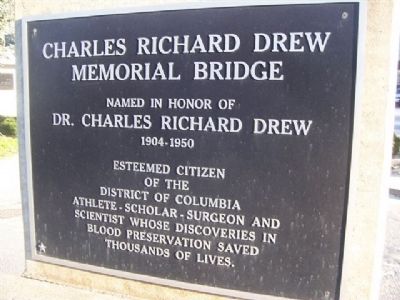
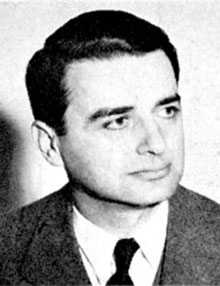
Dr. Charles Richard Drew (June 3, 1904 - April 1, 1950) was an American medical doctor and surgeon who started the idea of a blood bank and a system for the long-term preservation of blood plasma (he found that plasma kept longer than whole blood). His ideas revolutionized the medical profession and have saved many, many lives.
Dr. Drew set up and operated the blood plasma bank at the Presbyterian Hospital in New York City, NY. Drew's project was the model for the Red Cross' system of blood banks, of which he became the first director. Drew resigned his position as director after the US War Department issued a directive stating that blood taken from white donors should not be mixed with blood taken from black donors. Dr. Drew strongly objected, and stated "the blood of individual human beings may differ by blood groupings, but there is absolutely no scientific basis to indicate any difference in human blood from race to race." Dr. Drew also formed Britain's blood bank system.
Dr. Drew died on April 1, 1950, after a car accident in in rural North Carolina. Although there is a legend that he died as a result of being denied a blood transfusion and medical care from a "whites-only" hospital, Dr. Drew got immediate medical attention, in part from the other doctors (his friends) who were in the car accident with him (but were less severely injured). Dr. Drew was admitted to a mixed-race hospital, but died after being treated for massive internal injuries. A U.S. postage stamp was issued in 1981 to honor Dr. Drew.
Stamp in honour of Dr.DrewCharles DrewDr.Chales Richard Drew

Thursday, June 9, 2011

CAN OPENERS

Can Opener, 1858

British merchant Peter Durand made a huge stride in food preservation with his 1810 invention of the can. Canned rations provided to soldiers and explorers saved legions from sure starvation. So grateful for its inner contents were the hungry recipients that no one really complained about the sweat and toil often required to simply open the can.

In 1858 Ezra J. Warner of Waterbury, Connecticut, patented the first can opener. An intimidating combination of bayonet and sickle, Warner's invention was nonetheless eagerly adopted by the U.S. military during the Civil War. Household use of the can opener increased when William W. Lyman's more user-friendly model was introduced in 1870. No longer did opening a can of peaches mean risking one's fingers. 


MODERN CAN OPENER.

Lever type Can Opener

Electric Can Opener
Swiss Knie with can opener

Wednesday, June 8, 2011

Fascinating facts about the invention of Instant Photography by Edwin Herbert Land in 1947.

 EDWIN LAND

Erasmus Bartholin (1625-1698) was sent, in 1669, a transparent crystal from Iceland (Iceland spar) and, by rotating the crystal, he discovered that objects seen through it appeared double. He correctly deduced that light traveling through the crystal was refracted at two different angles. Today, these are still called the ordinary and extraordinary rays. The explanation required the genius of Thomas Young (1773-1829) to account for them some 150 years later: the two rays were polarized at right angles to each other. William Nicol (1768-1851) had the ingenious idea of cementing two crystals of Iceland spar together with Canada balsam so that each ray was separated at right angles. The resulting Nicol prism could then be used to measure the angle of polarization of compounds, which later resulted in a profound understanding of many aspects of chemistry.

Today, Nicol prisms are still very expensive, bulky and of limited aperture. Edwin Land, when a Harvard freshman, conceived the idea that a polarizer might be made by lining up a myriad of tiny crystals (iodoquinine sulphate) in the same direction and embedding them in transparent plastic which, when set, prevented the crystals from drifting apart. The new polarizer was patented in 1929.
The conventional photographic process involves exposing light sensitive material, which in turn must be developed, fixed, printed and the print developed and fixed, a procedure which can take hours, (or days if the processing facility is far from the place where the photo was taken.) In 1947, a remarkable new system of developing and taking pictures was introduced by American physicist Edwin Herbert Land (1909-1991).
Land had left Harvard after his freshman year to conduct his own research on the polarization of light. Two years later, he invented a sheet polarization filter which could be used on camera lenses to eliminate reflection and glare. In 1937, Land founded the Polaroid Corporation to manufacture and market his filters, lamps, window shades and sunglasses.In February 1947, he introduced Polaroid (po’lar-oid) instant film for use in his own Polaroid Land Camera. The Land camera (patent #2,543,181) was first offered for sale on November 26th, 1948.  Polaroid film processes chemicals in a flat, hermetically sealed compartment attached to the photosensitive paper. A pair of pressure rollers spreads the chemicals uniformly across the paper when exposed, and the completed print is ready a minute later. In 1963, Land introduced Polacolor, a full color film, which could be processed in less than a minute.
In 1972, the "SX-70" replaced the wet, peel-apart development process with dry films that developed in light. (Land even created an instant color movie-making system, "Polavision," in 1978; but this never enjoyed the commercial success of his still-photography cameras.)

Tuesday, June 7, 2011

Improvement in Steam Generators Steam Generator

George Babcock 
Born Jun 17 1832 - Died Dec 16 1893

Improvement in Steam Generators
Steam Generator

Patent Number(s) 65,042

Inducted 1997

Invention Impact
George H. Babcock and Stephen Wilcox invented an improved water tube steamboiler, which provided a safer and more efficient production of steam. 
Inventor Bio
Born in Unadilla Forks, New York, Babcock was part of a family of inventors and mechanics. In 1860, after moving to Brooklyn, he attended evening classes at Cooper Institute. During the American Civil War, he worked for the Mystic (Connecticut) Iron Works building ships for the U.S. government. He became the chief draftsman at the Hope Iron Works in Providence, R.I., where he joined Stephen Wilcox in improving boiler designs. The two men received their patent in 1867 and formed a partnership that same year. In 1881, the company was incorporated with Babcock as president and Wilcox as vice president. Since then, Babcock & Wilcox has become a world leader in the power generation industry and is a major operating unit of McDermott International, a worldwide energy services company. 

Monday, June 6, 2011

Hair Lotion

Despite the hardships suffered through slavery, many African Americans have managed to become great inventors, scientists, and thinkers.
Walk-Mad2Sarah Bedlow

Invented: Hair Lotion for black womSaah Breedlove, who later became known as Madam C. J. Walker, was born into a former-slave family to parents Owen and Minerva Breedlove. Madam Walker was an entrepreneur who built her empire developing hair products for black women. She claims to have built her company on an actual dream where a large black man appeared to her and gave her a formula for curing baldness. When confronted with the idea that she was trying to conform black women’s hair to that of whites, she stressed that her products were simply an attempt to help black women take proper care of their hair and promote its growth. She was the first African-American woman millionaire.

Sunday, June 5, 2011

The Telephone

Alexander Graham Bell
[Alexander Graham Bell,
Antonio Meucci
Antonio Meucci, 
Elisha Gray
Elisha Gray, 

Alexander Graham Bell was the first to patent the     telephone.

Attributing the true inventor or inventors to a specific invention can be tricky business. Often credit goes to the inventor of the most practical or best working invention rather than to the original inventor(s). This happens to be the case of the invention of the telephone!
There is a lot of controversy and intrigue surrounding the invention of the telephone. There have been court cases, books, and articles generated about the subject. Of course, Alexander Graham Bell is the father of the telephone. After all it was his design that was first patented, however, he was not the first inventor to come up with the idea of a telephone.
Antonio Meucci, an Italian immigrant, began developing the design of a talking telegraph or telephone in 1849. In 1871, he filed a caveat (an announcement of an invention) for his design of a talking telegraph. Due to hardships, Meucci could not renew his caveat. His role in the invention of the telephone was overlooked until the United States House of Representatives passed a Resolution on June 11, 2002, honoring Meucci's contributions and work (To read the report search Thomas Legislation, Bill summary and Status, 107th Congress, H Res 269 ).
To make matters even more interesting Elisha Gray, a professor at Oberlin College, applied for a caveat of the telephone on the same day Bell applied for his patent of the telephone. In Historical First Patents: The First United States Patent for Many Everyday Things(Scarecrow Press, 1994), Travis Brown, reports that Bell got to the patent office first. The date was February 14, 1876 . He was the fifth entry of that day, while Gray was 39th. Therefore, the U.S. Patent Office awarded Bell with the first patent for a telephone, US Patent Number 174,465 rather than honor Gray's caveat.
So, if someone asks who is credited with inventing the telephone, you can explain the controversy that still surrounds this question. The answer is Bell, but be sure to mention Meucci and Gray, because they played important roles in its development.

Saturday, June 4, 2011

RIP Co-Creator of Classic Fad - The Hula Hoop

Inventors

Last week we lost Richard Knerr (on the right), co-founder of Wham-O, and sometimes credited with co-creating one of the most amazing fads in US history; the Hula Hoop.  In 1958, inspired by Australian bamboo rings used for exercise, Wham-O manufactured their Hula Hoops in new-fangled candy striped plastic - later adding beads to make that trademark swooshing sound.
Knerr & partner's company Wham-O sold over 100 million Hula Hoops from 1958-1960 (25 million of those were sold in just four months).  MultihoopThat means that just about every other US resident's hips were ringed by a hula hoop of their very own.  However there's an even more amazing thing to consider in this "American Dream" success story.
After creating a national craze, and selling millions of hoops, can you guess what Wham-O's profits eventually were?  Less than $10,000 and a massive stock of unsold hoops.  Wham-O had made some bad business deals, and thought that the Hula Hoop fad indicated a permanent market.  Also, the hoops tended to last for years - so in a way the toys were victims of their own plasticky durability.
In his 1985 book American Fads, Richard Johnson writes that the Hula Hoop is “the standard against which all national crazes are measured”.  That's a telling statement, as we can learn a lot both from the meteoric rise of the fad, to the warehouses of unsold heaps of Hula's.  In case you're worried, Wham-O did just fine even after the hoop swooped its last loop.  They went on to invent and market such toys as the Frisbee, Nerf, Superball, and countless other perennial childhood favorites.
HudsuckerOne of my favorite movies takes its inspiration from the hula hoop.  It's a Cohen Brothers film called "Hudsucker Proxy", and while it's far from any real facts surrounding the actual invention of what they called the "Extruded Plastic Dingus", it's the kind of story that you wish happens along the way to developing a classic toy.


Friday, June 3, 2011

Wiremate, a wire management system

Inventors and Their Inventions

Photographer David Friedman explores the inspiration that moves inventors
Tony Pagoto

Wiremate, a wire management system

Pagoto's molded resin boxes organize, protect and conceal the cluttered tangle of wires that accumulate behind desks and home entertainment systems. Of his foray into the world of inventions, Pagoto says, "Dreams and determination aren't only for the young. My partners and I are 'older guys'. I am 64 and my partners Don and John are 64 and 68. We have known each other for over 50 years. They say never to go into business with friends and relatives, but we have done that and have benefited greatly from it."


Thursday, June 2, 2011

Nanoengineers Invent New Biomaterial


Nanoengineers Invent New Biomaterial That More Closely Mimics 

Human Tissue


A new biomaterial designed for repairing damaged human tissue doesn't wrinkle up when it is stretched. The invention from nanoengineers at the University of California, San Diego marks a significant breakthrough in tissue engineering because it more closely mimics the properties of native human tissue.
Shaochen Chen, professor in the Department of NanoEngineering at the UC San Diego Jacobs School of Engineering, hopes future tissue patches, which are used to repair damaged heart walls, blood vessels and skin, for example, will be more compatible with native human tissue than the patches available today. His findings were published in a recent issue of the journal Advanced Functional Materials.
The new biomaterial was created using a new biofabrication platform that Chen is developing under a four-year, $1.5 million grant from the National Institutes of Health. This biofabrication technique uses light, precisely controlled mirrors and a computer projection system -- shined on a solution of new cells and polymers -- to build three-dimensional scaffolds with well-defined patterns of any shape for tissue engineering.
"We are also exploring other opportunities," said Chen. "It's a new material. I think it's just a matter of time before more people will pick up and find applications for it in defense, energy and communications, for instance."
Although Chen's team is focused on creating biological materials, he said the manufacturing technology could be used to engineer many other kinds of materials including metal parts used in ships and spacecraft, for example.
Shape turned out to be essential to the new material's mechanical property. While most engineered tissue is layered in scaffolds that take the shape of circular or square holes, Chen's team created two new shapes called "reentrant honeycomb" and "cut missing rib." Both shapes exhibit the property of negative Poisson's ratio (i.e. not wrinkling when stretched) and maintain this property whether the tissue patch has one or multiple layers. One layer is double the thickness of a human hair, and the number of layers used in a tissue patch depends on the thickness of the native tissue that doctors are trying to repair. A single layer would not be thick enough to repair a heart wall or skin tissue, for example. The next phase of research will involve working with the Department of Bioengineering at the Jacobs School of Engineering to make tissue grafts to repair damaged blood vessels.
The team includes postdoctoral researchers in multiple disciplines: David Fozdar with the University of Texas at Austin, Department of Mechanical Engineering; Li-Hsin Han with the Stanford University School of Medicine, Department of Orthopeadic Surgery; and Pranav Soman and Jim Woo Lee at the UCSD Jacobs School of Engineering Department of NanoEngineering