


Meet India's miracle baby | |||||||
| |||||||
The infant, said to be the baby with the lowest birth weight to survive in the country, was born premature at 27 weeks of pregnancy on October 2. She had to be kept in neo-natal care for 90 days. Doctors waited until the baby reached a "safe survival period" and reported the incident only after it had attained a weight of 2.4 kg. A team of senior hospital doctors led by Dr Avinash Phadnis, director of obstetrics and gynaecology, and neo-natologist Dr Tushar Parikh have been involved in taking care of the baby so far. Doctors said the girl, who is yet to be named, was born to Narayangaon resident Shaila Pawar (36), who had a bad obstetric history. This was Pawar's 14th pregnancy. The previous 13 pregnancies were unsuccessful, with three abortions and three intra-uterine deaths. "She went to a doctor couple in Narayangaon, who realised that she might have hypertension related complications and referred her case to us when she was six months pregnant. She was put under the care of Dr Avinash Phadnis and put on anti-hypertensive pills to keep the blood pressure in control," said senior obstretician Dr Neena Sathe. A few days later Pawar had sudden elevation in blood pressure at home and she was rushed to Oyster and Pearl Tulip by her gynaecologist, where doctors decided to do an emergency caesarean after looking at her condition. "Pawar's baby was born premature, weighing just 495 grams at birth. The baby required artificial breathing support to regularise her breathing and then she was quickly transferred to the neo-natal ICU," said Dr Tushar Parikh. "To salvage the life of such a small baby was challenging as there were no reports of a baby weighing so little surviving in India." The doctor said the last reported smallest survival was a baby weighing 540 grams. According to doctors, babies born this small have extremely poor function of all body organs, including the lungs, heart, brain, kidneys, intestine, skin and adrenals. All of these organs need support for the survival of the child. The baby stayed in the neo-natal ICU for almost 90 days and when discharged, its weight was close to 1,400 grams. "We could have reported this case much earlier, but we wanted to ensure that the baby continues to grow normally and remains healthy after discharge. Now the baby is four-month-old and her weight is 2.4 kg," |
Popular Posts
-
HIPPOCRATES Father of Medicine in the Western World. As we saw from the postings on Sushruta and Charakan, medicne and surgery was quite ...
-
DEAR ALL, SWAMI VIVEKANANDA JAYANTHI, JANUARY 12 2011 Swami Vivekananda was born in Calcutta (Now Kolkata) Monday in a traditional family...
-
Sangam Age in Tamil Kingdoms The history of the Tamil country becomes clear only from the Sangam period. The word Sangam means an assoc...
-
Ernest Rutherford Discovers the Structure of an Atom. 1911 Ernest Rutherford in academic garb. Courtesy Edgar Fahs Smith Mem...
-
The Rani of Jhansi Regiment was the Women's Regiment of the Indian National Army, the armed force formed by Indian nationalists in 1942 ...
-
 Serendip...WHAT? T he Kingdom of Serendip Once upon a time there was an oriental and exotic Kingdom called Serendip, the memory of whic...
 -
Arikamedu Pondicherry This is a historic site which has revealed ancient Roman artifacts that are evidence of the thriving trade that exist...
-
History of Medicine The historic contribution of Sushruta ,(600-500BC) circa the ancient surgeon of India, is well recognised for his i...
-
 FATHERS OF SURGERY AND MEDICINE 4200 BC -- CAPT AJIT VADAKAYIL FATHER OF SURGERY -- ACHARYA SUSHRUTA FATHER OF MEDICINE -- ACHARYA CHA...
 -
 Brihdeshwar Temple has been declared as world heritage site in 1987 AD. The temple is located in the rice bowl district of Tamil Nadu, Than...
Popular Posts
-
HIPPOCRATES Father of Medicine in the Western World. As we saw from the postings on Sushruta and Charakan, medicne and surgery was quite ...
-
DEAR ALL, SWAMI VIVEKANANDA JAYANTHI, JANUARY 12 2011 Swami Vivekananda was born in Calcutta (Now Kolkata) Monday in a traditional family...
-
Sangam Age in Tamil Kingdoms The history of the Tamil country becomes clear only from the Sangam period. The word Sangam means an assoc...
-
Ernest Rutherford Discovers the Structure of an Atom. 1911 Ernest Rutherford in academic garb. Courtesy Edgar Fahs Smith Mem...
-
The Rani of Jhansi Regiment was the Women's Regiment of the Indian National Army, the armed force formed by Indian nationalists in 1942 ...
-
Serendip...WHAT? T he Kingdom of Serendip Once upon a time there was an oriental and exotic Kingdom called Serendip, the memory of whic...
-
Arikamedu Pondicherry This is a historic site which has revealed ancient Roman artifacts that are evidence of the thriving trade that exist...
-
History of Medicine The historic contribution of Sushruta ,(600-500BC) circa the ancient surgeon of India, is well recognised for his i...
-
FATHERS OF SURGERY AND MEDICINE 4200 BC -- CAPT AJIT VADAKAYIL FATHER OF SURGERY -- ACHARYA SUSHRUTA FATHER OF MEDICINE -- ACHARYA CHA...
-
Brihdeshwar Temple has been declared as world heritage site in 1987 AD. The temple is located in the rice bowl district of Tamil Nadu, Than...
Friday, February 18, 2011
A Miracle Baby Indeed.


HOMONYMS, HOMOPHONES AND HOMOGRAPHS.
Basic Definitions
When we start talking about words with multiple meanings, there are some basic definitions that we need to discuss first. Those defintions are the ones attached to homonyms, homophones, and homographs.
- Homonyms are words which have the same spelling and pronounciation, but have different meanings.
- Homophones are words which have the same pronounication, but different spellings and meanings.
- Homographs are words that are spelt the same, but have different pronounications and meanings.
Since the topic of words with multiple meanings is so broad, we will cover examples from each of these three unique areas. What follows are lists of homonyms, homophones, and homographs, and an explanation as to why each word belongs in that category if it is not apparent from the spellings.
Homonyms
- crane: That bird is a crane./They had to use a crane to lift the object./She had to crane her neck to see the movie.
- date: Her favorite fruit to eat is a date./Joe took Alexandria out on a date.
- engaged: They got engaged on March 7th./The students were very engaged in the presentation.
- foil: Please wrap the sandwich in foil./They learned about the role of a dramatic foil in English class.
- leaves: The children love to play in the leaves./They do not like when their father leaves for work.
- net: What was your net gain for the year?/Crabbing is easier if you bring a net along.
- point: The pencil has a sharp point./It is not polite to point at people.
- right: You were right./Make a right turn at the light.
- rose: My favorite flower is a rose./He quickly rose from his seat.-
- type: He can type over 100 words per minute./That dress is really not her type.
Homophones
- pale/pail
- ate/eight
- alter/altar
- band/banned
- buy/bye/by
- red/read
- blew/blue
- boar/bore
- canon/cannon
- coarse/course
- fair/fare
- genes/jeans
- foul/fowl
- grate/great
- in/inn
- hour/our
- knight/night
- no/know
- nose/knows
- maize/maze
- meddle/metal
- rain/reign
- sea/see
- role/roll
- their/there/theyre
- veil/vale
Homographs
- bass: They caught a bass./His voice belongs in the bass section.
- read: She is going to read the book later./He read the book last night.
- bow: She put a bow in her daughter's hair./Please bow down to the emperor.
- minute: That is only a minute problem./Wait a minute!
- learned: The class learned that information last week./He is a very learned individual.
- sewer: The rats crept through the sewer./She is a fine sewer.
- wound: They wound up the toy as soon as they got it./She received a wound from the punch.
- does: He does his homework every night./There were many does in the forest.
- wind: The wind swept up the leaves./Wind the clock up before you go to bed.
- sow: A sow is a female pig./Please sow the hole in your pants before the party.
WHY ARE THEY CALLED 'HOT DOGS'
The name hot dog dates back to the 17th century when a sausage maker referred to his sausage as a "little dachshunds" or little dogs. The name evolved from there. According to the Oxford English Dictionary, people commonly believed that the thin sausages contained actual dog meat!!!.
Madme Marie Curie...Mobel Prize winner in Physics and Chemistry.


Thursday, February 17, 2011
Valentine's Day History and things
Valentine's Day History and things
There are varying opinions as to the origin of Valentine's Day. Some experts state that it originated from St. Valentine, a Roman who was martyred for refusing to give up Christianity. He died on February 14, 269 A.D., the same day that had been devoted to love lotteries. Legend also says that St. Valentine left a farewell note for the jailer's daughter, who had become his friend, and signed it "From Your Valentine". Other aspects of the story say that Saint Valentine served as a priest at the temple during the reign of Emperor Claudius. Claudius then had Valentine jailed for defying him. In 496 A.D. Pope Gelasius set aside February 14 to honour St. Valentine.Self Confidence..The key to success.
The business executive was deep in debt and could see no way out. Creditors were closing in on him. Suppliers were demanding payment. He sat on the park bench, head in hands, wondering if anything could save his company from bankruptcy.
Suddenly an old man appeared before him. "I can see that something is troubling you," he said. After listening to the executive's woes, the old man said, "I believe I can help you."
He asked the man his name, wrote out a check, and pushed it into his hand saying, "Take this money. Meet me here exactly one year from today, and you can pay me back at that time." Then he turned and disappeared as quickly as he had come.
The business executive saw in his hand a check for $500,000, signed by John D. Rockefeller, then one of the richest men in the world! "I can erase my money worries in an instant!" he realized. But instead, the executive decided to put the uncashed check in his safe. Just knowing it was there might give him the strength to work out a way to save his business, he thought. With renewed optimism, he negotiated better deals and extended terms of payment. He closed several big sales. Within a few months, he was out of debt and making money once again.
Exactly one year later, he returned to the park with the uncashed check. At the agreed-upon time, the old man appeared. But just as the executive was about to hand back the check and share his success story, a nurse came running up and grabbed the old man. "I'm so glad I caught him!" she cried. "I hope he hasn't been bothering you. He's always escaping from the rest home and telling people he's John D. Rockefeller." And she led the old man away by the arm.
The astonished executive just stood there, stunned. All year long he'd been wheeling and dealing, buying and selling, convinced he had half a million dollars behind him.
Suddenly, he realized that it wasn't the money, real or imagined, that had turned his life around. It was his newfound self-confidence that gave him the power to achieve anything he went after!
Suddenly, he realized that it wasn't the money, real or imagined, that had turned his life around. It was his newfound self-confidence that gave him the power to achieve anything he went after!
Joke of the Day!
A trainee in a big multinational companay, dialed C.E.O. by mistake and said: “hey send a hot cofee in accounts deptt, in 2 mins”.
C.E.O. shouted: “Do U know with whom U are talking to?”
Trainee : “No.”
C.E.O: “I am C.E.O. of the company”.
Trainee in the same tone: “Do U know with whom U are talking ?”
C.E.O : “No.”
Trainee said: “Thank God”& disconnected the phone!
C.E.O. shouted: “Do U know with whom U are talking to?”
Trainee : “No.”
C.E.O: “I am C.E.O. of the company”.
Trainee in the same tone: “Do U know with whom U are talking ?”
C.E.O : “No.”
Trainee said: “Thank God”& disconnected the phone!
Good Deeds are rewarded by God...Churchill and Fleming.

Sir Alexander Fleming
His name was Fleming, and he was a poor Scottish farmer. One day, while trying to make a living for his family, he heard a cry for help coming from a nearby bog. He dropped his tools and ran to the boy. There mired to his waist in black muck, was a terrified boy, screaming and struggling to free himself. Farmer Fleming saved the lad from what could have been a slow and terrifying death. The next day, a fancy carriage pulled up to the Scotsman’s sparse surroundings. An elegantly dressed nobleman stepped out and introduced himself as the father of the boy Farmer Fleming had saved.
‘I want to repay you,’ said the nobleman… ‘You saved my son’s life.’
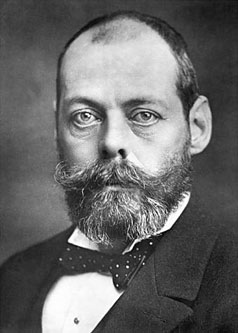
Lord Randolph Churchill
‘No, I can’t accept payment for what I did,’ the Scottish farmer replied waving off the offer. At that moment, the farmer’s own son came to the door of the family hovel.
‘Is that your son?’ the nobleman asked.
‘Yes,’ the farmer replied proudly.
‘I’ll make you a deal. Let me provide him with the level of education my own son will enjoy If the lad is anything like his father, he’ll no doubt grow to be a man we both will be proud of.’ And that he did.

Farmer Fleming’s son attended the very best schools and in time, graduated from St. Mary’s Hospital Medical School in London, and went on to become known throughout the world as the noted Sir Alexander Fleming, the discoverer of Penicillin.
Years afterward, the same nobleman’s son who was saved from the bog was stricken with pneumonia.
What saved his life this time? Penicillin.
The name of the nobleman? Lord Randolph Churchill .. His son’s name?
Sir Winston Churchill.

Sir Winston Churchill.
Someone once said:
What goes around comes around.
Work like you don’t need the money.
Money earning is just for living
Love like you've never been hurt.
Dance like nobody’s watching.
Sing like nobody’s listening.
Live like it’s Heaven on Earth.
Monday, February 14, 2011
This page lists the principal inventions and discoveries of Thomas Edison. A complete list of Edison's patents.
1868
- Invented the electrical vote recorder.
1869
- Invented the universal stock ticker and the unison stop.
1872
- Invented the motograph.
- Invented the automatic telegraph system.
- Invented duplex, quadruplex, sextuplex, and multiplex telegraph systems.
- Invented paraffin paper.
- Invented the carbon rheostat.
1875
- Discovered "Etheric Force," an electric phenomenon that is the foundation of wireless telegraphy.
1876
- Invented the electric pen used for the first mimeographs.
1877
- Invented the carbon telephone transmitter, making telephony commercially practical. This included the microphone used in radio.
1877
- Invented the phonograph. This was Edison's favorite invention. He sponsored the Edison Phonograph Polka to help popularize the new device.
1879
- Discovered incandescent light.
- Radically improved dynamos and generators.
- Discovered a system of distribution, regulation, and measurement of electric current-switches, fuses, sockets, and meters.
1880
- Invented the magnetic ore separator.
1880
- Discovered the "Edison Effect," the fundamental principle of electronics.
1885
- Discovered a system of wireless induction telegraph between moving trains and stations. He also patented similar systems for ship-to-shore use.
1891
- Invented the motion picture camera.
1896
- Invented the fluoroscope.
- Invented the fluorescent electric lamp.
1900
- Invented the nickel-iron-alkaline storage battery.
1914
- Invented the electric safety miner's lamp.
- Discovered the process for manufacturing synthetic carbolic acid.
1915
- Conducted special experiments on more than 40 major war problems for the Navy Department. Edison served as Chairman of the Naval Consulting Board and did much other work on National Defense.
1927-1931
- Tested 17,000 plants for rubber content as a source of rubber in war emergencies. A piece of vulcanized rubber was made from a Goldenrod strain he developed.
Cell Structure and Function
Cell Structure and Function
Organelles and Their FunctionsIn this lab you will look at the eukaryotic cells of plants and animals. Eukaryotic cells are distinguished from the more primitive prokaryotic cells by the presence of 1) cytoplasmic membranous organelles, 2) a nuclear membrane (i.e. a true nucleus), and 3) chromosomal proteins. In this lab we will focus primarily on organelles, their functions within the cell and how they differ between plant and animal cells.
Think of the cell as a microscopic city. Like a real city it requires many services to keep it clean and running smoothly. Think of some of the services a real city needs: traffic control, waste disposal, and authority figure just to name a few. Like our imagined city a cell needs the same services. Organelles are the “workers” that provide these services. The following is a list describing the various functions of some common organelles.
The NUCLEUS (“mayor of city hall”)
The nucleus houses the majority of genetic material of a cell. The nucleus is the “brain” of the cell and controls all activity within the cell. Using DNA as a blueprint(like the blueprints of a city) the nucleus directs the production of proteins. You will learn about this process in the DNA Transcription and Translation lab.
A nucleus with the DNA coiled into chromatin. Electron microscope picture of a nucleus

RIBOSOMES (“lumber or brick yard”)
The ribosomes carry out manual labor in the form of protein synthesis for the nucleus. They bring together all the raw ingredients such as RNA (copies of the original DNA blueprints) and amino acids to assemble proteins. The proteins created are essential to cell and organismal function. Think of proteins as machinery for cell functions much like electricity and plumbing are essential in a real city. For example, enzymes are a type of protein without which life could not exist.
The large and small subunits of ribosomal RNA translating an mRNA strand into a polypeptide chain.
Refer to DNA Transcription and Translation for further reading.

The ENDOPLASMIC RETICULUM (“highways and road systems”)
There are two types of endoplasmic reticulum (ER) – Smooth ER and Rough ER. This extensive network makes up approximately one half of all membranous tissue of the cell and is the site of membrane and protein synthesis. The ER system is much like a road system along which industry can be found. Goods are manufactured and shipped to needed areas via the road system. Rough ER is named for the presence of ribosomes along its membrane and is the source of proteins. Smooth ER lacks ribosomes and is responsible for lipid synthesis and processes a variety of metabolic processes such as drug detoxification.
Can you tell the difference between the smooth and rough ER?

CELL MEMBRANE (“City Border”) and CELL WALL (“City Wall”)
Cell membranes are found in animal cells whereas cell walls are found in plant cells. Cell walls and membranes have similar functions. Like a city perimeter, cell membranes surround the cell and have the ability to regulate entrance and exit of substances, thereby maintaining internal balance. These membranes also protect the inner cell from outside forces. Cell walls, as the city analogy implies, are much stronger than cell membranes and protect cells from lysing (exploding) in extremely hypotonic (diluted) solutions. You will learn more about these concepts in the Biological Membranes lab.
Artist rendition of an animal cell membrane. Artist rendition of a plant cell wall.

CYTOSKELETON (“steel girders”)
The cytoskeleton makes up the internal framework, like the steel girders that are the framework for buildings in a city that gives each cell its distinctive shape and high level of organization. It is important for cell movement and cell division (mitosis).
Picture of a cell’s cytoskeleton- a complex network of tubules and filaments.

CYTOPLASM (“lawns and parks”)
Cytoplasm is a semi-fluid substance (think gelatin) found inside the cell. The cytoplasm encases, cushions and protects the internal organelles. It is the cell landscape found in any space where organelles are not and therefore is much like the lawns and parks of our city.
The cytoplasm is the substance surrounding the visible vacuoles in this cell.

GOLGI APPARATUS (“post office”)
Like a post office, the golgi apparatus is used for shipping those goods created by the ER and ribosomes to the rest of cell.
EM picture of a golgi apparatus Artist rendition of the Golgi Complex

CHLOROPLASTS (“solar energy plant”)
Chloroplasts are organelles found only in plant cells. Like a solar energy plant they use sunlight to create energy for the city. Chloroplasts are the site of photosynthesis a process in which the plant uses carbon dioxide, water and sunlight to create energy in the form of glucose for the plant cell as well as heterotrophs that consume the plant.
Artist rendition of a chloroplast- site of photosynthesis in plant cells.

MITOCHONDRIA (“energy plant”)
Mitochondria are found in both plant and animal cells and is the site of cellular respiration. Through this process that will be covered in the Photosynthesis and Respiration lab ATP is created which is used for energy by the cell.
Electron microscope picture of a mitochondria.

LYSOSOMES (“waste disposal and recycling”)
The lysosomes are digestive sacs that can break down macromolecules in the cell using the process of hydrolysis. The digestion is carried out with lysosomal enzymes found in the lysosome. Like waste disposal in a city, lysosomes help keep excessive or bulky macromolecules from building up in the cell.
Electron microscope picture of a lysosome.

VACUOLES and VESICLES (“warehouses, water towers or garbage dumps”)
Think of these membrane sacs that have a variety of functions as containment units for anything in excess in a city. They can hold many substances from organic molecules to simple excess water. Plant cells have a central vacuole that is important in maintaining plant turgidity. You can read more about this phenomenon in the Biological Membranes Lab.
Central vacuole of a plant cell.

Subscribe to:
Posts (Atom)