Popular Posts

Popular Posts

Pages

Total Pageviews

Saturday, June 9, 2012

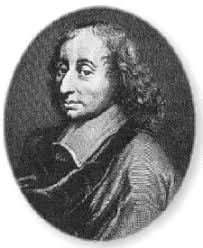
Blaise Pascal Inventions

Blaise Pascal Inventions


Have you ever heard of a child prodigy? Many of these prodigies are well-known for their achievements in such things as music or the arts but it is also possible for a child prodigy to show unusual achievements in the areas of mathematics. This is the case with Blaise Pascal, a French mathematician, philosopher and physicist that lived during the 17th century. Some of his inventions were so far ahead of their time that the concepts are still used today, although they have been improved on over the years. Here are a few Blaise Pascal inventions that you may or may not have heard of.


Since this man was both an inventor and a mathematician, one of his most notable achievements was that of an early calculator. As a matter of fact, this is probably one of the best-known of the Blaise Pascal inventions that are in existence. Known as a Pascaline, it was the second such calculator that was developed. He had a lot of commercial success with this particular calculator and it came in both decimal and non-decimal versions.


Another of the Blaise Pascal inventions that you may be familiar with is the syringe. Although it is not something that we necessarily enjoy getting, every time we receive a shot that is to our benefit we have this man to thank. Actually, the entire concept for the syringe came about as a result of Pascal's principal which states, a change in the pressure of an enclosed incompressible fluid is conveyed undiminished to every part of the fluid and to the surfaces of its container.


Blaise Pascal also used the same concept in order to help invent a hydraulic press. This is one of the Blaise Pascal inventions that is still being used today. Although it was not used in that particular way during his time, the entire concept was rather interesting and although it was used in some ways, its widespread use was not fully realized until the 20th century.

Tuesday, June 5, 2012

Samuel Moprse contribution to science.


791


On April 27, Samuel Finley Breese Morse is born in Charlestown, Massachusetts, the first child of Jedidiah Morse, a Congregational minister and geographer, and Elizabeth Ann Finley Breese.


1799


Morse enters Phillips Academy, Andover, Massachusetts.


1800


Alessandro Volta of Italy creates the "voltaic pile," a battery that produces a reliable, steady current of electricity.


1805


Samuel Morse enters Yale College at age fourteen. He hears lectures on electricity from Benjamin Silliman and Jeremiah Day. While at Yale, he earns money by painting small portraits of friends, classmates, and teachers. A profile goes for one dollar; and a miniature portrait on ivory sells for five dollars.


1810


Samuel Morse graduates from Yale College and returns to Charlestown, Massachusetts. Despite his wishes to be a painter and encouragement from the famed American painter Washington Allston, Morse's parents plan for him to be a bookseller's apprentice. He becomes a clerk for Daniel Mallory, his father's Boston book publisher.


1811


In July, Morse's parents relent and let him set sail for England with Washington Allston. He attends the Royal Academy of Arts in London and receives instruction from the famed Pennsylvania-born painter Benjamin West. In December, Morse rooms with Charles Leslie of Philadelphia, who is also studying painting. They become friends with the poet Samuel Taylor Coleridge. While in England, Morse also befriends the American painter Charles Bird King, the American actor John Howard Payne, and the English painter Benjamin Robert Haydon.


1812


Samuel Morse models a plaster statuette of The Dying Hercules, which wins a gold medal at the Adelphi Society of Arts exhibition in London. His subsequent 6' x 8' painting of The Dying Hercules is exhibited at the Royal Academy and receives critical acclaim.


1815


In October, Samuel Morse returns to the United States and Morse opens an art studio in Boston.


1816


In search of portrait commissions to support himself, Morse travels to New Hampshire. In Concord, he meets Lucretia Pickering Walker, aged sixteen, and they are soon engaged to be married.


1817


While in Charlestown, Samuel Morse and his brother Sidney patent a flexible-piston man-powered water pump for fire engines. They demonstrate it successfully, but it is a commercial failure.


Morse spends the rest of the year painting in Portsmouth, New Hampshire.


1818


On September 29, Lucretia Pickering Walker and Morse are married in Concord, New Hampshire. Morse spends the winter in Charleston, South Carolina, where he receives many portrait commissions. This is the first of four annual trips to Charleston.


1819


On September 2, Morse's first child, Susan Walker Morse, is born. The city of Charleston commissions Morse to paint a portrait of President James Monroe.


1820


The Danish physicist Hans Christian Oersted discovers that electric current in a wire generates a magnetic field that can deflect a compass needle. This property will eventually be used in the design of some electromagnetic telegraph systems.


1821


While living with his family in New Haven, Morse paints such distinguished individuals as Eli Whitney, Yale president Jeremiah Day, and his neighbor Noah Webster. He also paints in Charleston and Washington, D.C.


1822


Samuel Morse invents a marble-cutting machine that can carve three dimensional sculpture in marble or stone. He discovers that it is not patentable because it infringes on an 1820 design by Thomas Blanchard.


Morse finishes an eighteen-month project to paint The House of Representatives, an oversize scene of the Rotunda of the Capitol in Washington, D.C. It contains more than eighty portraits of members of Congress and justices of the Supreme Court, but loses money during its public exhibition.


1823


On March 17, a second child, Charles Walker Morse, is born. Morse opens an art studio in New York City.


1825


The Marquis de Lafayette makes his last visit to the United States. The City of New York commissions Morse to paint a portrait of Lafayette for $1,000. On January 7, a third child, James Edward Finley Morse, is born. On February 7, Morse's wife, Lucretia, dies suddenly at age twenty-five. By the time he is notified and returns home to New Haven, she has already been buried. In November, artists in New York City form a drawing cooperative, the New York Drawing Association, and elect Morse president. It is run by and for artists, and its goals include art instruction.


William Sturgeon invents the electromagnet, which will be a key component of the telegraph.


1826


January in New York, Samuel Morse becomes a founder and first president of the National Academy of Design, which has been established in reaction to the conservative American Academy of Fine Arts. Morse is president on and off for nineteen years. On June 9, his father, Jedidiah Morse, dies.


1827


Morse helps launch the New York Journal of Commerce and publishes Academics of Art.


Professor James Freeman Dana of Columbia College gives a series of lectures on electricity and electromagnetism at the New York Athenaeum, where Morse also lectures. Through their friendship, Morse becomes more familiar with the properties of electricity.


Monday, June 4, 2012

Chopin, a child prodigy

Frédéric Chopin


Composition
428Px-Image-Frederic Chopin Photo Downsampled
Chopin (March 1, 1810 – October 17, 1849) was born in the village of Żelazowa Wola, Duchy of Warsaw, to a Polish mother and French-expatriate father. Hailed in his homeland as a child prodigy, at age twenty Chopin left Poland forever. Young Chopin received his first piano lessons from his older sister Ludwika (Polish for “Louise”) and was subsequently taught by his mother. His musical talent was early apparent, and he gained a reputation in Warsaw as a “second Mozart.” At age seven he was already the author of two polonaises (G minor and B flat major), the first being published in the engraving workshop of Father Cybulski, director of a School of Organists and one of the few music publishers in Poland. The prodigy was featured in Warsaw newspapers, and “little Chopin” became an attraction in the capital’s aristocratic salons. He also began giving public charity concerts. He is said to once have been asked what he thought the audience liked best; the witty seven-year-old replied, “My shirt collar.” He first appeared publicly as a pianist when he was eight.

Sunday, June 3, 2012

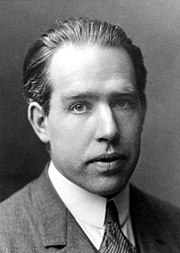
Niels Henrik David Bohr...Contribution to Physics and Chemistry.

Niels Bohr


Born Niels Henrik David Bohr


7 October 1885


Copenhagen, Denmark


Died 18 November 1962 (aged 77)


Copenhagen, Denmark


University of Manchester


Bohr model


Notable awards Nobel Prize in Physics (1922)


Franklin Medal (1926)


Signature......

Contributions to Physics and Chemistry

The Bohr model of the atom, the theory that electrons travel in discrete orbits around the atom's nucleus.


The shell model of the atom, where the chemical properties of an element are determined by the electrons in the outermost orbit.


The correspondence principle, the basic tool of Old quantum theory.


The liquid drop model of the atomic nucleus.


Identified the isotope of uranium that was responsible for slow-neutron fission – 235U.[26]


Much work on the Copenhagen interpretation of quantum mechanics.


The principle of complementarity: that items could be separately analyzed as having several contradictory properties.

Friday, June 1, 2012

Cyrus Field..Keading investor in the Transatlantic Cable


The First Cable


The manufacture of the cable started in early 1857 and was completed in June. Before the end of July it was stowed on the American Niagara and the British Agamemnon -- both naval vessels lent by their respective governments for the task. They started at Valentia Harbor in Ireland (which was by then connected to the rest of the British Isles) on 5 August. For the first few days, everything went well but six days later, due to a mistake made with the brake which limited the rate of descent, the cable snapped. Just 380 miles had been laid.


The ships were forced to return to port. An extra 700 miles of cable was made for the second attempt which began on 25 June 1858. This time the same two ships met each other in mid-Atlantic where they joined their respective ends. The cable broke almost immediately. Again the two ships made another splice: this time they managed 40 miles before it broke again. The fourth time they had laid 146 miles before the cable was lost yet again. It was clear that this was not going to be easy!


The two ships returned to Ireland but it was decided that, despite the loss of a considerable amount of cable, they still had enough for a further attempt. On 29 July they made their fifth attempt, again starting from the mid point. This time it worked! On 5 August 1858 both ships reached their destinations -- Valentia Harbor in Ireland and Trinity Bay in Newfoundland. The two continents were joined.


On 16 August communication was established with the message "Glory to God in the highest, and on earth, peace, good will to men." Unfortunately the engineer in charge, Wildman Whitehouse, started by applying very high voltages rather than the very weak currents that had been tested during the cable laying. Within three weeks the damage inflicted on the cable by the high voltages was becoming apparent and it ceased to work.

Customers at the New York offices of the Atlantic Telegraph Company in 1866 (top); making a cable splice aboard the Great Eastern as it lays off Valencia harbor in Ireland (bottom).


The Second Cable


It took several years before another attempt was made. This time a single ship was chartered, the enormous Great Eastern, by far the largest ship of its day. She started from Valencia at the end of July 1865 and succeeded in laying 1,200 miles before the cable snapped. Several attempts were made to retrieve the broken end but they all failed.


Bringing the cable ashore at Heart’s Content. Reaching for the looped end is Samuel


Canning, Chief Engineer. The man with the binoculars is Third Time LuckyBringing the cable ashore at Heart’s Content. Reaching for the looped end is Samuel


Again more cable was manufactured for the same company which had raised a further $2,500,000. Not only did the Great Eastern carry cable enough for a complete crossing but extra cable to finish the cable that had been lost the previous year -- if the end could be found.

After so many failed attempts, the final, successful, cable was laid with virtually no problems. On 27 July 1866, the cable was pulled ashore at a tiny fishing village in Newfoundland known by the charming name of Heart’s Content. The distance was 1686 nautical miles. The Great Eastern had averaged 120 miles a day while paying out the cable.

The first message sent on this, finally successful, cable was: "A treaty of peace has been signed between Austria and Prussia". Queen Victoria, then at Osborne, in the Isle of Wight, sent a message to the President of the United States. "The Queen congratulates the President on the successful completion of an undertaking which she hopes may serve as an additional bond of Union between the United States and England."

This was received in Newfoundland almost immediately but there was still a gap in the link to the mainland of North America and messages from London to New York still took 24 hours because of this gap. However, this did not concern people at the time who were amazed at the rapid news that was now possible.

Almost immediately the Great Eastern steamed east to the point that the second cable had reached and after about two weeks of trying, they found and raised the broken end. This was no mean feat as the broken cable was at a depth of 16,000 feet. The broken end was spliced and on 8 September the second completed cable was landed.

Contemporary accounts tell of the fascination of the operators that messages would actually be received hours before they were sent (due to the time zone difference at the two ends of the cable). Due to the time taken for ships to cross the Atlantic, people did not think much about the time difference -- the cable brought it home to them with a start.

Almost immediately, the cable opened for business but only the very wealthy could afford it -- the initial rates were a startling $1 a letter, payable in gold - at a time that a monthly wage for a laborer might be $20.

As with the overland cables, undersea cables were laid rapidly. Within 20 years there were 107,000 miles of undersea cables linking all parts of the world. The original two cables ceased to work in 1872 and 1877 but by this time four other cables were in operation. It is interesting to note that even though later cables could carry large numbers of signals at the same time, it was not until the 1960s that the first communication satellites offered a serious alternative to the cable.


Canning, Chief Engineer. The man with the binoculars is Cyrus W. Field, a leading


investor and motivator of the project. The Great Eastern is shown in the background.

Painting by Rex Woods, reproduced courtesy of Rogers Cantel.
 Third Time Lucky


Again more cable was manufactured for the same company which had raised a further $2,500,000. Not only did the Great Eastern carry cable enough for a complete crossing but extra cable to finish the cable that had been lost the previous year -- if the end could be found.


After so many failed attempts, the final, successful, cable was laid with virtually no problems. On 27 July 1866, the cable was pulled ashore at a tiny fishing village in Newfoundland known by the charming name of Heart’s Content. The distance was 1686 nautical miles. The Great Eastern had averaged 120 miles a day while paying out the cable.


The first message sent on this, finally successful, cable was: "A treaty of peace has been signed between Austria and Prussia". Queen Victoria, then at Osborne, in the Isle of Wight, sent a message to the President of the United States. "The Queen congratulates the President on the successful completion of an undertaking which she hopes may serve as an additional bond of Union between the United States and England."


This was received in Newfoundland almost immediately but there was still a gap in the link to the mainland of North America and messages from London to New York still took 24 hours because of this gap. However, this did not concern people at the time who were amazed at the rapid news that was now possible.


Almost immediately the Great Eastern steamed east to the point that the second cable had reached and after about two weeks of trying, they found and raised the broken end. This was no mean feat as the broken cable was at a depth of 16,000 feet. The broken end was spliced and on 8 September the second completed cable was landed.


Contemporary accounts tell of the fascination of the operators that messages would actually be received hours before they were sent (due to the time zone difference at the two ends of the cable). Due to the time taken for ships to cross the Atlantic, people did not think much about the time difference -- the cable brought it home to them with a start.


Almost immediately, the cable opened for business but only the very wealthy could afford it -- the initial rates were a startling $1 a letter, payable in gold - at a time that a monthly wage for a laborer might be $20.


As with the overland cables, undersea cables were laid rapidly. Within 20 years there were 107,000 miles of undersea cables linking all parts of the world. The original two cables ceased to work in 1872 and 1877 but by this time four other cables were in operation. It is interesting to note that even though later cables could carry large numbers of signals at the same time, it was not until the 1960s that the first communication satellites offered a serious alternative to the cable.


Tuesday, May 29, 2012

Contribution of Sir Issac Newton to science.

Isaac Newton
Overview


Isaac Newton is considered by many to be the father of modern physics. He invented calculus, and with calculus in hand, people could now create mathematical models of changing systems. His three laws of motion and his law of gravitation, however, are still one of the first things that all physics students learn, and are the basis behind a lot of physics that is done today.


Although Newton made many very important contributions to the world of science, the most important to astronomy were his laws of motion and law of gravity.


Laws of Motion


Newton's Laws of Motion are still used by physicists all over the world. Newtonian Physics is taught in many courses at the college level, as well as high school and middle school. Everything in that genre of physics is based upon these three laws:


Every object has uniform motion unless acted upon by a force.


The force applied to an object is equal to the object's mass times the resulting acceleration: F=m*a


For every action, there is an equal and opposite reaction.


These laws are used to describe everything from throwing a ball to the merging of galaxies. Even though it has been shown through people like Albert Einstein that Newton's Laws are really approximations, they work so well on a wide range of scales, that they are still used in lieu of the better laws. For example, you would use Newtonian Mechanics to describe the acceleration of a car, not Einstein's General Relativity.


Law of Gravity


Newton's Law of Gravity is not precise in extreme circumstances, such as very high velocities or very strong gravity. For cases such as these, Einstein's General and Special Relativity theories are needed. However, in most other cases, and especially those that we are familiar with on Earth, Newton's Law works extremely well.


It is based upon his laws of motion, and it shows how two objects exhibit a force upon the other. It is the equation to the right.


It says that the gravitational force experienced is equal to a gravitational constant times both masses divided by the distance between them squared. The value "G" is an extremely small number, and therefore the gravitational force is extremely weak - the weakest of the four fundamental forces. This law also shows that the force of gravity dies off with the square of the distance. This means that if you are twice as far away from something, then the gravitational force you experience is 1/4 as much.


Monday, May 28, 2012

Inventions of Galleo.

List of Galileo's Inventions thumbnail

Introduction to Galleo


Galileo Galilei, who lived from 1564 to 1642, is considered one of the founders of modern geometry and physics. Although he developed many important scientific theories and made many critical observations of the solar system, he is not credited with many original inventions. He did contribute to many inventions and improve upon many others.

Heliocentric Model of the Solar System


One of Galileo's most famous "inventions" was his confirmation that the sun is the center of our solar system, a theory first put forward by Nicolaus Copernicus. Galileo confirmed the theory partly through his observation of the phases of the planet Venus as it reflected light from the sun while orbiting the star. This was revolutionary at the time because most of the world still believed Earth was the center of the universe. The Catholic Church arrested Galileo as a heretic for this.


The Telescope


Although the telescope was invented in 1608 by Dutchman Hans Lippershey, Galileo built his own in 1609, without ever having seen Lippershey's, and he improved it over time from 3X magnification to about 30X. He built his first telescope based on descriptions he had heard. He was the first to use a telescope to observe the heavens.


Actual Inventions


In 1597, Galileo invented a geometric compass, a scientific instrument with two arms that can be used for making calculations and geometric measurements. Galileo also is credited with inventing a microscope with two lenses at either end of a hollow tube.


Contributions to Other Inventions


Galileo also contributed to the invention of several other pieces of technology for which there is no acknowledged single inventor. For instance, in he built an early thermometer in the 1590s, which used the expansion and compression of air to lift and lower water in a tube.


Sunday, May 27, 2012

Invention of the coffee filter

Coffee History: Melitta Bentz, Inventor of the Paper Filter

20110411-melitta-500.jpg
Of all the mad geniuses we have to thank for several centuries' worth of coffee-technology advancement, perhaps the person the vast majority of us owe the most gratitude to is a rather unlikely candidate: A housewife from Dresden, Germany. Specifically, the very enterprising (if maybe a little frumpy), apfelstrudel-baking mother of two Melitta Bentz, inventor of the paper filter.


As with most so-simple-it's-brilliant innovations, Bentz's invention was born out of irritation and annoyance. Fed up with the alternatives—such as having to constantly wring out stain-ridden cloth filters, or scrape coffee sludge off the bottom of unfiltered coffee pots—Bentz devised a simple (and, hallelujah, easily disposable!) filtration system by laying a regular old piece of paper over the perforated bottom of a brass pot. The result was a clean cup—and a relatively clean brewer, which of course would please any overextended housewife.

Within two years, she'd filed a patent on the design (formalized in 1908) and set up shop with her husband and sons, cranking out filters for caffeine-craving Germans. By the 1930s, the filter's original design had changed rather drastically, morphing from the flat-bottomed metal unit into a cone-shaped ceramic piece, with the unmistakable triangular-folded paper filter we know today.

20110411-other-cones-500.jpg


While the company that bears Melitta's name is still a leader in drip-cone manufacturing, coffee-loving geeks, designers, and professionals all over the world have followed our gal's lead by making tweaks to Bentz's initial concept and striving for the perfect filter brew. Japanese companies like Beehouse and Bonmac are ahead of the pack, and fanatical pour-over-loving baristas will argue with blue faces about the best methods for extracting coffee using this or that brewer. ("Pour the water slowly." "No, all at once!" "It has to be added in a slow circle, moving from the middle outward, in a clockwise rotation." "No, counterclockwise!" And so on, ad nauseum.)


So the next time you blearily reach for a paper filter, anxious to get the lifeblood flowing with that first morning cup, don't forget to pour a little of the finished brew out for one solid dame we all owe a debt to: Good ol' Melitta Bentz.


Saturday, May 26, 2012

How does an instant camera work?

Cool Camera Stuff Image Gallery
With instant-film photography, you can watch the image slowly come together in a matter of minutes. See more pictures of cool camera stuff.

Instant camera film is remarkable because it has its own built-in developing studio. To understand how this works, you need to understand the basics of traditional photographic film. Film is a plastic base coated with particles of silver compound that are sensitive to light. Black-and-white film has one layer of silver compound, while color film has three layers -- the top layer is sensitive to blue light, the next layer is sensitive to green and the bottom layer is sensitive to red. When you expose the film, the sensitive grains at each layer react to light of that color, forming metallic silver at that layer. This gives you a chemical record of the light and color pattern.


To turn this into a picture, you have to develop the film. One developer chemical turns the exposed particles into metallic silver. The film is then treated with three different dye developers containing dye couplers. The three dye colors are cyan (a combination of green and blue light), magenta (a combination of red and blue light) and yellow (a combination of green and red light).


Each of these dye coupler types react with one of the color layers in the film. In ordinary print film, the dye couplers attach to particles that have been exposed. In color slide film, the dye couplers attach to the non-exposed areas. Developed color film has a negative image -- the colors appear opposite of the colors in the original scene. In slide film, the two dyes that attach to the unexposed area combine to form the color captured at the exposed layer. For example, if the green layer is exposed, yellow and cyan dye will attach on either side of the green layer, but the magenta dye will not attach at the green layer. The yellow and cyan combine to form green.


The instant camera developing process combines colors the same basic way as slide film. It has the same layers of light-sensitive grains as traditional film, all arranged on a plastic sheet. The film also contains several additional layers, however. These layers contain all the necessary chemicals for the development process. Underneath each color layer, there is a developer layer containing dye couplers. All these layers sit on top of a black base layer, and underneath the image layer, timing layer and acid layer. This arrangement is essentially a chemical chain reaction waiting to be set in motion.


See how instant camera film develops on the next page. ­

Instant camera film has the entire developing process arranged in chemical layers. When the reagent enters above the light sensitive layers, it gets the process going.
With instant-film photography, you can watch the image slowly come together in a matter of minutes.
How Instant Film Develops


The component that gets the developing process going is the reagent (as in re-agent), a mix of opacifiers, alkali, white pigment and other elements. The reagent sits in a layer just above the light-sensitive layers and just below the image layer. Before you take the picture, the reagent material is all collected in a blob at the border of the plastic sheet, away from the light-sensitive material. This keeps the film from developing before it has been exposed.


After you snap the picture, the film sheet passes out of the camera, through a pair of rollers. The rollers spread the reagent material out into the middle of the film sheet, just like a rolling pin spreading out dough. When the reagent is spread in between the image layer and the light-sensitive layers, it reacts with the other chemical layers in the film. The opacifier material stops light from filtering onto the layers below, so the film isn't fully exposed before it is developed.


The reagent chemicals move downward through the laye­rs, changing the exposed particles in each layer into metallic silver. The chemicals then dissolve the developer dye so it begins to diffuse up toward the image layer. The metallic silver areas at each layer -- the grains that were exposed to light -- grab the dyes so they stop moving up. Only the dyes from the unexposed layers will move up to the image layer. For example, if the green layer was exposed, no magenta dye will make it to the image layer, but cyan and yellow will. These colors combine to create a translucent green film on the image surface. Light reflecting off the white pigment in the reagent shines through these color layers, the same way light from a bulb shines through a slide.


Instant camera film has the entire developing process arranged in chemical layers. When the reagent enters above the light sensitive layers, it gets the process going.


At the same time these reagent chemicals are working down through the light sensitive layers, other reagent chemicals are working through the upper film layers. The ac­id layer in the film reacts with the alkali and opacifiers in the reagent, making the opacifiers become clear. This lets you see the image below. The timing layer slows the reagent down on its path to the acid layer, to give the film time to develop before it is exposed to light.


When you watch the image in a photo film come into view, you're actually seeing this final chemical reaction. The image is already developed underneath -- you're just watching the acid layer clear up the opacifiers in the reagent so the image becomes visible.


Friday, May 25, 2012

Production of a daily newspaper...Steps

The Editorial Process


The process of producing a daily edition of a large city newspaper begins with a meeting of the paper's editors, who determine the amount of editorial copy in an issue based on the advertising space that has already been sold. A specific number of pages is agreed upon, and the editorial assignments are made to the various departments. The section of national and international news, generally the first part of the paper, is compiled from correspondents who send in their stories electronically, usually via computer modern, to their editor's computer. There, the editor checks the stories, sometimes rewriting them or increasing or decreasing their length. Additional stories of importance are compiled from wire services such as United Press International, Associated Press, and Reuters. These are organizations that employ reporters in various cities of the globe to compile stories and items quickly for dissemination over telephone wires.

Holding a sign stating "We're Printers, by gravy," these young men had their photograph taken in the mid-1890s, possibly to commemorate the end of their apprenticeships. (From the collections of Henry Ford Museum & Greenfield Village.)


Holding a sign stating "We're Printers, by gravy," these young men had their photograph taken in the mid-1890s, possibly to commemorate the end of their apprenticeships.


(From the collections of Henry Ford Museum & Greenfield Village.)


Timeliness is of the essence in the newspaper business. Even 150 years ago, New York City publishers would have messengers waiting to meet ships coming from Europe. The messengers would grab the latest dispatches, newspapers, and even novels and race to the printing office. There, rows of compositors would be poised to work all night setting type so that the next afternoon's newspaper could contain European news only two weeks old or the first chapters of a novel published months ago.


With the coming of the telegraph to the western parts of the U.S. in the mid-19th century, editors commonly kept one or two compositors late into the night ready to set stories that came in from the East by telegraph. The dots and dashes of the telegraph message, often consisting of just key words and phrases, were hastily transcribed by the telegrapher and given directly to the typesetters. Compositors were skilled enough to decipher the telegrapher's scribbles, compose full sentences while setting type (letter by letter) by hand, and complete the entire story by deadline.


The Linotype machine, developed in the 1880s, combined the processes of composing text, casting type, and redistributing the type molds. By working a keyboard, the Linotype operator assembled molds, or matrices, of letters, numbers, or punctuation marks in sequence. The matrices were then mechanically held in place while molten type metal was forced into them, creating a line of type ("lin' o' type"). The individual matrices were automatically replaced in the machine's magazine for reuse.


The Linotype increased the speed of a typesetter fourfold. This allowed editors to cut labor costs while getting all the latest news. The machine cost hundreds of compositors their jobs and added to the intensity and pace of the work.


William S. Pretzer


For a typical, newsbreaking story of local origin, the process begins with a correspondent submitting a report, either in person or via computer modern, to the "rewrite" desk person. The rewrite journalist fine-tunes the wording of the story and makes sure it answers the six important questions: who, what, where, when, why, and how. He or she then sends it over to the computer at the city desk. The city desk editor, who is responsible for the paper's local content, looks over the story, makes additional changes if necessary, and sends it over to the news desk. The news editor, who makes the final call about which stories to run in the upcoming edition based on their relevance, may make further changes before submitting the piece to the copydesk. The story arrives there with guidelines for length as well as headline instructions regarding size and type.


From this point, the story is set to be inserted on a certain page that has already been roughly laid out by both the news editor and a makeup editor. A mock-up of the page, essentially a blank form showing where the stories will run and where pictures and advertising will be inserted, is called the "dummy." The makeup editor has already met with the advertising department to determine how such pages will be laid out with ad space. The dummy has rough notes for headlines, story insertions, and graphic elements such as photos and tables of statistics. It also shows the date of the edition as well as a page and section number. After the news editor has determined the placement of the story on the page in question—as well as the other items set to run there—the dummy is sent on to a composing room.


The Manufacturing


Process


Typesetting


1 The composing room receives the story in an electronic format, with the computer text file already translated with typeset codes. In a typeset file, the characters are of the same "type"—style, size, and width—as they appear on the pages of the newspaper. The setting of stories into the type that a reader sees went unchanged for several decades until the latter years of the 20th century. Well into the 1800s, type was set by hand, letter by letter. A typesetter dropped small metal letters into a hand-held tray called a "stick." The invention of the Linotype machine in 1884 made possible a quicker, more efficient method of typesetting. Invented by German immigrant Ottmar Mergenthaler of Baltimore, Maryland, this large, cumbersome machine worked by casting hot lead into a line of type with the assistance of an operator who typed in the copy on a keyboard. Individual lines of type were then placed by hand onto a page form. When a page was completed, it was then sent to a stereotyping room where a curved metal plate was made from the page form. The page form was then placed on the printing press.


Modern technology has replaced the Linotype process through a method called phototypesetting. The first step in this process is the transfer of the dummy to the page layout section of the newspaper. There, an operator transfers the instructions on the dummy into a rough page prototype. A printed version may be looked over and adjusted several times by one of the reporters whose story is featured as well as by the copy editor. If another breaking story comes in, this page layout can be altered in a matter of minutes.


Image transference


2 The final version of the page is then approved by the editor on duty—sometimes a night editor in the case of a paper that is slated for a morning edition—and sent over to a process department. There, the page is taken in its computer format and transferred via laser beams onto film in an image setter apparatus. The operator then takes the film to a processor in another section of the paper, who develops it and adjusts it for its final look. Photographs are scanned into another computer terminal and inserted into the page layout. The pages that are set to be printed together are then taped down onto a device called a "stripper," and an editor checks them over once more for errors. The strippers are then put into frames on light-sensitive film, and the image of each page is burned onto the film. The film of each page is inserted into a laser reader, a large facsimile machine that scans the page and digitally transfers the images to the printing center of the newspaper.


At the printing center, typically a large plant separate from the newspaper's editorial offices and centrally located to facilitate
Newspaper


citywide distribution, the pages arrive at the laser room and are put through a laser writer, another scanning device that makes a negative image of them. In the negative image of the page, the text is white while the blank spaces are black. The final images of each page are further adjusted. This last-minute adjustment may involve fine-tuning of the colored sections and retouching photographs.


Platemaking


3 From these negatives, the forms from which the paper will be printed are composed in a platemaking room. The film of the page, usually done two pages at a time, is then placed on a lighted box. Next, an aluminum plate containing a light-sensitive coating is placed on top of the image of the pages. The light box is then switched on, and ultraviolet light develops the image of the pages onto the aluminum plate. The aluminum plate is then bent at the edges so that it will fit into a press, and is fitted onto plate cylinders.


Printing


4 The aluminum plates of each page next move on to the actual printing press, an enormous machine often two stories high. When the press is running, the noise in the building is deafening and employees must wear earplugs. The most common method of printing newspapers is called web offset. The "web" refers to the large sheets of blank newsprint that are inserted in rolls, sometimes weighing over a ton, into the actual printing press. The reels of newsprint are loaded in at the bottom floor of the press. The rolls are inserted onto a reel

Newspaper


stand, which has three components: the first reel brings a roll of paper up to the press, a second is loaded and ready to replace the first roll when it runs out, and a third reel stays empty and ready to be fed with another when the first reel is almost finished. Each roll of blank newsprint has double-sided tape at its edges, so that when one roll runs out in the press, another smoothly takes up where the other left off without interrupting the printing process.


The plate cylinders then press the image of the page onto a blanket cylinder, leaving a version of the page's image on the cylinder's soft material. When the paper runs through the press, the blanket cylinder presses the image onto it. The chemical reaction of the ink, which contains oil, and the squirting of jets of water into the process result in the actual newspaper page of black or colored images on a white back-ground. Since oil and water do not mix, the areas where ink should adhere to the page are black or colored, and water washes away the parts where ink is not needed. This is why this printing process is referred to as "offset."


Next, the large sheets of printed newsprint move on to another large piece of machinery called a folder. There, the pages are cut individually and folded in order. This entire printing process can move as fast as 60,000 copies per hour. Quality control technicians and supervisors take random copies and scan them for printing malfunctions in color, order, and readability. Next, a conveyer belt moves the papers into a mail room section of the plant, where they are stacked into quires, or bundles of 24. The quires then move to another section where a machine wraps them in plastic. The bundles are now ready to be loaded onto delivery trucks for distribution.


The Future


The demise of the printed word, especially in the form of a daily newspaper, is periodically predicted to be imminent by industry analysts. The growth of other news sources —such as radio and 24-hour television news stations—has helped diminish the impact of newspapers, but the competition between dailies in many cities has forced many of the weaker, less financially-viable newspapers out of business. In many cities, joint-operating agreements—by which two competing papers share business, advertising, and printing departments—has helped to keep two editorially distinct papers afloat.


Bypassing the printed newspaper altogether, on-line computer technology has enabled consumers to pick and choose news from among their own specific interests on the information superhighway. One site on the Internet, one of the most popular providers of access to on-line information, allows a person to create his or her own newspaper. A menu appears onscreen, and the user selects stories from wire services, as well as entertainment features and cartoons, and inserts them onto a template. This template can be generated on a daily basis with a few keystrokes, producing an edition of a customized newspaper almost instantly.