Popular Posts

Popular Posts

Pages

Total Pageviews

Tuesday, April 24, 2012

Medicinal uses of Lemon

Good info on using the whole lemon vs. only the juice... Lemon productions became more and more abundant around the world because of its nutritious contents. Lemons are used in many different ways in lemon industries and factories, but not among households. How do you eat or taste lemon in your house?*


Probably, you do not know how to apply lemon the right away. Do you just squish a few drips to your vegetable salad, bread, ice cream, ,cake, fruit drinks, or to your other favorable dishes?** If so, what a waste! *** Here, I'll tell you the real use of lemon***I'm sure you know how nutritious a lemon is. **But you may only know how To use it as a simple seasoning, as most people do, and not as a side dish. You think that only the squished juice from lemon is used, while the lemon peel is thrown away. Yes, you think that you only need that sour, citrus taste of the lemon's juice, is that right? *However*, we found out that many professionals in restaurants and eateries are using or consuming the entire lemon and nothing is wasted. How can you use the whole lemon without waste?


Simple...place the lemon in the freezer section of your refrigerator. Once the lemon is frozen, get your grater, and shred the whole lemon (no need to peel it) and sprinkle it on top of your foods. Sprinkle it to your vegetable salad, ice cream, vegetable soup, curry soup, noodles, spaghetti sauce, rice, etc. It doesn't matter whether it's a Chinese dish, Italian dish, French dish, African, Indian, Japanese, Korean, or Latin American dishes, you just name it. All of these foods will unexpectedly have wonderful taste, something that you may have never tasted before in your life. You don't believe me? Just try it and you will agree with me. Everything will certainly taste great! Most likely, you only think of lemon juice and vitamin C. Not anymore. Now that you've learned this lemon secret, you can use lemon even in instant cup noodles What's the major advantage of using the whole lemon other than preventing waste and adding new taste to your dishes?*


Well, you see lemon peels contain as much as 5 to 10 times more Vitamins han the lemon juice itself. And yes, that's what you've been wasting.


But from now on, by following this simple procedure of freezing the whole lemon, then grating it on top of your dishes, you can consume all of those nutrients and get even healthier..


The lemon peel is good in making you slim if you are a fat person, or makes you healthy fat if you are skinny.


It is very good that the PYRO-ENERGEN < http://www.pyroenergen.com/about.htm> is also for the taste of all people. It's also good that lemon peels are health rejuvenators in eradicating toxic elements in the body.


So place your lemon in your freezer, and then grate it on your meal every day. It is a key to make your foods tastier and you get to live healthier and longer! That's the lemon secret!*


Better late than NEVER!* The surprising benefits of lemon!


This is the latest in medicine, effective for cancer Lemon *(Citrus*) is a miraculous product to kill cancer cells. It is 10,000 times stronger than chemotherapy.** Why do we not know about that? Because there are laboratories interested in making a synthetic version that will bring them huge profits. You can now help a friend in need by letting him/her know that lemon juice is beneficial in preventing the disease. Its taste is pleasant and it does not produce the horrific effects of chemotherapy.


How many people will die while this closely guarded secret is kept, so as not to jeopardize the beneficial multimillionaires large corporations? As you know, the lemon tree is known for its varieties of lemons and limes. You can eat the fruit in different ways: you can eat the pulp, juice press, prepare drinks, sorbets, pastries, etc... It is credited with many virtues, but the most interesting is the effect it produces on cysts and tumors. This plant is a proven remedy against cancers of all types. Some say it is very useful in all variants of cancer. It is considered also as an anti microbial spectrum against bacterial infections and fungi, effective against internal parasites and worms, it regulates blood pressure which is too high and an antidepressant, combats stress and nervous disorders.


The source of this information is fascinating: it comes from one of the largest drug manufacturers in the world, says that after more than 20 laboratory tests since 1970, the extracts revealed that: It destroys the malignant cells in 12 cancers, including colon, breast, prostate, lung and pancreas ... The compounds of this tree showed10,000 times better than the product Adriamycin, a drug normally used chemotherapeutic in the world, slowing the growth of cancer cells. And what is even more astonishing: this type of therapy with lemon extract only destroys malignant cancer cells and it does not affect healthy cells. Institute of Health Sciences, 819 N.L.L.C. Cause Street, Baltimore, MD1201.


"Live , Love And Laugh"


Sunday, April 22, 2012

Eccentric Inventors in Medicine.

Some of the greatest advances in medicine were spearheaded by some of the most eccentric characters.
wells
Horace Wells (1815-1848) (Invetor of anaesthsia)


Wells was an American dentist with a dislike for inflicting pain on his patients. His flash of genius occurred at a travelling show where he observed an audience member injure their leg while under the influence of laughing gas (nitrous oxide). Wells noted that the person experienced no pain and realised that this gas might also bring to an end the pain of dental surgery.


In his first experiment he took the gas himself for his own tooth extraction and subsequently used it on a number of patients. A month later he staged his first public demonstration but unfortunately the patient was not sufficiently anaesthetised and cried out in pain when the tooth was extracted. The audience were not impressed and booed Wells from the stage. After some time promoting his work in France Wells returned to the USA and continued researching anaesthetics. Unfortunately on one occasion whilst taking chloroform he became deranged and threw acid over two prostitutes, later committing suicide once he realised what he had done
James Barry (1792-1865)
barry
 
Barry was a surgeon with the British Army and an early pioneer of the caesarean section. History suggests that Barry was actually a woman, born Margaret Ann Bulkley. Barry is likely to have been the first British female doctor.


She is alleged to have hidden her sex to allow her to follow her chosen career in medicine. It was only following her death that her true identity was discovered when underneath her gentlemen's garments was the body of a women.
 
 
Christiaan Barnard (1922-2001)
barnard
 
Known as the "film star surgeon" Barnard became an overnight celebrity when he performed the first human heart transplant in 1967. Always pushing the boundaries of possibility, he also transplanted primate hearts into humans on two occasions (one from a baboon and one from a chimpanzee).


His private life resembled that of a modern celebrity with rumours of numerous affairs with famous women. He married three times, twice to fashion models - the final time to a girl young enough to be his granddaughter.
 
 
Werner Forssmann (1904-1979)
forssman
 
Forssmann eventually became a urologist but in his earlier career he made his name by pushing catheters into places other than the urethra. His defining experiment was in 1929 when he inserted a catheter 65cm into his own cephalic vein before calmly walking up two flights of stairs to have an X-ray taken showing the tip in his right atrium. He published his feat along with suggestions for its use. However not everybody was impressed, and following disciplinary action for his self-experimentation he quit cardiology and pursued a career in urology. His work was eventually followed up and in 1956 he was awarded a Nobel Prize.

Microwwave oven

The Microwave Oven


The microwave oven, aka the "Popcorn and Hot Pockets Warmer," was a happy accident that came from, of all things, a weapons program.


Percy LeBaron Spencer was a self-educated engineer working on radar technology in the years following WWII. The technology in question was the sci-fi sounding magnetron, a piece of machinery capable of firing high intensity beams of radiation.


Apparently, P.L.S., as some have called him, had a bit of a sweet tooth. Or a strange fetish. Either way, he had a candy bar in his pants while he was in the lab one day. The self-proclaimed engineer noticed that the chocolate bar had melted when he was working with the magnetron.


Spencer disregarded the simple idea that his body heat had melted the chocolate in favor of the less logical and therefore more scientific conclusion that invisible rays of radiation had "cooked it" somehow.


A sane man would stop at this point and realize these magical heat rays were landing just inches from his tender scrotum. Indeed, most of the military experts on hand probably dreamed of the battlefield applications of their new Dick-Melting Ray. But like all men of science, Spencer was fascinated and treated his discovery like a novelty. He used it to make eggs explode and pop kernels of corn ("Imagine, a future where a building full of workers in cubicles eat this all day!")


Spencer continued to experiment with the magnetron until he boxed it in and marketed it as a new way to cook food. The initial version of the microwave was roughly six feet tall, weighed in around 750 pounds and had to be cooled with water. But they got it down to size, and today we use it mostly to destroy random objects on YouTube.


Saturday, April 21, 2012

The first ships.

WHO INVENTED THE FIRST SHIP?


THE FIRST SHIP WAS INVENTED BY THE EGYPTIANS


Ancient Egypt was a civilization in eastern North Africa, concentrated along the middle to lower reaches of the Nile River in what is now the modern nation of Egypt. The civilization began around 3150 BC with the political unification of Upper and Lower Egypt under the first pharaoh, and it developed over the next three millennia. Its history occurred in a series of stable periods, known as kingdoms, separated by periods of relative instability known as Intermediate Periods. After the end of the last kingdom, known as the New Kingdom, the civilization of ancient Egypt entered a period of slow, steady decline, during which Egypt was conquered by a succession of foreign powers. The rule of the pharaohs officially ended in 31 BC when the early Roman Empire conquered Egypt and made it a province.


The civilization of ancient Egypt thrived from its adaptation to the conditions of the Nile River Valley. Controlled irrigation of the fertile valley produced surplus crops, which fueled social development and culture. With resources to spare, the administration sponsored mineral exploitation of the valley and surrounding desert regions, the early development of an independent writing system, the organization of collective construction and agricultural projects, trade with surrounding regions, and a military that defeated foreign enemies and asserted Egyptian dominance. Motivating and organizing these activities was a bureaucracy of elite scribes, religious leaders, and administrators under the control of a divine pharaoh who ensured the cooperation and unity of the Egyptian people through an elaborate system of religious beliefs.


The many achievements of the ancient Egyptians included a system of mathematics, quarrying, surveying and construction techniques that facilitated the building of monumental pyramids, ships, temples, obelisks, faience and glass technology, a practical and effective system of medicine, new forms of literature, irrigation systems and agricultural production techniques, and the earliest known peace treaty. Egypt left a lasting legacy: art and architecture were copied and antiquities paraded around the world, and monumental ruins have inspired the imaginations of tourists and writers for centuries. A newfound respect for antiquities and excavations in the early modern period led to the scientific investigation of Egyptian civilization and a greater appreciation of its cultural legacy for Egypt and the world.


Maritime artist Ken Hendrickson's image of Virginia leaving the Kennebec River


Friday, April 20, 2012

Invention of the steam engine..Star of the INDUSTRIAL REVOLUTION.

Steam Engine Invented


In 1769 James Watt took out a patent on a steam engine making use of a separate condenser. James Watt's improved steam engine transformed previously designed steam engines, which had hardly changed for fifty years, into a source of power that transformed the world of work, and was the key innovation that brought forth the Industrial Revolution. The contributions made by Watt were of such significance that he is frequently referred to as the inventor of the steam engine.

Steam Engine


The importance of the steam engine invention can hardly be underestimated--it gave us the modern world. A key feature of it was that it brought the engine out of the remote coal fields into factories where many mechanics, engineers, and even tinkerers were exposed to its virtues and limitations. It was a platform for generations of inventive men to improve. It was clear to many that higher pressures produced in improved boilers would produce engines having even higher efficiency, and would lead to the revolution first in transportation that was soon embodied in the locomotive and steamboat and later to the farm field and the Traction Steam Engine. Steam Engine Invented


In 1769 James Watt took out a patent on a steam engine making use of a separate condenser. James Watt's improved steam engine transformed previously designed steam engines, which had hardly changed for fifty years, into a source of power that transformed the world of work, and was the key innovation that brought forth the Industrial Revolution. The contributions made by Watt were of such significance that he is frequently referred to as the inventor of the steam engine.


The importance of the steam engine invention can hardly be underestimated--it gave us the modern world. A key feature of it was that it brought the engine out of the remote coal fields into factories where many mechanics, engineers, and even tinkerers were exposed to its virtues and limitations. It was a platform for generations of inventive men to improve. It was clear to many that higher pressures produced in improved boilers would produce engines having even higher efficiency, and would lead to the revolution first in transportation that was soon embodied in the locomotive and steamboat and later to the farm field and the Traction Steam Engine.

Steam Engine Tractor

Farmers started buying self-propelled steam engines in the late 1870's in considerable numbers. In 1890 approximately 3000 steam tractors and 2661 steam threshers were built. In 1894 several plow manufactur�ers advertised multiple-bottom steam tractor plows or gangs. By 1900 more than 30 firms were manufacturing some 5,000 large steam-traction engines a year. These tractors were greatly improved over earlier models. 0


Farmers started buying self-propelled steam engines in the late 1870's in considerable numbers. In 1890 approximately 3000 steam tractors and 2661 steam threshers were built. In 1894 several plow manufactur�ers advertised multiple-bottom steam tractor plows or gangs. By 1900 more than 30 firms were manufacturing some 5,000 large steam-traction engines a year. These tractors were greatly improved over earlier models. 0


Thursday, April 19, 2012

Early inventions that changed the history of mankind.

Invention of the Wheel


Wooden WagonInvention of the Wheel


Aryan ChariotModern Car


Up till now, it is still a mystery as to who invented the wheel and when the wheel was invented. According to archaeologists, it was probably invented in around 8,000 B.C. in Asia. The oldest wheel known however, was discovered in Mesopotamia and probably dates back to 3,500 B.C.


This wheel was believed to have been made by the Sumerians. It was made of planks of wood joined together. The picture above briefly describes the stages of development of the wheel.


Stage one: Early men placed rollers beneath heavy objects so that they could be moved easily.


Stage two: Early men began to place runners under a heavy load, which they discovered would make it easier for the load to drag. This was the invention of the sledge.


Stage three: Men began to combine the roller and the sledge. As the sledge moved forward over the first roller, a second roller was placed under the front end to carry the load when it moved off the first roller. A model of a sledge with such rollers is in the Smithsonian Institution.


Stage four: Soon, men discovered that the rollers which carried the sledge became grooved with use. They soon discovered that these deep grooves actually allowed the sledge to advance a greater distance before the next roller was needed to come on!


Thus, in Stage five: The rollers were changed into wheels. In the process of doing so, wood between the grooves of the roller were cut away to form an axle and wooden pegs were fastened to the runners on each side of the axle. When the wheels turn, the axle turned too in the space between the pegs. The first wooden cart was thus made.


Stage six: A slight improvement was made to the cart. This time, instead of using pegs to join the wheels to the axle, holes for the axle were drilled through the frame of the cart. Axle and wheels were now made separately.


The wheel was furthered improved on later by the Egyptians, who made wheels with spokes, which could be found on Egyptian chariots of around 2000 BC. Over in Ancient India, chariots with spoked wheels dating back to around 1500 B.C. were also discovered. The Greeks too, adopted the idea of wheel-making from the Egyptians and made further improvements to it. Later, during the time of the Roman Empire, the Romans too engaged themselves in wheel-making and produced the greatest variety of wheeled vehicles. They had chariots for war, hunting, and racing, two-wheeled farm carts, covered carriages, heavy four-wheeled freight wagons and passenger coaches.


Today, we see that the wheel has indeed undergone a drastic transformation from a simple one made of wood to the pneumatic rubber tyres that we see on vehicles today. What do you think are the advantages of using rubber tyres instead of wooden wheels?


A wagon on wooden wheels.


Chariots belonging to the Aryans of ancient India


A modern cart which uses rubber tyres instead.


A Another Example of a vehicle using rubber tyres


Car on pneumatic rubber tyres


Wednesday, April 18, 2012

Inventions that changed history.Prining.

Printing press


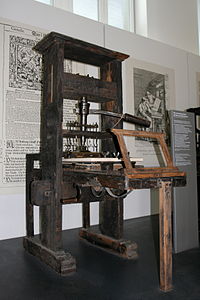
In the 1440s, Johann Gutenberg came out with an invention called the printing press. Previously, books were copied down mainly by monks in monastaries, which made them quite rare. Gutenberg’s invention in effect brought the written word to the masses.


In many ways, this brought on a complete revolution. A lasting effect was on the scientific community. Suddenly, scientists working in different locations could popularize their findings with their peers, opening the doors to the scientific revolution. No longer would each scientist have to reinvent the wheel, but instead could build on the research of his peers and predecessors.


It also gave a greater degree of accountability to authors. Since previously each individual page was copied by hand, a text written by one author could vary from book to book. You could never be sure that you were reading the same version as someone else. It also led to greater education for the masses, since now books were more widely available.


Gutenberg may not have set out to revolutionize the way that language was used, but ended up doing just that.


      Johannes Gensfleisch zur Laden zum Gutenberg


Born c. 1398


Mainz, Electorate of Mainz


Died February 3, 1468 (aged 70)


Mainz, Electorate of Mainz


Cause of death Natural Causes


Occupation Engraver, Inventor, and Printer, Go;dsmith


Religion Catholic


Spouse Else Wirick zum GutenburgPrinting press in Munich 1811


Tuesday, April 17, 2012

Invention of the plough.

The Plow


Compared to some of the gleaming, electronic inventions that fill our lives today, the plow doesn't seem very exciting. It's a simple cutting tool used to carve a furrow into the soil, churning it up to expose nutrients and prepare it for planting. Yet the plow is probably the one invention that made all others possible.


No one knows who invented the plow, or exactly when it came to be. It probably developed independently in a number of regions, and there is evidence of its use in prehistoric eras. Prior to the plow, humans were subsistence farmers or hunter/gatherers. Their lives were devoted solely to finding enough food to survive from one season to the next. Growing food added some stability to life, but doing it by hand was labor intensive and took a long time. The plow changed all that.


Plows made the work easier and faster. Improvements in the plow's design made farming so efficient that people could harvest far more food than they needed to survive. They could trade the surplus for goods or services. And if you could get food by trading, then you could devote your day-to-day existence to something other than growing food, such as producing the goods and services that were suddenly in demand.


The ability to trade and store materials drove the invention of written language, number systems, fortifications and militaries. As populations gathered to engage in these activities, cities grew. It's not a stretch to say that the plow is responsible for the creation of human civilization.

Monday, April 16, 2012

THE PILL

The Birthday of the Pill


For most women, the birth control pill is a part of life, but this tiny pill has a large role in history.


Some believe it was more liberating to women than the right to vote.


The pill gave women control over their reproductive systems leading to new careers and the march toward gender equality. First introduced in 1960, the Pill turns 52 this year thanks to a few tenacious individuals.


The driving force was a nurse named Margaret Sanger. In 1916 she founded the first birth control clinic in the U-S and was often jailed and prosecuted.


She wasn’t deterred and in 1942 founded the Planned Parenthood Federation.


Yet forty years later, Sanger was frustrated there remained no oral contraceptive for women. At the age of 72 she met Gregory Pincus, an American biologist who believed hormones could be key to making an effective pill and agreed to help Sanger.


At the time a chemist named Carl Djerassi in Mexico City had just created an orally effective synthetic form of progesterone. Once Pincus knew, he worked to confirm that a progesterone pill was able to prevent ovulation in rabbits and rats.


But Pincus needed more money to continue his research so Margaret Sanger once again set to work. After Sanger talked to her friend, Katherine McCormick, the heir to the vast McCormick fortune then wrote a 40-thousand dollar check which enabled Pincus to develop the Pill.


In a clinical trial with fifty women, Pincus used a protocol of 21 days of pills and 7 days off to allow for menstruation which is how the Pill is still administered today.


None of the 50 women ovulated while on the drug and in 1960 the Pill was approved for the mass market. Today women take the pill for granted… which when you consider it perhaps was the goal.


Sunday, April 15, 2012

Inventions that changed history.Super glue.

Krazy Glue and/or Super Glue


The story goes that in 1942, Dr. Harry Coover was working for Eastman Kodak, a company renowned for cameras and camera-related things. His job was to find a plastic that could be used as a clear gunsight, since this was smack in the middle of WWII and everybody knew where the money was.


Coover got frustrated because the material, called cyanoacrylate, was just too damned sticky. Rather than noticing he accidentally made one of the most versatile adhesives of all time, he threw it away in a huff and continued sweating over gunsights for a war that would be ended, ironically, by two bombs with blast radiuses so big that they didn't even require sights at all.


Years later, Coover would re-discover his invention, we prefer to think due to him noticing that old container of cyanoacrylate was still stuck to the bottom of his trash can and couldn't be removed by any means.


In 1958, after finally convincing his bosses that at the very least, there was enormous comedic potential in the prospect of a man getting his hand permanently stuck to his junk; Kodak released the glue with the catchy name "Eastman 910."


Somebody then decided to actually pay the marketing guys to do something, and they decided the best way to convince people to buy this new product was to suspend a car over a public street with a crane, supposedly held up only with the ol' 910.


Reactions resulted in the product being coined "Krazy Glue"; a product so crazy that it requires intentional misspelling. The early slogan, "Remember, you can only use it once before it completely solidifies in the tube!" was quickly dropped and it remains a top-selling product to this day.


Read more: 5 Accidental Inventions That Changed The World
Cracked.com http://www.cracked.com/article_17134_5-accidental-inventions-that-changed-world.html#ixzz1s3nfSOlb