Popular Posts

Popular Posts

Pages

Total Pageviews

Saturday, January 28, 2012

chinese-restaurant-syndrome.jpg


CHINESE RESTAURANT SYNDROME – attributed to the flavor enhancer monosodium glutamate (MSG) which is commonly added to Chinese food, the symptoms of Chinese Restaurant Syndromecan include feelings of numbness, pressure, warmth or tingling of the skin at the back of the neck and extending to the back and arms; nausea; chest pain, rapid heartrate, or heart palpitations; bronchial reaction in asthmatics; weakness and drowsiness. The onset is usually within 15 to 20 minutes of ingesting food and symptoms persist for around 2 hours. Though this syndrome has been reported by many, clinical studies to date have yet to demonstrate a significant relationship between the consumption of (pure) MSG and this syndrome. Though no current studies have tested the effects of MSG consumed in the context of Chinese food – perhaps MSG in combination with other ingredients often found in American Chinese food may bring about this reaction in some individuals. MSG is a known excitotoxin at higher blood serum levels, though beyond what one would experience from eating Chinese food.

Friday, January 27, 2012

Daily news from the Natinal Geographic..Tuesday morning.

Aurora picture: northern lights over mountains in Norway


Arctic Auroras

Photograph by Ole C. Salomonsen, arcticlightphoto.no
Northern lights dance over the Lyngan Alps in a picture taken Tuesday night near Tromsø, Norway. The brilliant auroras were triggered by a coronal mass ejection, or CME, that hit our planet Tuesday morning. A CME is a cloud of superheated gas and charged particles hurled off the sun.
On Monday, space-weather scientists reported that an especially strong solar flare had erupted from an active region on the sun, followed by the huge CME that came barreling toward our planet. The burst of activity triggered the strongest solar storm experienced since October 2003, according to experts atNOAA's Space Weather Prediction Center in Boulder, Colorado.
When a CME hits Earth, the charged solar particles can interact with gases in our atmosphere to produce the northern and southern lights. Sky-watchers were put on alert for intense auroras Tuesday night through Wednesday morning.

Halley's Comet Makes an Appearance..1910

halley_630x


1910: Earth passes through the tail of Halley’s comet. The anticipation of its arrival creates quite a stir. In some circles, the comet’s unusually close approach is seen as a sign of impending doom, a notion the down-market press does little to dispel.
The comet was named for British astronomer Edmond Halley, the first to determine its orbit and accurately predict its return to the Earth’s night sky. Although Halley died 16 years before his prediction could be tested, the comet appeared on Christmas night 1758, right on schedule. It’s been Halley’s comet ever since, appearing at regular 74- to 79-year intervals.
The 1910 pass of Earth was especially close and, thanks to expansive newspaper coverage, eagerly anticipated by the general public. In fact, Earth’s orbit carried it through the end of the comet’s 24-million-mile-long tail for six hours on May 19, earning the story the day’s banner headline in The New York Times.
While most reporters of the day turned to astronomers to get the facts straight, the yellow press chose to pursue the story in more fanciful ways, helping to fuel the fears of the impressionable that the end of the world was nigh. Despite some published reports leading up to the event, the comet’s tail did not contain poisonous gases, and there was never any danger of a celestial collision, either.
In anticipation of the comet’s arrival, telescope sales shot up, and hotels in large cities offered special packages that included rooftop viewings. President William Howard Taft had a look-see at the U.S. Naval Observatory and came away suitably impressed. Not everyone was taken in, though: The sitting pope, Pius X, dismissed the entire show as overblown.
The comet was at its closest, therefore its brightest, between May 14 and 22.
We can’t file this item without mentioning Mark Twain’s famous connection to Halley’s comet. Twain (nee Samuel Clemens), America’s pre-eminent man of letters, was born in 1835 as the comet passed over. In 1909, knowing that Halley’s comet was due to make another pass the following year, Twain predicted he would die when it did. Observatory telescopes picked up the comet on April 9, 1910, and followed it as it reached perihelion on April 20. Twain died the next day.
Halley’s comet is scheduled to make its next appearance in late July 2061.
Photo: Halley's cometOf the thousands of known comets in the solar system, Halley's comet is one of some 200 that are periodic. Halley's comet orbits Earth every 76 years; the next flyby will occur in 2061.
Photo: Comet glowing amid starsComet C/2001 Q4, also known as NEAT, emits a blue-and-purple glow as it moves through the cosmos in May 2004. Its coma, or head, and a portion of its tail are visible in this shot, as are myriad stars. This image was taken by telescope from Kitt Peak National Observatory near Tucson, Arizona.

Thursday, January 26, 2012

Science madeeasy.Are you right or left eyed


Are you right or left-eyed?

Make a circle with your thumb and first finger. With both eyes open look at an object on the wall or in the distance, and centre it inside the circle. Now close one eye, and then the other. What happens?

What’s happening?

When you closed your left or right eye you should have found that the object jumps outside the circle. If the object seemed to move when you closed your left eye – then you have left eye dominance. If the object moved more when your right eye was closed, then your right eye is the dominant one.
Your brain builds up an image of the world around you using slightly different views from your right or left eye. Most people tend to have a dominant eye so that even when both eyes are open, one is giving priority information.
The object you chose was lined up to be in the circle using information from your dominant eye. When you close this one you can see that the object was not lined up for your other eye.
About 80% of the population are right-eyed, and a very small percentage seem to have no eye-dominance at all.

So what…?

If you take part in any sport that involves shooting at a target (eg archery or darts) then you should know your eye-dominance. Left eyed people should shoot with their left hand and vice versa.

Wednesday, January 25, 2012

SCIENCE MADE EASY..cell structure


Cells are the Starting Point

Structure of generic animal cellAll living organisms on Earth are divided in pieces called cells. There are smaller pieces to cells that include proteins and organelles. There are also larger pieces called tissues and systems. Cells are small compartments that hold all of the biological equipment necessary to keep an organism alive and successful on Earth. 

A main purpose of a cell is to organize. Cells hold a variety of pieces and each cell has a different set of functions. It is easier for an organism to grow and survive when cells are present. If you were only made of one cell, you would only be able to grow to a certain size. You don't find single cells that are as large as a cow. Also, if you were only one cell you couldn't have a nervous system, no muscles for movement, and using the internet would be out of the question. The trillions of cells in your body make your life possible.


In 1665, Robert Hooke coined the term cell to describe the structures he could see in cork with some of the first microscopes. Since then, technology has given us an increasingly complex view of the basic unit of life. 

One Name, Many Types


Animal and plant cells

There are many types of cells. In biology class, you will usually work with plant-likecells and animal-like cells. We say animal-like because an animal type of cell could be anything from a tiny microorganism to a nerve cell in your brain. Plant cells are easier to identify because they have a protective structure called a cell wall made of cellulose. Plants have the wall; animals do not. Plants also have organelles like the chloroplast(the things that make them green) or large water-filled vacuoles.
Different types of animal cells

We said that there are many types of cells. Cells are unique to each type of organism.Humans may have hundreds of types of cells. Some cells are used to carry oxygen (O2) through the blood (red blood cells) and others might be specific to the heart. If you look at very simple organisms, you will discover cells that have no defined nucleus (prokaryotes) and other cells that have hundreds of nuclei (multinucleated). The thing they all have in common is that they are compartments surrounded by some type of membrane.
1. Red blood cells  They look like little cinnamon candies here, but they're actually the most common type of blood cell in the human body - red blood cells (RBCs). These biconcave-shaped cells have the tall task of carrying oxygen to our entire body; in women there are about 4 to 5 million RBCs per microliter (cubic millimeter) of blood and about 5 to 6 million in men. People who live at higher altitudes have even more RBCs because of the low oxygen levels in their environment.

3. Purkinje neurons  Of the 100 billion neurons in your brain, Purkinje neurons are some of the largest. Among other things, these cells are the masters of motor coordination in the cerebellar cortex. Toxic exposure such as alcohol and lithium, autoimmune diseases, genetic mutations including autism and neurodegenerative diseases can negatively affect human Purkinje cells.
5. Blood vessels emerging from the optic nerve  In this image, stained retinal blood vessels are shown to emerge from the black-coloured optic disc. The optic disc is a blind spot because no light receptor cells are present in this area of the retina where the optic nerve and retinal blood vessels leave the back of the eye. 

Tuesday, January 24, 2012

Science made easy..HOW DO ANIMALS SPEND THE WINTER?


HOW DO ANIMALS SPEND THE WINTER?


The weather gets colder, days get shorter and leaves turn color and fall off the trees. Soon, winter is here. Snow covers the ground. People live in warm houses and wear heavy coats outside. Our food comes from the grocery store. But what happens to the animals?


MIGRATE

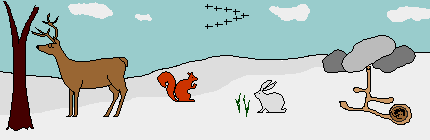
Animals do many different, amazing things to get through the winter. Some of them "migrate." This means they travel to other places where the weather is warmer or they can find food.
Many birds migrate in the fall. Because the trip can be dangerous, some travel in large flocks. For example, geese fly in noisy, "V"-shaped groups. Other kinds of birds fly alone.


Stock Photo - birds migratory 
vector illustration. 
fotosearch - search 
stock photos, 
pictures, wall 
murals, images, 
and photo clipart

How do they know when it is time to leave for the winter? Scientists are still studying this. Many see migration as part of a yearly cycle of changes a bird goes through. The cycle is controlled by changes in the amount of daylight and the weather.
Birds can fly very long distances. For example, the Arctic tern nests close to the North Pole in the summer. In autumn, it flys south all the way to Antarctica. Each spring it returns north again.


Click to show "Arctic Tern" result 3

Most birds migrate shorter distances. But how do they find their way to the same place each year? Birds seem to navigate like sailors once did, using the sun, moon and stars for direction. They also seem to have a compass in their brain for using the Earth's magnetic field.
Other animals migrate, too. There are a few mammals, like some bats, caribou and elk, and whales that travel in search of food each winter. Many fish migrate. They may swim south, or move into deeper, warmer water.
Elk PicturesElk


ADAPT

Some animals remain and stay active in the winter. They must adapt to the changing weather. Many make changes in their behavior or bodies. To keep warm, animals may grow new, thicker fur in the fall. On weasels and snowshoe rabbits, the new fur is white to help them hide in the snow.
Food is hard to find in the winter. Some animals, like squirrels, mice and beavers, gather extra food in the fall and store it to eat later. Some, like rabbits and deer, spend winter looking for moss, twigs, bark and leaves to eat. Other animals eat different kinds of food as the seasons change. The red fox eats fruit and insects in the spring, summer and fall. In the winter, it can not find these things, so instead it eats small rodents.
Animals may find winter shelter in holes in trees or logs, under rocks or leaves, or underground. Some mice even build tunnels through the snow. To try to stay warm, animals like squirrels and mice may huddle close together.
Certain spiders and insects may stay active if they live in frost-free areas and can find food to eat. There are a few insects, like the winter stone fly, crane fly, and snow fleas, that are normally active in winter. Also, some fish stay active in cold water during the winter. 


HIBERNATE

Some animals "hibernate" for part or all of the winter. This is a special, very deep sleep. The animal's body temperature drops, and its heartbeat and breathing slow down. It uses very little energy. In the fall, these animals get ready for winter by eating extra food and storing it as body fat. They use this fat for energy while hibernating. Some also store food like nuts or acorns to eat later in the winter. Bears, skunks, chipmunks, and some bats hibernate. 
A three-month-old black bear cub along with its hibernating mother. Hibernating black bear.

AND MORE

Cold-blooded animals like fish, frogs, snakes and turtles have no way to keep warm during the winter. Snakes and many other reptiles find shelter in holes or burrows, and spend the winter inactive, or dormant. This is similar to hibernation.
Water makes a good shelter for many animals. When the weather gets cold, they move to the bottom of lakes and ponds. There, frogs, turtles and many fish hide under rocks, logs or fallen leaves. They may even bury themselves in the mud. They become dormant. Cold water holds more oxygen than warm water, and the frogs and turtles can breath by absorbing it through their skin.
Insects look for winter shelter in holes in the ground, under the bark of trees, deep inside rotting logs or in any small crack they can find. One of the most interesting places is in a gall. A gall is a swelling on a plant. It is caused by certain insects, fungi or bacteria. They make a chemical that affects the plant's growth in a small area, forming a lump. The gall becomes its maker's home and food source.
Every type of insect has its own life cycle, which is the way it grows and changes. Different insects spend the winter in different stages of their lives. Many insects spend the winter dormant, or in "diapause." Diapause is like hibernation. It is a time when growth and development stop. The insect's heartbeat, breathing and temperature drop. Some insects spend the winter as worm-like larvae. Others spend the winter as pupae. (This is a time when insects change from one form to another.) Other insects die after laying eggs in the fall. The eggs hatch into new insects in the spring and everything begins all over again.


Monday, January 23, 2012

WHY ARE ZEBRAS STRIPED.

I remember asking my parents why zebras were striped or why did giraffes have such a long neck. Most of the time the answers were elusive and I used to be very irritated. I could never get the right answer to satisfy my curiosity. I now realize why my parents could not give me a concrete answer. You see I happened to be in the same dilemma when my three-year-old daughter asked me the same question! I was faced with the difficult task of giving her half-baked answers or finding the right answers this time.


The most obvious question to ask about zebras is why are zebras striped? Unfortunately nobody really knows the answer. Looking at zebras in the zoo, the striped pattern seems very conspicuous and could hardly be thought of as protective.


Zoologists believe the stripes on a zebra could be one of several reasons. It could be basically for camouflage very much like the military fatigues. The bold wavy lines of a zebra blend in with the tall wavy grassy plains of Africa where these animals live. The bold stripe may even serve to break up the shape of the Zebra. If a zebra is standing still in such surroundings, a lion, its chief predator, may overlook it completely.


It doesn't matter that the zebra's stripes are black and white and the grass are dusty brown or green, because the lion is colour blind!


However this may benefit an individual zebra in some situations but is it likely a large zebra herd would be able to escape a lion's notice? This is exactly where it helps the zebra most. Zebra herds are very large but they stay very close to one another.


When all the zebras stick together in a herd, the pattern of stripes blends in with the stripes of the zebras around it. This is confusing to the lion! All it can see is a large, moving, striped mass instead of many individual zebras. The lion has trouble picking out individual zebras and it's harder still for the lion to recognize which way each zebra is moving!


Each zebra pattern is unique like a fingerprint. Also like a fingerprint, the patter varies from zebra to zebra and no two zebras are exactly alike. What is truly amazing is that zebras can recognize other zebras from their body stripe! A mother can instantly spot her colt in a herd!


There are three species classified according to the variations in the arrangement of the stripes - the Imperial or Grevy's zebra, the Plains or Common zebra and the Mountain zebra - and several subspecies. The mountain zebra is the smallest of these averaging only four feet. It has silver-white stripes with black markings that extend to every part of the body except the stomach and the inner part of thighs. Plains zebras travel in large herds and are pale yellow with broad black stripes. This specie has several variations: some have stripes down to the hooves while the lower legs of the others are solid white without any stripes.


Do you know that people of Africa think of zebras as black animals with white stripes whereas people outside Africa consider them as white animals with black stripes! Black stripes or white, the fact remains that zebras are extremely unique and are among the fastest and most graceful of runners in the African bush land.
Animal Camouflage Image Gallery


Sunday, January 22, 2012

All about Cyclones


What are cyclones?
Cyclones ( or more properly called Tropical Cyclones) are a type of severe spinning(rotating) storm that occurs over the ocean near the tropics.
The word "Cyclone" just means 'turning wind with one eye. It relates to the word "Cyclops" that one eyed creature in an Ancient Greek story.

Tropical Cyclones have a number of characteristics like:
  • They must have a wind speed greater than 119km/h
  • They start in the tropics.

Did you know...
cyclones are also called hurricanes around the US. Cyclones are called typhoons near the South China sea (from the chinese word meaning 'big wind' )


Image: Courtesy of NOAA
Did you know that cyclones are actually the release of stored solar energy that rotates. The sun heats the ocean up and this creates the condition for a tropical cyclone to develop.
Cyclones spin because the Earth is spinning. It's due to something called thecoriolis effect.
The direction they spin depends on which hemisphere they are in.
In the Southern hemisphere they spin in a clockwise direction and Northern hemisphere they spin in an anti-clockwise direction.
There are two main parts of the Earth's surface that cyclones affect.
  • Land
  • Sea
Land - the obvious is the the land closest to the sea. Usually the land is subjected to high winds but also rain. This can result in flooding of low lying areas.
The parts that join the land with the sea such as the coast might suffer erosion. For example sand may be washed away leaving bare rocks.
Coral reefs can often be damaged. Most reefs can cope but if cyclones are too frequent then they don't have time to recover and could die.
The wind along the coasts might tear down trees and cause damage to buildings. But sometimes the wind might help to disperse seeds (eg coconuts, and mangrove pods)

Sea - the sea is typically suffers large waves which can cause problems for ships travelling in the area. The extra rainfall can dilute a part of the upper level of the water but this might not be a problem as the sea is being churned up all the time.
In extreme cases a tornado can form over the sea and suck fish out of the sea and send them flying inland causing 'fish to rain down'


The effect on animals on land
Animals that live on the land might be affected such as having their burrows flooded. For example a wombat.
Animals that live on the coast may also be affected but in most cases they are well adapted to a rough sea life.

Cyclones can cause flooding further inland many kilometres away from the main storm

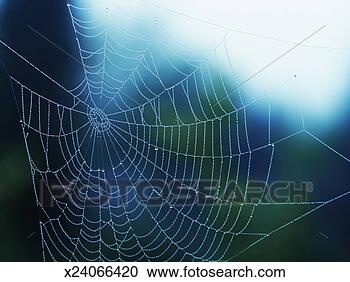
Science made easy...Why Spiders do not stick to their webs.


Spiders lay down two types of webbing, says U of T zoology professor Darryl Gwynne: sticky and non-sticky. In fact, some spiders do get stuck in their own sticky webs, mainly by accident. But most are able to bypass the sticky strands and follow the safe trail of non-sticky webs laid down first for their own convenience.
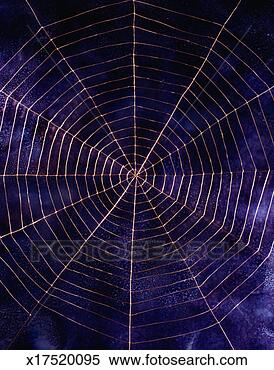
Gwynne, who teaches at the University of Toronto at Mississauga, says web-building has several phases. A spider begins by attaching a single strand of silk horizontally between two supports, such as twigs or branches. It then builds an outside rim — almost like a bicycle wheel — and attaches spokes and a spiral from the centre to the outside of the web. These parts of the web are all composed of non sticky silk. With this frame — the foundation for a decent web — firmly in place, the spider adds the sticky strands, once again in a spiral pattern. This spiral is connected to the non-sticky spokes. "So, when a spider runs across from the centre of the web to grab a prey, it tends to go along a spoke, stepping on the bits that aren't sticky," Gwynne says. "And this essentially is the reason that spiders don't get stuck to their webs." 


Saturday, January 21, 2012

Heart: Simplified for layman


  • The heart is one of the most important organs in the human body, continuously pumping blood around our body through blood vessels.
  • Your heart is located in your chest and is well protected by your rib cage.
  • The study of the human heart and its various disorders is known as cardiology.
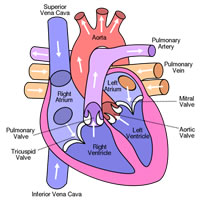
  • The heart is made up of four chambers, the left atrium, right atrium, left ventricle and right ventricle.
  • There are four valves in the human heart, they ensure that blood only goes one way, either in or out.
  • Blood that leaves the heart is carried through arteries. The main artery leaving the left ventricle is the aorta while the main artery leaving the right ventricle is the pulmonary artery.
  • Blood going towards the heart is carried through veins. Blood coming from the lungs to the left atrium is carried through the pulmonary veins while blood coming from the body to the right atrium is carried through the superior vena cava and inferior vena cava.
  • You might have felt your own heart beating, this is known as the cardiac cycle. When your heart contracts it makes the chambers smaller and pushes blood into the blood vessels. After your heart relaxes again the chambers get bigger and are filled with blood coming back into the heart.
  • Electricity going through your heart makes the muscle cells contract.
  • You might have watched television shows or movies where a patient in a hospital is attached to an electrocardiogram (ECG). You might recognize it as the machine with a line moving across a screen that occasionally spikes (or remains flat when a patient is dying). This machine can measure the electricity going through a patient’s heart. A doctor can use the information to know when a patient is having heart rhythm problems or even a heart attack.
  • Heart attacks cause scar tissue to form amongst normal heart tissue, this can lead to further heart problems or even heart failure.

  • Heart Circulation

    1. CORONARY CIRCULATION

    The heart muscle itself needs blood. The graphic above identifies arteries (red) supplying oxygenated blood to the heart tissue, and veins (blue) removing deoxygenated blood. Coronary artery disease is associated with reduced blood flow to these vessels.

    Lung Circulation

    2. PULMONARY CIRCULATION

    Veins carry oxygen-depleted blood (blue) from the body to the heart, which pumps it to the lungs. The lungs enrich the blood with oxygen (red) and return it to the heart to be pumped to the rest of the body.

    Brain Circulation

    3. CEREBRAL CIRCULATION

    The brain comprises only 2% of the body's weight but receives 20% of the blood supply. Over 150,000 people have strokes each year, largely resulting from blockages in the arteries and veins. Unimpeded circulation of blood to and from the brain is critical to health.

    Kidney Circulation

    4. RENAL CIRCULATION

    Approximately 20% of blood output from the heart goes to the kidneys. The kidneys cleanse and detoxify blood and also serve an excretory function sending urine to the bladder. Renal circulation significantly contributes to overall circulatory health.

    Hepatic Portal

    5. HEPATIC PORTAL CIRCULATION

    Blood from the entire digestive area including the intestines, stomach, pancreas, and gall bladder passes through the liver for cleansing and storing of nutrients. This function is often overlooked as critical to the overall circulatory system.

    Systemic Circulation

    6. SYSTEMIC CIRCULATION

    Blood flows to the rest of the body including the extremities. Major arteries and veins supplying the arms are pictured above.


The human heart