Popular Posts

Popular Posts

Pages

Total Pageviews

Sunday, November 13, 2011

10 Great Scientists of the 20th century


1. Albert Einstein

A picture of the wax figure of scientist Albert Einstein at Madame Tussaud's.(Mario Tama / Getty Images)
Albert Einstein (1879-1955) may have revolutionized scientific thought, but what made the public adore him was his down-to-earth sense of humor. Known for making short quips, Einstein was the people's scientist. Despite being one of the most brilliant men of the 20th century, Einstein appeared approachable, partly because he always had uncombed hair, disheveled clothing, and a lack of socks. During his entire life, Einstein worked diligently to understand the world around him and in so doing, developed the Theory of Relativity, which opened the door for the creation of the atomic bomb.

2. Marie Curie

Portrait of Marie Curie.Picture courtesy Smithsonian Institution Archives.
Marie Curie (1867-1934) worked closely with her scientist husband, Pierre Curie (1859-1906), and together they discovered two new elements: polonium and radium. Unfortunately, their work together was cut short when Pierre died suddenly in 1906. (Pierre had been trampled by a horse and carriage while trying to cross a street.) After Pierre's death, Marie Curie continued to research radioactivity (a term she coined) and her work eventually earned her a second Nobel Prize. Marie Curie was the first person to be awarded two Nobel Prizes. Marie Curie's work led to the use of X-rays in medicine and laid the foundation for the new discipline of atomic physics.

3. Sigmund Freud

Sigmund Freud, founder of psychoanalysis, smoking cigar.Picture courtesy of Google-hosted LIFE Photo Archive.
Sigmund Freud (1856-1939) was a controversial figure. People either loved his theories or hated them. Even his own disciples got into disagreements. Freud believed that every person has an unconscious that can be discovered through a process called "psychoanalysis." In psychoanalysis, a patient would relax, perhaps on a couch, and use free association to talk about whatever they wanted. Freud believed that these monologues could reveal the inner workings of the patient's mind. Freud also postulated that slips of the tongue (now known as "Freudian slips") and dreams were also a way to understand the unconscious mind. Although many of Freud's theories are no longer in regular use, he established a new way of thinking about ourselves.

4. Max Planck

Picture of Max Planck.Picture courtesy of the Smithsonian Institution.
Max Planck (1858-1947) didn't mean to, but he completely revolutionized physics. His work was so important that his research is considered the pivotal point where "classical physics" ended and modern physics began. It all started with what seemed an innocuous discovery -- energy, which appears to be emitted in wavelengths, is actually discharged in small packets (quanta). This new theory of energy, called quantum theory, played a role in many of the most important scientific discoveries of the 20th century.

5. Niels Bohr

Picture of scientist Niels Bohr.Picture courtesy of the Library of Congress.
Niels Bohr (1885-1962), a Danish physicist, was only 37 when he won the Nobel Prize for Physics in 1922 for his progress in understanding the structure of atoms (specifically his theory that electrons lived outside the nucleus in orbits of energy). Bohr continued his important research as the director of the Institute for Theoretical Physics at the University of Copenhagen for the rest of his life, except during World War II. During WWII, when the Nazis invaded Denmark, Bohr and his family escaped to Sweden on a fishing boat. Bohr then spent the rest of the war in England and the United States, helping the Allies create an atomic bomb. (Interestingly, Niels Bohr's son, Aage Bohr, also won the Nobel Prize for Physics in 1975.)

6. Jonas Salk

Picture of Jonas Salk.Picture courtesy of the Archives Service Center, University of Pittsburgh.
Jonas Salk (1914-1995) became a hero overnight when it was announced that he had invented a vaccine for polio. Before Salk created the vaccine, polio was a devastating viral disease that had become epidemic. Each year, thousands of children and adults either died from the disease or were left paralyzed. (U.S. President Franklin D. Roosevelt is one of the most famous polio victims.) By the early 1950s, polio epidemics had been increasing in severity and polio had become one of the most feared childhood diseases. When the positive results from an extensive test trial of the new vaccine was announced on April 12, 1955, exactly ten years after Roosevelt's death, people celebrated around the world. Jonas Salk became a beloved scientist.

7. Ivan Pavlov

A drawing of a cute dog eating food.(Picture by Chet Phillips / Getty Images)
Ivan Pavlov (1849-1936) studied drooling dogs. While that may seem like an odd thing to research, Pavlov made some fascinating and important observations by studying when, how, and why dogs drooled when introduced to varied, controlled stimuli. During this research, Pavlov discovered "conditioned reflexes." Conditioned reflexes explain why a dog would automatically drool when hearing a bell (if usually the dog's food was accompanied by a bell being rung) or why your tummy might rumble when the lunch bell rings. Simply, our bodies can be conditioned by our surroundings. Pavlov's findings had far reaching effects in psychology.

8. Enrico Fermi

Enrico Fermi
Enrico Fermi (1901-1954) first became interested in physics when he was 14 years old. His brother had just died unexpectedly and while looking from an escape from reality, Fermi happened upon two physics books from 1840 and read them from cover to cover, fixing some of the mathematical errors as he read. Apparently, he didn't even realize the books were in Latin. Fermi went on to experiment with neutrons, which led to the splitting of the atom. Fermi is also responsible for discovering how to create a nuclear chain reaction, which led directly the creation of the atomic bomb.

9. Robert Goddard

A picture of Dr. Robert Hutchings Goddard, the father of American rocketry.Picture courtesy of NASA.
Robert Goddard (1882-1945), considered by many to be the father of modern rocketry, was the very first to successfully launch a liquid-fueled rocket. This first rocket, named "Nell," was launched on March 16, 1926 at Auburn, Massachusetts and rose 41 feet into the air. Goddard was just 17 years old when he decided he wanted to build rockets. He was climbing a cherry tree on October 19, 1899 (a day he forever after called "Anniversary Day") when he looked up and thought how wonderful it would be to send a device to Mars. From that point on, Goddard built rockets. Unfortunately, Goddard was not appreciated in his lifetime and was even ridiculed for his belief that a rocket could one day be sent to the moon.

10. Francis Crick and James Watson

Computer generated picture of a three dimensional DNA double helix.(Photo by Chad Baker / Getty Images)
Francis Crick (1916-2004) and James Watson (b. 1928) together discovered the double helix structure of DNA, the "blueprint of life." Surprisingly, when news of their discovery was first published, inNature on April 25, 1953, Watson was just 25 years old and Crick, although older than Watson by little more than a decade, was still a doctoral student. After their discovery was made public and the two men became famous, they went their separate ways, rarely speaking to each other. This may have been in part because of personality conflicts. Although many considered Crick to be talkative and brash, Watson made the very first line of his famous book, The Double Helix(1968): "I have never seen Francis Crick in a modest mood." Ouch!

Saturday, November 12, 2011

Robert Oppenheimer.. Father of the Atom Bomb.

Robert Oppenheimer is considered to be father of atomic bomb. He was born in a wealthy Jewish family, but had little Jewish upbringing. He was highly intelligent, and had mastered 7 languages in addition to English. He studied Sanskrit at Berkeley Univ. and thereafter he studied Bhagwad Gita in original Sanskrit. Bhagwad Gita became part of his life and he will live like Arjuna or Yudhisthra and will often quote Gita to justify his actions.
He wrote to his brother Frank that Gita is very easy and has profound knowledge. When Roosevelt died in 1945, he quoted from Gita. When first atomic test was done in July 1945, he quoted from Gita. Although he was very reluctant to give his okay to bomb Hiroshima and Nagasaki, he justified his action by citing Gita that, as a scientist, his duty is to do his research work, and leave upto politicians to decide what to do with atomic weapons. Later he criticised bombing of Nagasaki and Hiroshima saying that bombing was not necessary because Japan was already defeated.
Oppenheimer, J. Robert images

OPPENHEIMER, J. ROBERT

(b. New York, N.Y., 22 April 1904; d. Princeton, New Jersey, 18 February 1967).
J. Robert Oppenheimer was the son of Julius Oppenheimer, who had immigrated as a young man from Germany.
As a boy Oppenheimer showed a wide curiosity and the ability to learn quickly. He went to the Ethical Culture School in New York, a school with high academic standards and liberal ideas. With all the breadth of his interests, Oppenheimer was quite clear that his own subject was physics.
Atomic Energy: Los Alamos . The change was the result of Oppenheimer’s involvement with atomic energy. After the discovery of fission he, like many others, had started thinking about the possibility of the practical release of nuclear energy. With his quick perception he was aware of the importance of fast neutrons for any possible bomb. In 1940 and 1941 the idea of releasing nuclear energy was beginning to be taken seriously. A number of groups in different universities were working on the feasibility of a nuclear reactor, and others on methods for separating uranium isotopes. The latter would ultimately lead to the production of the light isotope (U235) in nearly pure form, and this is capable of sustaining a chain reaction with last neutrons. 
When the test of the first bomb at Alamogordo demonstrated the power of the new weapon, all spectators felt a terrified awe of the new power, mixed with pride and satisfaction at the success of their endeavors. Initially some were more conscious of the one emotion, some of the other. Oppenheimer, whose attitude to his own faults was as unmerciful as to those of others, if not more so, admitted later that he could not resist feeling satisfaction with the key part he had played in the work. Many accounts have quoted the verses from his Sanskrit studies of the Bhagavad-Gita which went through his mind at the time of the test, the first referring to the “radiance of a thousand suns” and the other saying, “I am become Death, the destroyer of worlds.” Besides the awareness of the technical achievement, Oppenheimer clearly did not lose sight of the seriousness of the implications.
None of this was public knowledge until 6 August 1945, when the first uranium bomb was dropped on Hiroshima. The implications of the decision to use the bomb to destroy a city will continue to occupy historians for a long time. Oppenheimer played some part in this decision: he was one of a panel of four scientists (the others being A. H. Compton, E. Fermi, and E. O. Lawrence) who were asked in May 1945 to discuss the case for the military use of the bomb on Japan. They were told that it would he impossible to cancel or delay the planned invasion of Japan, which was sure to be very costly in lives, unless Japan surrendered beforehand. Their opinion, which Oppenheimer supported, was that a demonstration on an uninhabited island would not he effective, and that the only way in which the atom bomb could be used to end the war was by actual use on a “military” target in a populated area. Today, in retrospect, many people, including many scientists, deplore this advice and the use of the bomb. Oppenheimer commented in 1962: “I believe there was very little deliberation ... The actual military plans at that time… were clearly much more terrible in every way and for everyone concerned than the use of the bomb. Nevertheless, my own feeling is that if the bombs were to he used there could have been more effective warning and much less wanton killing.…”11 lie remained for the rest of his life acutely conscious of the responsibility he bore for his part in developing the weapon and in the decision to use it.

After reaching an altitude of 8,000 meters, the smoke ascended more slowly and took about 30 seconds to reach an altitude of 12,000 meters. Then, the mass of smoke gradually discolored and scattered in wads of white cloud

Lie Detector Invented..1922..John a Larson

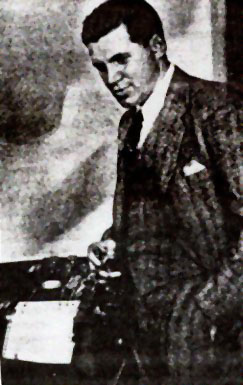
Basically speaking, the polygraph is a simple detector device that monitors the changes in the body when a person is speaking. It is a common and traditional belief that changes occur in the body when a person is lying. Some examples are the heart beating faster, the person breaking into a sweat, the mouth becoming dry, etc. The polygraph tries to monitor all these changes. The principle is simple - if the person is speaking the truth, all these changes won't occur. But if the person is lying, then these changes are bound to happen, and that's what the polygraph picks up.


Professinal lie detector kit
The polygraph has undergone a lot of changes since the first crude design created by Dr. John A. Larson of the University of California in 1920.


John A. Larson
Born11 December 1892
Shelburne, Nova Scotia, Canada
Died1 October 1965
Berkeley
ResidenceBerkeley, California
CitizenshipU.S.
NationalityAmerican
FieldsMedicine
Criminology
Alma materUniversity of California, Berkeley
Known forCriminology, Polygraphy
Larson.jpg
 However, to its credit, I must say that investigators were so impressed by this detective aid that they immediately began informally using it. August Vollmer of the Berkeley Police Department was known to often use polygraph testing in his investigations. And the polygraph did not take long to spread throughout the US and eventually worldwide. Investigation is always such a tedious process that detectives would welcome anything to ease their burden anyway. 

Today's polygraph monitors three vital symptoms of the human body in an attempt to find out if the person is lying. These three systems are the circulation system, the sweat producing system and the respiratory system. Thus, it contains three detectors, which are connected to the fingers (for monitoring changes in sweat production), to the chest (for monitoring changes in breathing) and at any suitable place on the body to determine changes in circulation of blood. The output can be either produced on traditional pen and paper, on a computer monitor. In both kinds of devices, the results are recorded and are quite easily understandable. 

Let us now see how a typical polygraph testing is conducted.

A session of polygraph testing can last from one to three hours. It is not necessary that the polygraph testing will always provide authentic results. The expert will sometimes have to make deductions from the results obtained during the interviews. In order to make the procedure simpler to both the examiner and the examinee, the total interview is broken down into three parts. They are simply called the pre-test, the test and the post-test. During the pre-test, the necessary paperwork is completed and the examiner explains to the examinee how the test works. Sometimes, the examiner will also indicate what kinds of questions he or she will ask of the examinee during the test. When the test really begins, these questions are asked in detail. This is the period when the polygraph testing results become really significant. This is also the longest part of the interview. Finally, the interview peters down to the post-test phase, when the examiner finishes asking the questions, which might be mostly confirmative questions of those asked earlier.

Based on the results of the polygraph test, the examiner will give a verdict. The verdict can be either Not Guilty to Guilty, but then there are also Inconclusive results given out if the results of the test are not so very clear. The examiner can also form a No Opinion conclusion, especially if the test had to be terminated midway.

Of course, errors are rampant. Lie detection through a polygraph leans heavily on the premise that the person will show some definite physical changes which can be recorded. But, in hardcore liars (sorry, no better word!), the polygraph test will fail. Such people will have a way to cheat the lie detector test, because they know exactly what the examiners are looking for. 

There's one more reason why polygraph testing must not be relied on. In people who have a high guilty conscience, the polygraph will record a false positive test (means a guilty result when the person is actually not guilty). A person's heart may beat faster or he or she may perspire simply because of the fear of the law.


The Legacy

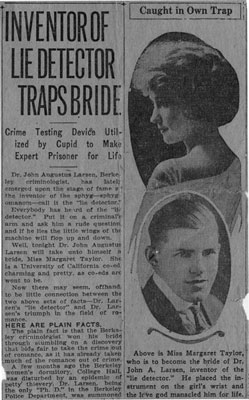
Larson married Margaret Taylor, the freshman victim of the College Hall case and the first person he ever interrogated on the lie detector. Over the next fifteen years, he collected hundreds of files on successful criminal cases where his polygraph solved murders, robberies, thefts and sex crimes. His instrument was nicknamed 'Sphyggy' by the press who covered Larson’s crime solving escapades in the 1920’s and 30's; 'Sphyggy' because they couldn’t pronounce 'Sphygmomanometer.' [9] The polygraph is considered officially one of the greatest inventions of all time. It is included in theEncyclopædia Britannica Almanac 2003's list of 325 greatest inventions,[10] and is still ranks at 10 in the Rankopedia’s Best Inventions of 1920’s.[11] This first polygraph instrument of Larson is now at the Smithsonian Institution in Washington, D.C.. It first appeared in action in a moving picture in 1926 in the silent police serial ‘’Officer 444’’.

edit]

India

Recently an Indian court adopted the brain electrical oscillations signature test as evidence to convict a woman, who was accused of murdering her fiance. It is the first time that the result of polygraph was used as evidence in court.[55] On May 5, 2010, The Supreme Court of India declared use of narcoanalysis, brain mapping and polygraph tests on suspects as illegal and against the constitution.[56]Article 20(3) of the Indian Constitution-"No person accused of any offence shall be compelled to be a witness against himself." Polygraph tests are still legal if the defendant requests one, however.

Friday, November 11, 2011

First Commercial Radio Broadcast Aired...1920..Wikipedia

Radio is the transmission of signals through free space by modulation of electromagnetic waves with frequencies below those of visible light. Electromagnetic radiation travels by means of oscillating electromagnetic fields that pass through the air and the vacuum of space. Information is carried by systematically changing (modulating) some property of the radiated waves, such as amplitude, frequency, phase, or pulse width. When radio waves pass an electrical conductor, the oscillating fields induce an alternating current in the conductor. This can be detected and transformed into sound or other signals that carry information. 


 Classic Radio 


Tesla demonstrating wireless transmissions during his high frequency and potential lecture of 1891. After continued research, Tesla presented the fundamentals of radio in 1893.
In 1896, Marconi was awarded British patent 12039, Improvements in transmitting electrical impulses 
 The Invention of Radio
and signals and in apparatus there-for, for radio. In 1897, he established a radio station on the Isle of Wight, England. Marconi opened his "wireless" factory in Hall Street, Chelmsford, England in 1898, employing around 50 people. Shortly after the 1900s, Marconi held the patent rights for radio.

20th century


The next advancement was the vacuum tube detector, invented by Westinghouse engineers. On Christmas Eve, 1906, Reginald Fessenden used a synchronous rotary-spark transmitter for the first 
Click to show "Reginald Fessenden" result 2

radio program broadcast, from Ocean Bluff-Brant Rock, Massachusetts. Ships at sea heard a broadcast that included Fessenden playing O Holy Night on the violin and reading a passage from the Bible. This was, for all intents and purposes, the first transmission of what is now known as amplitude modulation or AM radio. The first radio news program was broadcast August 31, 1920 by station 8MK in Detroit, Michigan, which survives today as all-news format station WWJ under ownership of the CBS network.
UK:
in contrast, related developments in the United Kingdom saw the British High Court uphold Marconi's British Patent 7,777 that was issued on April 26, 1900. This British patent held by Marconi disclosed a four-circuit system, which was strikingly similar to a four-circuit system disclosed in U.S. patent #645,576 that was issued earlier to Tesla on March 20, 1900. On the matter of invention, it is held that Marconi knowingly and unknowingly used the scientific and experimental work of many others who were devising their own radio tuning apparatus' around the same time, such as the work of American electrical engineer John Stone Stone who was issued several U.S. patents between 1904 and 1908. However, what made Marconi more successful than any other was his ability to commercialize radio and its associated equipment into a global business.]

The Difference Between Memorial Day and Veterans Day


The Difference Between Memorial Day and Veterans Day

By: Helen Polaski
The difference between Memorial Day and Veterans Day may be blurry to some people, but to the people who have lost loved ones to war or who are currently in the United States Armed Services, the difference is crystal clear. Because Americans observe both holidays, many believe they serve the same purpose. In reality, there is a tremendous difference, with one holiday recognizing those who fought for America and the other remembering those who lost their lives.
Origins of Memorial Day and Veterans Day
Though both days of observance have been set aside to honor members of the United States Armed Forces, each of the two days was singled out for completely different reasons. One of them falls on an important date in world history, while the other date was set by an act of Congress.
Memorial Day is a day of remembrance. Memorial Day is always observed on the last Monday in the month of May. It is on this day that we remember those who have given their lives in defense of the United States. This includes all those who have gone before us, and who gave up their lives in battle or in service to our country for our freedom. These men and women have earned a day of distinction.
Memorial Day began in the aftermath of the Civil War. Originally known as Decoration Day, this day was set aside for war widows to visit their husbands' graves. Many women brought flowers and wreaths to thank their lost husbands for helping to keep America as one nation. In 1882, the day began to be observed nationally as a day of remembrance for all fallen soldiers. After World War I, Memorial Day was observed on May 30. The Uniform Holidays Act, which went into effect in 1971, moved Memorial Day to the last Monday of May as a way to encourage business owners to give employees the day off.
Veterans Day is a day of remembrance following the ceasefire of World War I. While the war did not officially end until the Treaty of Versailles was signed on June 28, 1919, fighting ceased seven months earlier when an armistice was agreed upon between Germany and the Allied Nations. Because the cessation of fire went into effect on the 11th hour of the 11th day of the 11th month, President Woodrow Wilson proclaimed November 11 Armistice Day.
Originally intended as a day to honor World War I veterans, Armistice Day was expanded in many parts of America to include World War II veterans during the 1950s. President Dwight D. Eisenhower, himself a World War II veteran, made the name change official in 1954.
As part of the Uniform Holiday Act, Veterans Day was moved to the fourth Monday in October in 1971 and designated an official federal holiday. By 1978, the date moved back to November 11. Schools and government facilities typically close on Veterans Day, but most businesses remain open.  Some European countries still observe Armistice Day as a day to remember World War I.
It is understandable how the two days of observance can become misinterpreted as both observances are heralded by parades, picnics and community gatherings. The best way to distinguish the two days of observance in your mind is to remember that Memorial Day, or the day to honor those who have fallen or gone before us, is observed in the spring, as it comes before Veterans Day, which is observed on November 11 to honor those who are still with us.

First Traffic Light..1914

Inventing history:
Garrett Morgan and the traffic signal

Morgan's traffic signal
In early 1922, African-American inventor Garrett Augustus Morgan designed a cross-shaped traffic signal, for which he submitted a patent application on February 27 of that year. The patent — which was not even among the first 50 traffic signal patents issued in the United States — was granted on November 20, 1923. For whatever reason, numerous writers and public figures have credited Morgan with inventing any or all of the following:
  • world's first traffic signal
  • first traffic signal to earn a patent
  • first automatic traffic signal
  • first traffic signal with a third "all-directional stop" phase
  • first signal with a yellow light phase
  • the basis for modern traffic signal systems
None of these claims are even remotely true, as rest of this page shows.

Myth: Garrett Morgan invented the first traffic signal

Some notable early signals, prior to Morgan's 1922 invention

London, 1868

1868 London signal,
designed by J.P. Knight
The first known signal device for regulating street traffic was installed in 1868 in London, at the intersection of George and Bridge Streets near the Houses of Parliament. Designed by railroad signal engineer JP Knight, it had two semaphore arms which, when extended horizontally, meant "stop"; and when drooped at a 45-degree angle, meant "caution." At night, red and green gas lights accompanied the "stop" and "caution" positions (Sessions 1971;Mueller 1970).
By the signal "caution", all persons in charge of vehicles and horses are warned to pass over the crossing with care and due regard to the safety of foot passengers. The signal "stop" will only be displayed when it is necessary that vehicles and horses shall be actually stopped on each side of the crossing, to allow the passage of persons on foot; notice being thus given to all persons in charge of vehicles and horses to stop clear of the crossing.
Proclamation of Richard Mayne, London Police Commissioner, in 1868; quoted in Mueller 1970

Salt Lake City, about 1912

A contender for "inventor of the first electric traffic light" is Lester Wire of Salt Lake City (Sessions 1971).
Mr. Wire, who died in 1958, was a Salt Lake police officer who invented the first electric traffic light in 1912.... The first hand-made model was a wooden box with a slanted roof so rain and snow would fall off. The lights were colored with red and green dye and shone through circular openings. The box was mounted on a pole, and the wires were attached to the overhead trolley and light wires. It was operated by a policeman. In ensuing years, Mr. Wire improved upon the first model.
"Peak Named for Inventor," Deseret News (Salt Lake City), February 9, 1967

Cleveland, Ohio, 1914

On August 5, 1914, several years before Garrett Morgan invented his T-shaped semaphore-type signal, the American Traffic Signal Company installed red and green traffic lights at each corner of the intersection of 105th Street and Euclid Avenue in Cleveland (see this 1914 Motorist article documenting the debut of the lights).
The installation was patterned after the design of Cleveland inventor James Hoge (Sessions 1971; Mueller 1970), whose U.S. patent #1,251,666 describes a system of electrically powered stop-go indicators, each mounted on a corner post. In Hoge's design, the signals are wired to a manually operated switch housed inside a control booth, and are electrically interlocked in such a way as to make conflicting signals impossible. Also described in the patent is a system to allow communication between the signal controller and the police and fire departments. The Cleveland installation incorporated all of the above elements in some form or other, plus a bell to warn the drivers of color changes.

J.B. Hoge traffic control system
from Hoge's patent #1,251,666

William Potts' 4-way, red-yellow-green signals, Detroit, 1920

In October and December of 1920, a Detroit policeman named William Potts constructed several red-yellow-green light signal systems. Some lights were mounted atop "traffic towers" manned by policemen; others were overhead suspension lamps remarkably similar in form to a modern traffic light. The 4-direction traffic lamp pictured below is of the latter type, and is on display at the Henry Ford Museum in Dearborn, Michigan.
Potts traffic lightplaque
A 1920 vintage Potts signal, at the Henry Ford Museum.
William Potts
William Potts
An entry in the museum's artifact database describes the item:
The world's first three-color, four-direction, elec. traffic lamp, was installed at the intersection of Woodward Ave. and Fort Street, Detroit, Michigan in October, 1920. It was designed by Superintendent (then inspector) William L. Potts of the Signal Bureau, Detroit Police Department. Basic design remains practically unchanged today. The signal remained in use until 1924 and became a part of the world's first synchronized signal system. This system extended from Jefferson to Adams on Woodward Avenue and was controlled manually from a tower at Woodward and Michigan.
museum archives, Henry Ford Museum & Greenfield Village (as of Jan 29 2003)
The meanings of the colored lights were essentially the same as today. Green meant "go"; red meant "stop"; and yellow (amber) meant "clear the intersection" (Mueller 1970). An analogous color scheme had been used by the railroads, where as early as 1899, the New York, New Haven and Hartford Railroad introduced a system wherein red, yellow, and green meant "stop", "caution", and "all clear" respectively (Brignano 1981).