Popular Posts

Popular Posts

Pages

Total Pageviews

Thursday, September 29, 2011

Thursday, Sept.29. 2011


Kenyan environmentalist  (pictured), the first African woman to receive the Nobel Peace Prize, dies at the age of 71.


Patrick Makau Musyoki of Kenya wins the Berlin Marathon, setting a new world record.


King Abdullah of Saudi Arabia announces that Saudi women will be permitted to vote and stand for election.


Vladimir Putin declares his candidacy for the presidency of Russia, as proposed by incumbent .Dmitry Medvedev.
   
On this day...
September 28: Rosh Hashanah (Jewish New Year) begins at sunset .
(2011, 5772 AM); Statehood Day in the Czech Republic; Teachers' Day in Taiwan
The Jewish holidays are days observed by Jews as a holy or secular commemoration of important events in Jewish history. In Hebrew, Jewish holidays and festivals, depending on their nature, may be called yom tov ("good day") (Yiddish: yontif) or á¸¤agh/Chag ("festival") or ta'anit("fast"). A "Yom Tov" has similar obligations and restrictions to Shabbat, with the exception that you can cook, carry, and transfer fire (from a pre-existing flame). The origins of various Jewish holidays generally can be found in Biblical mitzvot (commandments), rabbinical mandate, and modern Israeli history.


1901 – Philippine-American War: Filipino guerrillas killed more than forty American soldiers in a surprise attack in the town of Balangiga on Samar Island.
1928 – Scottish biologist and pharmacologist Alexander Fleming (pictured) discovered penicillin when he noticed a bacteria-killing mould growing in his laboratory.
2008 – SpaceX's Falcon 1 rocket achieved orbit on its fourth attempt to become the first successful liquid-propelled orbital launch vehicle developed with private funding.
2009 – A protest held by 50,000 people in Conakry, Guinea, was forcefully disrupted by the military junta, resulting in at least 157 deaths and over 1,200 injuries.
Patrick Makau Musyoki of Kenya wins the Berlin Marathon, setting a new world record.

King Abdullah of Saudi Arabia announces that Saudi women will be permitted to vote and stand for election.
Vladimir Putin declares his candidacy for the presidency of Russia, as proposed by incumbent .


Wednesday, September 28, 2011

SOME MYTHS, JOKES AND FACTS


1. Water is composed of two gins, Oxygin and Hydrogin. Oxygin is pure gin. Hydrogin is gin and water.

2. Blood flows down one leg and up the other.

3. Momentum: What you give a person when they are going away.

4. To prevent milk from turning sour, keep it in the cow.

5. The parts of speech are lungs and air.

6. The inhabitants of Moscow are called Mosquitoes.

SOME MYTHS, FACTS AND FACTS


. Water is composed of two gins, Oxygin and Hydrogin. Oxygin is pure gin. Hydrogin is gin and water.

Water is a chemical substance with the chemical formula H2O. Its molecule contains one oxygen and two hydrogen atoms connected bycovalent bonds. Water is a liquid at ambient conditions, but it often co-exists on Earth with its solid state, ice, and gaseous state (water vaporor steam). Water also exists in a liquid crystal state near hydrophilic surfaces.
Water covers 70.9% of the Earth's surface, and is vital for all known forms of life.A very small amount of the Earth's water is contained within biological bodies and manufactured products.
Water on Earth moves continually through a cycle of evaporation or transpiration (evapotranspiration), precipitation, and runoff, usually reaching the sea. Evaporation and transpiration contribute to the precipitation over land.
Clean drinking water is essential to humans and other lifeforms. Access to safe drinking water has improved steadily and substantially over the last decades in almost every part of the world. There is a clear correlation between access to safe water and GDP per capita.is actively handled by humans, is consumed byagriculture.
Water Droplet

The truth behind the curtain- Of water , water purifiers and chlorine


The mercury levels have risen much beyond my expectations. The afternoon was hot, sultry, uncomfortable and unbearable. The birds too were reluctant to fly out in the air and were resting quietly in their nests. The natural pool that would otherwise witness vibrant activity of fishes performing stunts was now calm and quiet. Children who would normally have to be forced to stay indoors were now finding relief with the AC put to work and the computer receiving signals from the gaming hands. I at last found something that could cool me down- the community swimming pool.

 I without any hesitation dived into the pool. My happiness was no less than the joy of a rishi when the god is pleased by his penance. 

I enjoyed myself in the pool for a few minutes after which I could feel a sensation of itching that I could no more bear. In seconds, I came out of the pool but the itching persisted. I thought that there was something wrong with the water. Moreover my skin is highly allergitic to chemicals. May be, the chemicals were used in much excess than what was required. I felt the hot blazing sun to be much better.

I got into my car to reach home. My throat had dried completely. As soon as I reached home, I dashed towards the newly bought water purifier and quenched my thirst. The purified water was crystal clear and the water tasted good too.

My attention was drawn towards the bright shining sticker on the purifier that promised a handsome reward of Rs 3.1919187 crores if one could prove that the water purifier was unsafe. I wondered what was the need to place a decimal and append the six letter word ‘crores’ at the end. Was it because one would not have the time to count the number of digits to find out if the promised money was nearly three crores or three lakhs? There was no use in thinking over that for I am not that lucky to claim the money.

I switched on the air conditioner and lay down on the bed. I pulled the blanket over me and was thinking of what I would be dreaming of if I went into a deep sleep at that moment. Suddenly I was woken up with a terrible pain in my stomach. I felt as if my internal organs had declared a war against me and have decided to end me.

I called the doctor. He tested me and declared that something must have gone wrong with what I have eaten or drunk. He prescribed some medicines on a plain sheet of plain in a writing that none except the boy at the medical shop could understand. 

I am a kind of person who would like to investigate all unnecessary things. Why did the stomach ache attack me all of a sudden? What did I eat or drink since morning? Bread and jam- but that is what I consume daily. What was new? Yes, the water from the brand new purifier. But could it be the reason? If so, why would they offer a reward of more than three crores for everyone who would visit them with a stomach ache or similar ailments?

I even remember gobbling a glass of water accidentally from the pool. That was my first visit to a pool and such accidents are normal.

I connected to the World Wide Web and started my research. Amazing facts did present themselves before me. The water purifier was unsafe and so was the water in the swimming pool. It seemed as though I drank a bucket of water to which a very strong disinfectant was added to kill the germs and the label purified water was put on the bucket. The chemicals added cause much more ailments than the germs themselves. And here is a brief summary of the interesting facts that I found out.

Not all chemicals can be used to purify water. Many of them are harmful and fatal. For the first time in 1991 the Standard setting body in India, Bureau of Indian Standards (BIS) made available the water standards IS 10500-1991. However India does not have any existing Standards for Storage Water Purifiers or other water purifiers. In such circumstances one should rely on the regulatory authorities like the United States Environment Protection Agency (EPA) and others. These regulating authorities certify whether a particular chemical is suitable for use in Drinking Water use or not. Using chemicals that are not suggested for purification of water amounts to crime. While many certifications are necessary for the electronic goods and other household appliances, nothing as such exist for water purifiers, including the BIS certificate. There is no way by which consumers can know how safe a water purifier is.

Chlorine is one such chemical that should be used with care. A dosage of 10-20ppm is dangerous and possesses many risks. High chlorine levels show both short term and long term effects. Chest pain, vomiting, coughing, difficulty breathing,, nose, eyes, throat, stomach irritation and nausea are some observable effects. The fact that chlorine is a carcinogenic is debated. However, the EPA does not classify chlorine as a carcinogenic. 

Removing all the clutter from my brain was too difficult for me. However I managed to sleep and my mind enter the sub conscious state from the conscious state. 

There was a knock at my door and I was presented with a cash reward of 3.1919187 crores promised by that reputable company that claims to purify every single drop of water and make it safe for drinking. Such a huge amount! What shall I do with it? No idea.

Even before I could digest that happiness, there were few more knocks at the door and money came pouring in- 1 crore, 1.97 crores, 98.75 lakhs, 5 crores and so on…… at the end my house was filled with money and there was no place for me to move. I thought that the first thing to be done is to buy a new house.

I was just about to call a dealer to buy a new house when there was another knock at my door. Oh no! Where am I to keep the money that would come now? I might have to myself move out of the house if I am to accept that money.

I moved towards the door and opened it. Much to my surprise; hospital beds, wheel chairs, cardiograms, a team of doctors, nurses, ward boys and everyone and everything else rushed in. ‘We have been informed that you are going to be attacked by a number of diseases and we are here to rescue you’ said the head doctor. 

How is it in the world that they know in advance about my health condition? May be god sends warnings when millionaires are in a critical stage. The doctors started their work. I looked like a robot fitted with external hard drives, processors and all other equipments to make it more efficient.

The money that had earlier filled my house diminishing and later on my valuables and even my house too vanished. I was left in rags with a huge plate in hand- may be the one that I should use for begging. 

No………… and I was awakened by my own shriek. Thank god! It was a dream. The first thing that I have done was to dump the water purifier in the garbage which was followed by an oath that I shall never again see the face of a swimming pool. And today I live happily even after the intake of lakhs of germs present in the not so highly purified water!


Monday, September 26, 2011

WHO ARE ELIGIBLE FOR THE NOBEL PRIZE..EXAMPLES

Nobel Prizes are normally given for discoveries rather than inventions. A discovery has been described as an abstract theory, which may further lead to an invention. Inventions are a process, more concrete and have a utilitarian purpose. This list looks at some of the fantastic discoveries that have been made by scientists and thinkers over several decades of hard work.
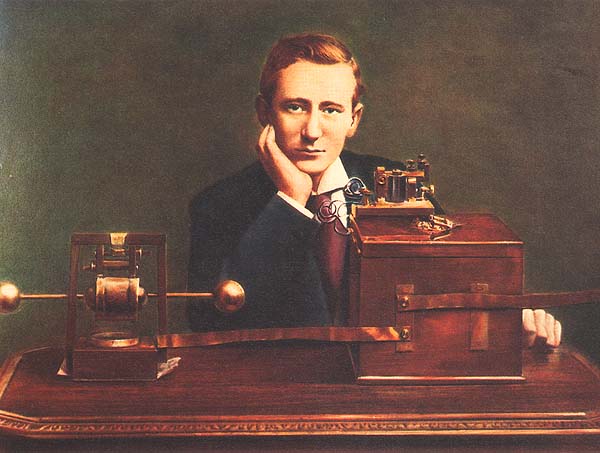
Guglielmo MarconiAlbert Einstein – He won the Physics Nobel Prize in 1921 for his “discovery of the law of photoelectrical effect”. The actual discovery may not have touched our lives but without it many of the modern day electronics would not have come into existence.


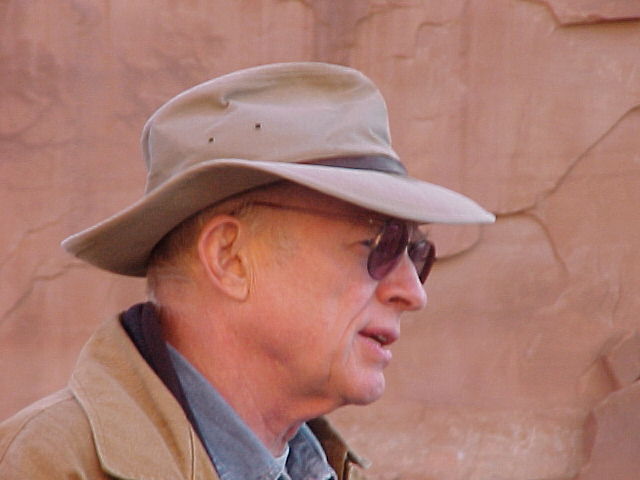
Luis Walter Alvarez3. Luis Walter Alvarez – He won the Nobel Prize in Physics in 1968, and had over 50 patents in his name. His most famous and useful invention was the radio distance and direction indicator. His invention of the hydrogen bubble chamber was used to detect subatomic particles and this further led to a major change in nuclear theories.

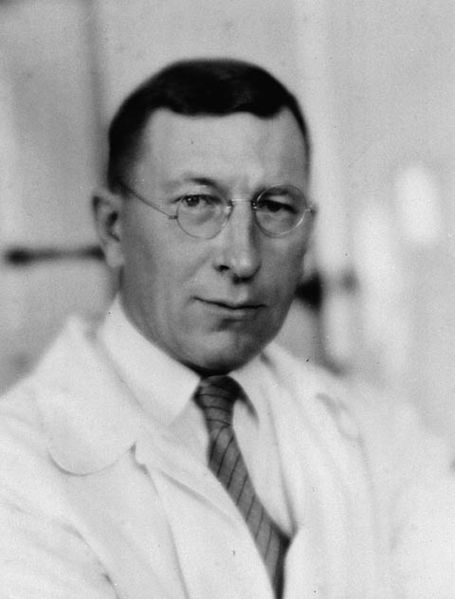
Fredrick Banting4. Frederick Banting
-  A 1923 Nobel Prize winner in medicine, he discovered insulin and the role that it played in treating diabetes. With his colleagues, he then invented means of extracting and isolating insulin, and administering it to diabetes patients.


Jack S. Kilby5. Jack S. Kilby
-  A scientist who won the Physics Nobel Prize in 2000, Kilby is best known as the inventor of the handheld calculator and the thermal printer. His monolithic integrated circuit is one of the most widely used applications in electronic circuitry.

Baruch S Blumberg6. Baruch S Blumberg – In 1963 Blumberg discovered an antigen to detect the presence of Hepatitis B in blood samples. His invention of the test to isolate this virus, is used extensively even today, and it has led to a significant decrease in Hepatitis B infections after blood transfusions. He also jointly developed a vaccine against this virus.
Arthur Schawlow7. Arthur Schawlow – Along with Charles Townes he was the co-inventor of the Laser. Today various fields such as defence and communication and medicine rely upon Laser techniques to make their jobs easier. They received a patent for the laser in 1960 and within a few years it was being commonly used by eye-surgeons for minute, precise surgery.

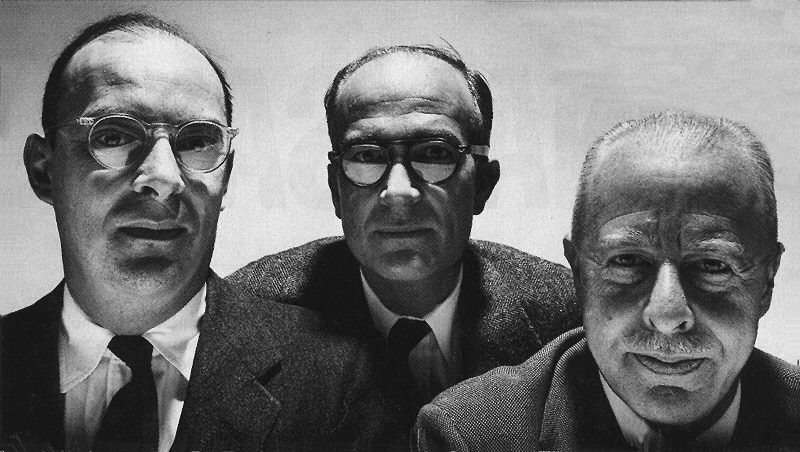
John Bardeen William  Shockley  Walter Brattain8. John Bardeen & William B Shockley & Walter Brattain
– These three shared the Nobel Prize in Physics in 1956 for inventing the transistor – a device that could amplify electrical current. Bardeen won the Nobel Prize a second time 1972 for his work on superconductivity. Modern computer technology electronics and microchip owe a lot to these three scientists.


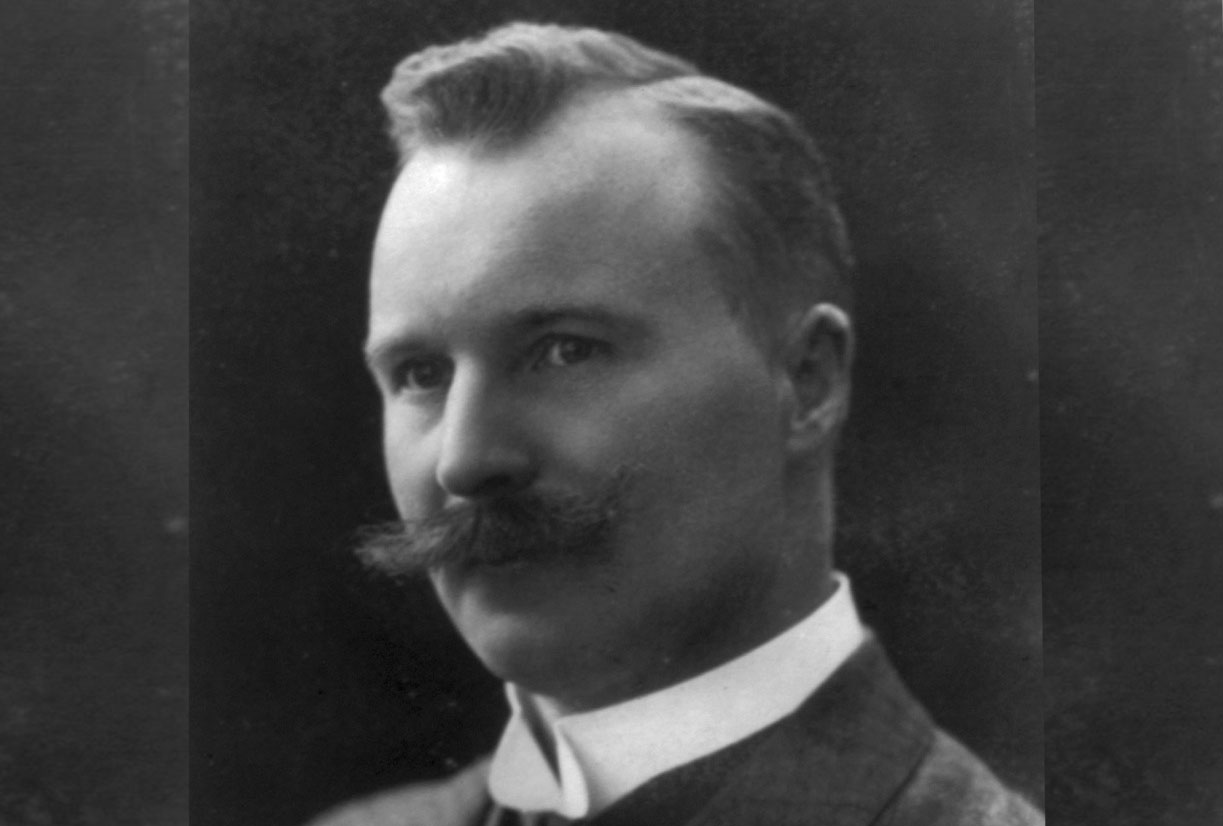
Nils Gustaf Dalen9. Nils Gustaf Dalen
– He was awarded the Nobel Prize for his “invention of automatic regulators for use in conjunction with gas accumulators for illuminating lighthouses and bouys.” He was also the inventor of the AGA cooker and of the Dalen Light.


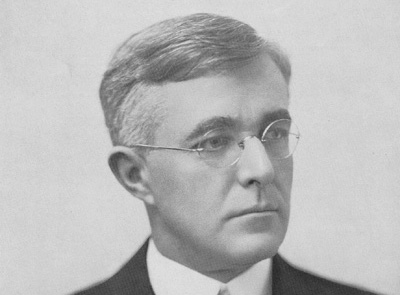
Irving Langmuir10. Irving Langmuir – An American physicist and chemist, Irving Langmuir is renowned for inventing the gas filled incandescent lamp and for the high-vacuum electron tube. The incandescent lamps are now being phased out, but for many years they were used for households and commercial areas and for cars and advertising sites.

Food Preservation. Can Openers and Canned Beer

British merchant Peter Durand made an impact on food preservation with his 1810 patenting of the tin can. In 1813, John Hall and Bryan Dorkin opened the first commercial canning factory in England. In 1846, Henry Evans invents a machine that can manufacture tin cans at a rate of sixty per hour. An significant increase over the previous rate of only six per hour.
 

First Patented Can Opener

The first tin cans were so thick they had to be hammered open. As cans became thinner, it became possible to invent dedicated can openers. In 1858, Ezra Warner of Waterbury, Connecticut patented the first can opener. The U.S. military used it during the Civil War. In 1866, J. Osterhoudt patented the tin can with a key opener that you can find on sardine cans.


William Lyman - Classic Can Opener

The inventor of the familiar household can opener was William Lyman. William Lyman patented a very easy to use can opener in 1870. The kind with the wheel that rolls and cuts around the rim of a can. The Star Can Company of San Francisco improved William Lyman's can opener in 1925 by adding a serrated edge to the wheel. An electric version of the same type of can opener was first sold in December of 1931.


Beer in a Can

On January 24, 1935, the first canned beer, "Krueger Cream Ale," was sold by the Kruger Brewing Company of Richmond, VA.


Pop-Top Can

In 1959, Ermal Fraze invented the pop-top can (or easy-open can) in Kettering, Ohio.

Aerosol Spray Cans

The concept of an aerosol originated as early as 1790, when self-pressurized carbonated beverages were introduced in France.
Aerosol Spray Cans

Erik Rotheim
On November 23, 1927, Norwegian engineer Erik Rotheim (also spelled Eric Rotheim) patented the first aerosol can and valve that could hold and dispense products and propellant systems. This was the forerunner of the modern aerosol can and valve. In 1998, the Norwegian post office issued a stamp celebrating the Norwegian invention of the spray can.


Photo courtesy
Eric Rotheim's original aerosol-can patent includes the same basic elements found in cans today.


Lyle Goodhue and William Sullivan
During World War II, the U.S. government funded research into a portable way for service men to spray malaria-carrying bugs. Department of Agriculture researchers, Lyle Goodhue and William Sullivan, developed a small aerosol can pressurized by a liquefied gas (a fluorocarbon) in 1943. It was their design that made products like hair spray possible, along with the work of another inventor Robert Abplanalp.

Robert Abplanalp – Valve Crimp
In 1949, 27-year-old Robert H. Abplanalp’s invention of a crimp on valve enabled liquids to be sprayed from a can under the pressure of an inert gas. Spray cans, mainly containing insecticides, were available to the public in 1947 as a result of their use by U.S. soldiers for preventing insect-borne diseases. Abplanalp’s invention made of lightweight aluminum made the cans a cheap and practical way to dispense liquids foams, powders, and creams. In 1953, Robert Abplanal patented his crimp-on valve “for dispensing gases under pressure.” His Precision Valve Corporation was soon earning over $100 million manufacturing one billion aerosol cans annually in the United States and one-half billion in 10 other countries.

Sunday, September 25, 2011

Sir.C.V.Raman, we feel proud of him.


Sir C.V.Raman and Raman Spectroscopy (1888-1970)

Sir C.V.Raman won the Nobel Prize in 1930 for discovering a new type of radiation when a material is excited by an external light source. This radiation was nothing but a signature of the molecular bonds holding the molecules together which was unique for every material. A look into the background of Sir C.V.Ramans life and a little description about the famous Raman Effect.
Chandrashekhar Venkata Raman was born on November 7th 1888 in the small village of Thiruvanaikkava near Trichinopoly, Madras Presidency (now Tiruchirapalli, state of Tamil Nadu, India) in Southern India, the son of Chandrashekara Aiyar, who became the Professor of Mathematics and Physics at the Mrs. A.V.N.College in Vishakapatnam when his son was three years old, and Parvati Ammal, who belonged to a family famous for Sanskrit Scholarship. Young Raman received an early interest in science and music from his father and a strong personality and sense of self-reliance from his mother. He attended the A.V.N. College and then the Presidency College of the University of Madras, from which he received his BA degree in 1904 at the age of 15, ranking first in his class and winning the gold medals for Physics and English. While still an undergraduate, he began research on acoustics and optics and published his first article (in the Philosophical magazine) in 1906 at the age of 18. He received his MA degree with highest honors in January 1907.

Because of ill health Raman was unable to pursue further studies at any of the universities in Great Britain (He was disqualified medically by the Civil Surgeons of Madras, who said that the rigors of English Climate would kill him) and because at that time there were no opportunities or incentives in India for a scientific career, he entered the Indian Civil Service, attaining first place on the competitive examination for a position in the Indian finance Department (The Indian Audit and Account Service was the only Government department that did not require a training period in Great Britain) . In June 1907 he was posted at Calcutta as Assistant Accountant General, and that same year he married 13-year old Lokasundari Ammal, an artist who shared his interest in musical instruments, by whom he had two sons, Chandrasekhara and Radhakrishnan. He served the Indian Finance Department in posts of increasing responsibility for a decade, much as Einstein worked as an examiner in the Swiss Patent Office. Like Einstein, he continued to carry out independent research working nights and weekends, mostly at the laboratory of the Indian Association for the Cultivation of Science at Calcutta. He worked primarily on vibrations and sound (Theoretical and experimental investigations of the oscillations of strings) and on the theory of musical instruments, especially that of violins and Indian drums.
During this period Raman published 30 papers in Nature, the Philosophical magazine, and the Physical review, which led to his being offered in 1917 the newly endowed Palit professorship of Physics at the University of Calcutta. Despite a considerable financial sacrifice, he resigned his better paying government post to accept this chair, which he held for 16 years, during which time he continued his work on acoustics and optics and made Calcutta a center for scientific research.
In the summer of 1921 Raman represented his University at the British Empire Universities Congress at Oxford and lectured on the theory of stringed instruments before the Royal Society of London. Returning home by the way of the Mediterranean Sea, he was fascinated by its opalescent, deep blue color and attempted to discover the cause. Rejecting Lord Rayleigh’s explanation that it was caused by the reflection from the sky, in 1922 Raman showed that the scattering of light by water molecules could account for the color of the sea exactly as the scattering of light by air molecules accounted for the color of the sky.

Despite his increasing preoccupation with optics, Raman also continued his research on acoustics, which resulted in his election to fellowship in the Royal Society in 1924. He worked on the excitation of strings vibrations; motion of the bowed point; the effect of the bridge in coupling the motion of the string to the body of the violin; vibration phenomena of the piano, veena and sitar; and the harmonic overtones of Indian drums. He also traveled extensively, visiting and representing India in Canada, the United States (At Nobel laureate Robert A.Millikan’s invitation he spent five months at the California Institute of technology in 1924), the USSR, Germany, Switzerland and Italy. In India he was active in organizing learned societies and journals, e.g. the Indian Science Congress (1924), The Indian Academy of Sciences (1934) and its Proceedings (In which much of his work was published) and the Indian Journal of Physics (which he founded and of which he became editor in 1926).

In the field of optics his primary concern, Raman studied light scattering by various substances, especially liquids. In April 1923 his associate K.R.Ramanathan observed a weak secondary radiation, shifted in wavelength along with normally scattered light, which was attributed to ‘fluorescence’. In January 1928, S.Venkateswaran next noticed that highly purified glycerin does not appear blue under sunlight but instead radiates a strongly polarized, brilliant, green light, they reported in Nature (March 31,1928) ‘ a new type of secondary radiation’ from the scattering of focused beams of sunlight in both carefully purified liquid and dust free air.

Raman further refined his experiment by using a mercury arc as the light source on February 28, 1928, and on March 16 he reported his results to the Indian Science Association at Bangalore in the Southern Indian state of Karnataka (‘A New Radiation’, Indian Journal of Physics, 2,387 (1928)). This secondary radiation showed several lines shifted toward longer wavelengths (The Shifts were characteristics of the substances used) and indicated the absorption of energy by the scattering molecule, an effect predicted in 1923 by the Austrian Physicist Adolf Smekal (1895-1959) and observed independently, but in less detail, several months after Raman and Krishnan’s discovery by the Soviet Physicists Grigorii Samuilovich Landsberg (1890-1957) and Leonid Isaakovich Mandelshtam (1879-1944). For his discovery, known as the Raman Effect, which Ernest Rutherford described as ‘among the best three or four discoveries in experimental physics of the decade’, Raman was awarded the Hughes Medal of the Royal Society of London (1930), the Matteucci Medal of the Societa Italiana delle Scienze (1928) was knighted by King George V of great Britain (1929) and received honorary degrees from numerous universities. In 1930 he received that ne plus ultra of science, the Nobel prize (in Physics) ‘ for his work on the scattering of light and for the discovery of the effect named after him’. He was the first Asian to receive a Nobel Prize in science. Raman continued his work on the Raman effect through the 1930’s, as did many others; almost 2,000 articles on it were published during the dozen years following its discovery.

Beginning at 1930, Raman divided his time between training future leaders of science and crystallographic studies that he thought ‘will ultimately have repercussions in the whole scientific world’. Believing that two and possibly four types of diamonds based on tetrahedral and octahedral symmetry must exist; he used a large portion of his $40,000 Nobel Prize to but diamonds. He studied their Raman spectra, fluorescence, absorption spectra, magnetic susceptibility, specific heat, X-ray diffraction patterns, and infra red spectra, and he demonstrated that the luminescence of a diamond excited by ultraviolet light is a characteristic of the diamond itself and is not due to impurities or defects, as was previously believed. He also investigated optical effects in minerals (labradorite, pearly felspar, and agate) and gems such as opal and pearls.

In 1933, Raman moved to Bangalore to become Director (1933-1937) of the Indian Institute of Science and Head of its Department of Physics (1933-1948). Here he pursued experimental and theoretical work on the diffraction of light by acoustic waves of ultrasonic and hypersonic frequencies, Brillouin scattering in liquids, light scattering in colloids, and the effects produced by X-rays on Infrared vibrations in crystals exposed to ordinary light. In 1948 Raman became the first Director of the Raman Research Institute built on land in Hebbal, a suburb of Bangalore, give by the Mysore government to the Indian Academy of Sciences. That same year he was appointed the first National Professor by the Government of a newly independent India.


Among topics investigated by Raman during his later years were colors and their perception, the spectroscopic study of flowers (the first to do this), the physiology of human color vision (he developed a new theory.), and electrical and magnetic anisotropy. A proud man of great authority, Raman was often arrogant and contemptuous of others, yet he was generous in encouraging his students. He often represented India at international meetings, was fluent in English slang, and considered himself a humorist. Educated entirely in India, he carried out pioneering scientific research when few Indians made science a career and when the Indian scientific community was small and relatively isolated. For his championing of Indian science, he was regarded, along with Rabindranath Tagore, Mahatma Gandhi, and Jawaharlal Nehru, as one of the heroes of the Indian political and cultural renaissance. He died on November 21, 1970 in Bangalore and was cremated in his beloved rose garden.

Raman Effect:-

The Raman effects, a scattering of a portion of monochromatic light when it is passed through a transparent substance, is the counterpart for visible light of the Compton effect for the X-rays. The American experimental physicist Robert Williams Wood considered it ‘one of the most convincing proofs of the quantum theory of light’. In addition to the light of the original frequency, the spectrum of the scattered light contains weaker lines (Raman lines) differing from the original frequency by constant amounts and due to the grain or loss of their energy experienced by the photons because of their interaction with the vibrating molecules of the substance through which they pass.

Since no two compounds have the same Raman Spectrum and since the intensity of a Raman line of a substance is proportional to its concentration, Raman spectroscopy can be used in qualitative and quantitative analysis. It is also employed in the elucidation of the structures of molecules, the study of the interactions between molecules and the calculation of thermodynamic properties.

Much information about a molecule can be deduced from its Raman spectrum. For example, for a diatomic molecule the effective moment of inertia in the lowest vibrational energy state and from this the effective inter-nuclear distance for this state can be obtained. Because homo-nuclear molecules such as H2 and N2 have no permanent dipole moment, they yield no pure rotational or vibrational infrared spectrum and therefore can be studied only by their Raman effect (although electronic spectra can yield rotational spectra). From an analysis of the vibrational-rotational bands there can be obtained the classical vibrational frequency of the diatomic molecule, the moments of inertia and inter-nuclear distances for higher vibrational states, the force constant, the dissociation energies, the zero point energy, the potential energy curve as a function of the inter-nuclear distance, and the rotational and vibrational energies needed for thermodynamic calculations.

Raman spectral data can also be used to detect interactions between molecules. For example, if hydrogen bonding is present, Raman displacements corresponding to C single bond H and C double bond O vibrations appear at values much lower than their normal values. The weakness of the scattered radiation have been the greatest deterrent to the widespread adoption of Raman spectroscopy as an analytical technique. Since the more intense the primary radiation source, the greater the intensity of the Raman spectra, the advent of lasers transformed this method of largely academic interest into a highly practical, powerful tool with a number of commercially available instruments and installations in many industrial laboratories. If Raman were alive today, he would undoubtedly be amazed - and –pleased by the multifaceted uses now made of his ‘new’ radiation.

Saturday, September 24, 2011

HOMI JEHANGIR BHABHA...MAKES US FEEL PROUD TO BE AN INDIAN


Homi Jehangir Bhabha

Homi J. Bhabha, considered the father of India's atomic energy program.
Born
30 October 1909
Mumbai
Died24 January 1966
ResidenceIndia 
NationalityIndian 
FieldPhysics
InstitutionsCavendish Laboratories
Tata Institute of Fundamental Research
Atomic Energy Commission of India
Alma materCambridge
Academic advisor Paul Dirac