Popular Posts

Popular Posts

Pages

Total Pageviews

Sunday, July 17, 2011

The Invention of the zip

In 1893 Whitcomb Judson of Chicago (who also invented the 'Pneumatic Street Railway') marketed a 'Clasp Locker' a complicated hook-and-eye shoe fastener. The clasp locker was an assemblage of hooks and eyes that Judson thought would save people time and sore backs fastening their shoes with one hand. Together with businessman Colonel Lewis Walker, Whitcomb launched the Universal Fastener Company to manufacture the new device.
Swedish immigrant and electrical engineer, Gideon Sundback was hired
 

to work for the Universal Fastener Company. Good design skills and a marriage to the plant-manager's daughter Elvira Aronson led Sundback to the position of head designer at Universal. He was responsible for improving the far from perfect 'Judson C-curity Fastener.' Unfortunately, Sundback's wife died in 1911. The grieving husband busied himself at the design table, by December of 1913, he came up with the modern zipper.
Sundback increased the number of fastening elements from four per inch to ten or eleven, had two facing-rows of teeth that pulled into a single piece by the slider, and increased the opening for the teeth guided by the slider. The patent for the 'Separable Fastener' was issued in 1917. Sundback also created the manufacturing machine for the new zipper. The 'S-L' or scrapless machine took a special Y-shaped wire and cut scoops from it, then punched the scoop dimple and nib, and clamped each scoop on a cloth tape to produce a continuous zipper chain. Within the first year of operation, Sundback's zipper-making machinery was producing a few hundred feet of fastener per day.
The popular 'zipper' name came from B. F. Goodrich Company president Bertram G. Wrok, when they decided to use Gideon's fastener on his "Mystic Boot", which were rubber boots or galoshes, and called it the Zipper Boot.
Boots and tobacco pouches with a zippered closure were the two chief uses of the zipper during its early years. It took twenty more years to convince the fashion industry to seriously promote the novel closure on garments.
In the 1930’s, a sales campaign began for children's clothing featuring zippers. The campaign praised zippers for promoting self-reliance in young children by making it possible for them to dress in self-help clothing.
Not until 1934 when Lord Louis Mountbaten persuaded the Prince of Wales and George, Duke of York to give up their buttons for zipper flies. Tailors who disdained zipper flies as vulgar created a fold of cloth to conceal the zipper.
YKK. In 1934
Yoshida Kogyo Kabushililaisha was founded. Sixty years later they changed their name to YKK Co. The privately owned firm, headquartered in Japan, now is made up of 80 companies at 206 facilities in 52 countries.
The zipper beat the button in the 1937 in the "Battle of the Fly," when French fashion designers raved over zippers in men's trousers. Esquire magazine declared the zipper the "Newest Tailoring Idea for Men" and among the zippered fly's many virtues was that it would exclude "The Possibility of Unintentional and Embarrassing Disarray." Obviously, the new zippered trouser owners had not yet discovered the experience of forgetting to zip-up.
The next big boost for the zipper came when zippers could open on both ends, as on jackets. Today the zipper is everywhere, in clothing, luggage and leather goods and countless other objects. Thousands of  zipper miles produced daily meet the needs of consumers, thanks to the early efforts of the many famous zipper inventors.
 

Saturday, July 16, 2011

History of firearmas..Guns, Rifles, Machine Guns, and Firearm Ammunition By Mary Bellis, About.com Guide

  1. Loading a Hand Revolver
  2. Since the introduction of the flintlock musket in the 17th century, military small arms have gone through a series of significant changes.
  3. Muskets

  4. Puckle Gun - 1718
  5. In 1718, James Puckle of London, England, demonstrated his new invention, the "Puckle Gun," a tripod-mounted, single-barreled flintlock gun fitted with a multishot revolving cylinder. This weapon fired nine shots per minute at a time when the standard soldier's musket could be loaded and fired but three times per minute. Puckle demonstrated two versions of the basic design. One weapon, intended for use against Christian enemies, fired conventional round bullets, while the second variant, designed to be used against the Muslim Turks, fired square bullets, which were believed to cause more severe and painful wounds than spherical projectiles. The "Puckle Gun" failed to attract investors and never achieved mass production or sales to the British armed forces. One newspaper of the period observed following the business venture's failure that "those are only wounded who hold shares therein."
  6. James Puckle
  7. According to the Patent Office of the United Kingdom, "In the reign of Queen Anne, the law officers of the Crown established as a condition of patent that the inventor must in writing describe the invention and the manner in which it works." James Puckle's 1718 patent for a gun was one of the first to provide a description.
  8. Revolvers

  9. History of the Colt Revolver

  10. Samuel Colt invented the first revolver - named after its revolving cylinder. He was issued a U.S. patent in 1836 for the Colt firearm equipped with a revolving cylinder containing five or six bullets with an innovative cocking device. 
  11. Samuel Colt
  12. Rifles

  13. The breech-loading rifle was invented by Captain Patrick Ferguson of Pitfours, Scotland.
  14. John Moses Browning - Winchester Rifle
  15. John Moses Brownig


  16. John Moses Browning was the prolific gun designer who invented the Winchester rifle (30/30), the pump shotgun, and the Colt 45 automatic. He is best known for his automatic pistols and was the first one to invent the slide, which encloses the barrel of a pistol and the firing mechanism.

  17. John Moses Browning
  18. Modern Assault Rifles - M16 History
  19. The history of the modern assault rifle begins with the German Sturmgewehr used during WW2, the first rifle that could fire a medium size bullet at high rates of fire. In response the U.S. military began developing their own assault rifle, the result was the M16 assault rifle, first issued to American Soldiers in Vietnam in 1968 and designed by Eugene Stoner, a Marine Corps Veteran.

  20. John Garand - M1 Semiautomatic Rifle
  21. Canadian, John Garand invented the M1 semiautomatic rifle in 1934.
  22. The Johnson Rifle
  23. The Johnson Model 1941 Rifle one of the most innovative rifles of its time period. The Johnson rifle was invented by Melvin M. Johnson Jr.
  24. Samuel Gardiner
  25. Samuel Gardiner, Jr. received a U.S. Patent in 1863 on a "high explosive rifle bullet" in .54, .58, and .69 calibers. Fused to explode 1 1/4 seconds after firing, it ensured that any soldier hit by the projectile with a range of 400 yards faced the danger of the bullet exploding within the impact wound. The U.S. Government purchased 110,000 rounds of such ammunition for issue during the Civil War. Criticizing the use of similar ammunition by the Confederates, General Ulysses S. Grant complained that "their use is barbarous because they produce increased suffering without any increased advantage to using them."
  26. Rifle Scopes
  27. A rifle scope is a refractor telescope used on a rifle. In 1880, August Fiedler (Stronsdorf), forestry commissioner of Prince Reuss, managed to build the first telescopic sight that really did work.
  28. Machine Guns
  29. Gatling Gun - 1861
  30. Doctor Richard Gatling patented his design of the "Gatling Gun", a six-barreled weapon capable of firing a (then) phenomenal 200 rounds per minute.
  31. Maxim Machine Gun - 1885
  32. In 1881, a friend of Hiram Maxim, the American inventor, told him: "If you wanted to make a lot of money, invent something that will enable these Europeans to cut each other's throats with. Hiram Maxim was born in Sangersville, Maine in 1840 and was the inventor of the Maxim Machine Gun and the Maxim Silencer.
  33. Thompson Submachine Gun - Tommy Gun
  34. The Thompson submachine gun or Tommy gun was invented by General John T. Thompson, it was the first hand held machine gun. Thompson was driven with the thought of creating a hand held machinegun that would help end the First World War, However, "the first shipment of prototype guns destined for Europe arrived at the docks in New York city on November 11, 1918, the day the War ended."
  35. Silencers
  36. Hiram Maxim (born 1853) invented the Maxim Silencer or Suppressor: that attached to the front of the barrel of a pistol and allowed the firearm to be fired without a loud bang. Invented in 1909, the Maxim Suppressor was the first commercially successful silencer.

Friday, July 15, 2011

Mary Phelps Jacob..inventor of the bra in 1907

In 1907 Mary Phelps Jacob, a New York socialite, bought herself a new, sheer fabric, evening dress. The existing undergarments of the time showed beneath this flimsy dress and caused her a problem, so she set to work with her maid and they designed their own bra. The makeshift item was fashioned from two silk handkerchiefs, ribbon and cord.
Before Mary and her maid knew what was happening, everybody wanted one of these new, comfortable undergarments.
In 1914 a US patent was granted for the “backless bra”. This style of bra was more of a flattener than a supporting device and the invention became popular during the 1920’s flapper era.
Bras had been commercially produced during the 1860’s were unsuccessful because they were cumbersome and uncomfortable and came into he “corset” category.
By the mid 1920’s new designs made this item more comfortable to wear and provided lift and support for the figure but it was not until the 1930’s that this industry really moved forward. Prior to this the word “bra” was little used. The term has been “brassiere”, or “corset”. 1930’s women had more freedom and a choice of fabrics, colours and sizes.
More structured, shaped bras began to appear during the 1940’s and 50’s, but it wasn’t until the 1960’s that there was a wide range of fabrics, styles and sizes at affordable prices.
From 1970 onwards there has been a huge change in this market. There were many styles of bra available in silk, nylon, polyester, cotton and a myriad of other fabrics. These became available in a whole range of back and cup sizes in any colour of the rainbow you could possibly imagine.
In the year 2001 the bra industry in US was worth a cool 15 billion dollars with manufacturers Berlei and Gossard taking the largest share. Designs have come a long way from those two silk handkerchiefs of 1907.
Mary Phelps Jacob..inventor of the bra in 1907.
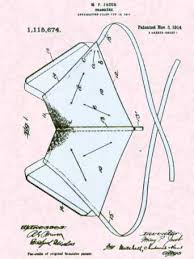
First bra patented.
Cretan Bra used over a thousand years ago.
Fashion Bra became popular in 1924.
2007 marks the 100years of bra.


Thursday, July 14, 2011

Reginald Fessenden Invented radio broadcasting (1906)

Reginald Fessenden
Reginald Fessenden.(
 (1866-1931)


By Mary Bellis
Canadian-born Reginald Fessenden had been trained as an electrician. So when Edison wanted to make him a chemist, Reginald Fessenden protested. Edison replied, "I have had a lot of chemists . . . but none of them can get results." Reginald Fessenden turned out to be an excellent chemist, working with insulation for electrical wires. He left the West Orange lab around 1889 and patented several inventions of his own, including patents for telephony and telegraphy. In 1906, Reginald Fessenden became the first person to broadcast words and music over radio waves.
Reginald Fessenden - Extracts From National Capitol Commission of Canada;
Canadian, Reginald Fessenden is best known for his invention of the modulation of radio waves and the fathometer. Fessenden worked as as a chemist for Thomas Edison during the 1880s and later for Westinghouse. Reginald Fessenden started his own company where he invented the modulation of radio waves, the "heterodyne principle" which allowed the reception and transmission on the same aerial without interference. On Christmas Eve, 1906, ships off the Atlantic coast with Fessenden-designed equipment broadcast the first trans-Atlantic voice transmission. Fessenden held over 500 patents and won Scientific American's Gold Medal in 1929 for the fathometer, which could measure the depth of water beneath a ship's keel.
At the end of the 19th century, people communicated by radio using Morse code - sputtering dots and dashes that trained radio operators could decode into a message. A Canadian inventor, Reginald Fessenden, changed all that. In 1900 he transmitted the world's first voice message. It took six years for Reginald Fessenden to refine his invention but on Christmas Eve, 1906, Reginald Fessenden made the first radio broadcast in history. In the 1920s, vessels of all sizes were using Fessenden's "depth sounding" technology. Thomas Edison invented the first commercial light bulb. ButReginald Fessenden re-invented the light bulb and did it better.