Popular Posts

Popular Posts

Pages

Total Pageviews

Friday, January 21, 2011

COBOL; computer language inventor..GRACE HOPPER


Hopper
COBOL
The achievements of Admiral Grace Murray Hopper which, most notably, include the invention of the compiler, cemented her place at the forefront of the computing revolution that began in the early 1940s. Trained as a mathematician, her career spanned six decades during which she remained simultaneously connected across several disciplines and industries, including academia, industry and the U.S. military. Hopper Born Grace Brewster Murray on December 9, 1906 in New York City, she was the eldest of three children, and shared with her mother an affinity for mathematics. She attended Vassar College, from where she graduated in 1928, Phi Beta Kappa, with a BA in mathematics and physics. She took on a teaching post there while she pursued graduate studies at Yale University, completing MA and PhD degrees in mathematics at Yale in 1930 and 1934, respectively.
Meanwhile, in 1930, she married Vincent Foster Hopper, an English instructor with the New York School of Commerce, whom she divorced several years later. She continued to teach at Vassar, achieving the rank of associate professor in 1941, when she was awarded a fellowship at New York University's Courant Institute for Mathematics.
Hopper made a life-altering decision in 1943 when she decided to join the World War II effort and enlist with Navy WAVES, for Women Accepted for Voluntary Emergency Service, in December of that year. Her family had strong military ties, thus this was not a totally unexpected move for Hopper; however, it presented her with extraordinary opportunities to contribute to the early development of computing machines. In July 1944, having been commissioned a lieutenant, she became part of the team working on the Bureau of Ordnance Computation Project at Harvard University, along with professor and Naval Reserve officer Howard H. Aiken. Aiken was the principal engineer behind IBM's Harvard Mark I computer, considered the first large-scale automatic digital computer in the United States.
As the third person to have the opportunity to work on this machine, Hopper dove in and learned to program it, in the process authoring a 500-page manual of operations that would serve to lay down lasting principles for computer operation. She went on to work with the Mark II and III machines and was later recognized for her achievements with a Naval Ordnance Development Award. In 1946 she returned to inactive duty and joined the Harvard faculty as a research fellow, where she continued her computing research until 1949.
That year she accepted a post as senior mathematician with Eckert-Mauchly Computer, which was purchased in 1950 by Remington Rand and merged into the Sperry Corporation in 1955. During this period, Hopper developed the revolutionary concept of the compiler, an intermediate program that translates instructions written in English into code that may be understood by the computer. Normally, programmers would have to write programs out in binary code, consisting of long series of zeros and ones. A compiler would allow a programmer to compose code more quickly and easily, without as much room for error, using English commands.
Hopper's first compiler, A-O, was unveiled in 1949, and used symbolic mathematical code to represent binary code combinations. This she followed up with B-O, or "Flow-Matic," considered the first English language data-processing compiler. This was used to program UNIVAC I and II machines by the end of 1956. The UNIVAC, which stands for Universal Automatic Computer, was among the first commercially available computers in the Unites States, built by Sperry Rand.
When discussions arose as to how to create a standardized, universal computer language, Hopper was deeply involved in the development of COBOL; her Flow-Matic compiler was used to help form a basis for the language, and she designed standard manuals and tools for it as well as translator programs that converted non-standard COBOL languages into the standard version. The first specifications for COBOL were made available in 1959.
Hopper retired from the Naval Reserves in 1966; however, in 1967 she took military leave from Sperry when she was called back into active duty to help the Navy standardize high-level computing languages. Her service was extended indefinitely, and she officially retired from Sperry in 1971.
For the Navy, Hopper worked on high-level computing research and development, including formula translation, code optimization and subroutines. She also educated thousands of people on the use of compilers and computer language standardization via speaking engagements throughout the world. In 1983 she was promoted to commodore at a ceremony that took place at the White House in Washington, D.C. She became Admiral Hopper in 1985 when this post was merged with rear admiral. She retired from the Navy in 1986.
Hopper then became a senior consultant to Digital Equipment Corporation, where she worked well into her 80s. She was awarded a National Medal of Technology in 1991, and was honored with more than 40 honorary doctoral degrees, as well as the first ever Computer Science Man-of-the-Year Award from the Data Processing Management Association in 1969. A U.S. warship was also named in her honor. In 1973, she became the first person from the United States, and the first woman from any nation, to become a Distinguished Fellow of the British Computer Society.
Hopper died on January 1, 1992, and was buried with full military honors in Arlington National Cemetery.

Karl Benz ; the Inventor of the four stroke car engine.


Karl Benz (Carl Benz)

Karl Benz (Carl Benz)
In 1885, German mechanical engineer, Karl Benz designed and built the world's first practical automobile to be powered by an internal-combustion engine. On January 29, 1886, Benz received the first patent (DRP No. 37435) for a gas-fueled car. It was a three-wheeler; Benz built his first four-wheeled car in 1891. Benz & Company, the company started by the inventor, became the world's largest manufacturer of automobiles by 1900.
Karl BenzBiography
Karl Friedrich Benz was born in 1844 in Baden Muehlburg, Germany (now part of Karlsruhe). He was the son of an engine driver. Benz attended the Karlsruhe grammar school and later the Karlsruhe Polytechnic University. In 1871, He founded his first company with partner August Ritter, the "Iron Foundry and Machine Shop" a supplier of building materials.
Benz began his work on a two-stroke engine, in hopes of finding a new income. He received his first patent in 1879. In 1883, he founded Benz & Company to produce industrial engines in Mannheim, Germany. He then began designing a "motor carriage", with a four-stroke engine (based on Nicolaus Otto's patent). Benz designed his engine (958cc, 0.75hp) and the body for the three-wheel vehicle with an electric ignition, differential gears, and water-cooling. The car was first driven in Mannheim in 1885. On January 29, 1886, he was granted a patent for his gas-fueled automobile (DRP 37435) and in July, he began selling his automobile to the public.
The Inventions of Thomas Edison
History of Phonograph - Lightbulb - Motion Pictures
Replica of original phonographReplica of original phonograph

An ad for the phonograph
Phonograph - History The first great invention developed by Edison in Menlo Park was the tin foil phonograph. While working to improve the efficiency of a telegraph transmitter, he noted that the tape of the machine gave off a noise resembling spoken words when played at a high speed. This caused him to wonder if he could record a telephone message. He began experimenting with the diaphragm of a telephone receiver by attaching a needle to it. He reasoned that the needle could prick paper tape to record a message. His experiments led him to try a stylus on a tinfoil cylinder, which, to his great surprise, played back the short message he recorded, "Mary had a little lamb."
The word phonograph was the trade name for Edison's device, which played cylinders rather than discs. The machine had two needles: one for recording and one for playback. When you spoke into the mouthpiece, the sound vibrations of your voice would be indented onto the cylinder by the recording needle. This cylinder phonograph was the first machine that could record and reproduce sound created a sensation and brought Edison international fame.

Thursday, January 20, 2011

BARBIE Doll Invention

Ruth Handler

Barbie Doll Invention

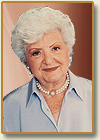
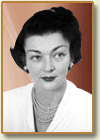
Ruth Handler Perhaps one of the most famous toys in American history, the Barbie doll is a staple in the toy chests of little girls everywhere. Along with co-founding the renowned toy company Mattel, woman inventor Ruth Handler also designed the doll that would become an American cultural icon.
While watching her daughter play with paper dolls, Ruth Handler noticed that she and her friends used the dolls to act out the future rather than the present. So, she set out to invent a grown-up, three-dimensional doll that girls could use to act out their dreams. This, of course, included the presence of breasts (and what many would later call "unrealistic body proportions"). The female inventor named her new Barbie doll invention after the nickname of her daughter Barbara. Later on, a male counterpart doll would be named after her son: Ken.
After premiering at the Toy Fair in 1959, Barbie became an instant sensation. The success of the doll propelled Mattel to become a publicly owned company that soon made Fortune's list of the 500 largest U.S. industrial companies. Handler served as the company's president for several of its most successful years. Along with being an inventor and businesswoman, Ruth Handler is also a breast cancer survivor – an experience she used to start another company, Nearly Me, which manufactured realistic-looking breast prostheses.
To this day, the Barbie doll invention remains one of Mattel's best-selling products.

VOLTA and the first battery

Alessandro Volta (1745-1827)

Alessandro Volta invented the voltiac pile - the first battery.


Alessandro Volta demonstrating the battery
Alessandro Volta demonstrating the battery. Alessandro Volta discovered the first practical method of generating electricity.
Photograph courtesy of the National Library of MedicineIn 1800, Alessandro Volta of Italy built the voltaic pile and discovered the first practical method of generating electricity. Count Volta also made discoveries in electrostatics, meteorology and pneumatics. His most famous invention, however, is the first battery.


Alessandro Volta - Background

Alessandro Volta was born in Como, Italy in 1745. In 1774, he was appointed as professor of physics at the Royal School in Como. While at the Royal School, Alessandro Volta designed his first invention the electrophorus in 1774, a device that produced static electricity. For years at Como, he studied and experimented with atmospheric electricity by igniting static sparks. In 1779, Alessandro Volta was appointed professor of physics at the University of Pavia and it was while there that he invented his most famous invention, the voltaic pile.

Alessandro Volta - Voltaic Pile

Constructed of alternating discs of zinc and copper, with pieces of cardboard soaked in brine between the metals, the voltaic pile produced electrical current. The metallic conducting arc was used to carry the electricity over a greater distance. Alessandro Volta's voltaic pile was the first battery that produced a reliable, steady current of electricity.

Alessandro Volta - Luigi Galvani

One contemporary of Alessandro Volta was Luigi Galvani, in fact, it was Volta's disagreement with Galvani's theory of galvanic responses (animal tissue contained a form of electricity) that led Volta to build the voltaic pile to prove that electricity did not come from the animal tissue but was generated by the contact of different metals, brass and iron, in a moist environment. Ironically, both scientists were right.

Named In Honor of Alessandro Volta

  1. Volt - The unit of electromotive force, or difference of potential, which will cause a current of one ampere to flow through a resistance of one ohm. Named for Italian physicist Alessandro Volta.
  2. Photovoltaic - Photovoltaic are systems that convert light energy into electricity. The term "photo" is a stem from the Greek "phos," which means "light." "Volt" is named for Alessandro Volta, a pioneer in the study of electricity.

The story of KFC's..Persistenance pays

Description: http://www.imageharmony.com/images/miqs/263.jpg

Keep Knocking


When Colonel Harland Sanders retired at the age of 65, he had little to show for himself, except an old Caddie roadster, a $105 monthly pension check, and a recipe for chicken.
Knowing he couldn't live on his pension, he took his chicken recipe in hand, got behind the wheel of his van, and set out to make his fortune. His first plan was to sell his chicken recipe to restaurant owners, who would in turn give him a residual for every piece of chicken they sold--5 cents per chicken. The first restaurateur he called on turned him down.
So did the second.               So did the third.
 

In fact, the first 1008 sales calls Colonel Sanders made ended in rejection. Still, he continued to call on owners as he travelled across the USA, sleeping in his car to save money. Prospect number 1009 gave him his first "yes."

After two years of making daily sales he had signed up a total of five restaurants. Still the Colonel pressed on, knowing that he had a great chicken recipe and that someday the idea would catch on.

Of course, you know how the story ends. The idea DID catch on. By 1963 the Colonel had 600 restaurants across the country selling his secret recipe of Kentucky Fried Chicken (with 11 herbs and spices).

In 1964 he was bought out by future Kentucky governor John Brown. Even though the sale made him a multi-millionaire, he continued to represent and promote KFC until his death in 1990.


Colonel Sanders' story teaches an important lesson: its never too late to decide to never give up. Earlier in his life the Colonel was involved in other business ventures--but they weren't successful. He had a gas station in the 30's, a restaurant in the 40's, and he gave up on both of them. At the age of 65, however, Harland Sanders decided his chicken idea was the right idea, and he refused to give up, even in spite of repeated rejection.

He knew that if he kept on knocking on doors, eventually someone would say "yes." Keep on knocking till the door is opened." If you have made half-hearted attempts...if you have given up too easily in the past...remember: It's never too late to become persistent. It's never too late to decide to never give up. Keep on knocking. Keep on asking. Keep on seeking… Success is sure to knock your door!

Edwin Land..and Instant photography

Edwin Land
Polaroid Photography - Instant Photography

Polaroid Photography Camera - Edwin LandPolaroid photography was invented by Edwin Land. Land was the American inventor and physicist whose one-step process for developing and printing photographs created a revolution in photography - instant photography. You can view Edwin Land's patent for the polaroid camera on the left for the camera that allowed the photographer to remove a developing print after the picture had been snapped. Edwin Land founded the Polaroid Corporation to manufacturer his new camera. The first poloroid camera was sold to the public in November, 1948.

Top 10 Inventions of the 20th Century


Top 10 Inventions of the 20th Century

There can be no doubt that the twentieth century is one of the most remarkable in human history for its previously unparalleled rate of technological advances and scientific discoveries, a rate that continues to this day. In fact, there were so many new gadgets invented and discoveries made in the last century that it’s difficult to pare the list down to just the ten (which is why there will be a number of glaring omissions from my list). However, I think I have managed to whittle it down to those ten innovations or technologies that have had the greatest influence on humanity—both positively and the negatively. And so, without further ado and in no particular order, here are my nominees for the ten greatest inventions/discoveries of the twentieth century:

10. Nuclear Power

nuclear-power
Nuclear power was to the twentieth century what steam power had been to the nineteenth: a game changer. Suddenly humanity had a power source that didn’t pollute, was efficient and practically unlimited, and so had the potential to change the planet overnight. Unfortunately, it was a two-edged sword in that this same energy source could be used to create the most destructive weapons in history, threatening human survival with its very presence. Additionally, while nuclear power plants didn’t spew pollutants into the air, in the hands of the truly incompetent they had the capacity to render whole regions radioactive and, as such, uninhabitable for generations (as was demonstrated at Chernobyl in 1986).
However, it is hard to deny the overall positive impact nuclear power has had. The fear of mutually assured destruction probably prevented the world from experiencing a third world war and, when operated safely, nuclear power plants truly are a superb and cost-efficient energy source that has the capacity to power entire cities. The only question is whether we’re mature enough to handle that power into the next century.

9. The Personal Computer

apple-computer-1976
It’s difficult to imagine our world today without computers. Of course, they have been around since World War Two, but they were clunky, massively expensive things that had all the calculating power of a brick. When Steve Wozniak and Stephen Jobs introduced the Apple in 1976, however, it changed everything and the rest is, as they say, history. Today, of course, they are everywhere and we have become so dependent upon them that many people almost feel naked without one. For some, they even provide the very means of maintaining a livelihood: we use them to keep track of our finances, write books, design logos and sell real estate. Plus, they are rapidly replacing the stereo and television in their ability to entertain us with music, movies, and games. Makes it hard to understand how our ancestors did so well without them, doesn’t it? (Image: the Apple 1, 1976.)

8. The Airplane

airplane influential inventions of the 20th century
Just as the locomotive made the world a smaller place in the nineteenth century, the airplane did the same for us in the twentieth century, shrinking our planet to the point that a person could fly anywhere in the world in a matter of hours. Not only have they made travel quick and safe, but aircraft provide many other services as well: from crop dusting and fighting forest fires to overnight delivery of packages and chasing hurricanes. They have also revolutionized warfare, turning battle into a long-range affair fought at arm’s length by machines of such sophistication that the way wars are fought has completely changed. Of course, they’ve also been responsible for leveling whole cities and bringing war to the civilian population—who had rarely been directly affected by war until the twentieth century—but then no invention is perfect.

7. The Automobile

Though under development in Europe during the nineteenth century, the automobile didn’t really become a practical and reliable source of transportation until the twentieth century. Once it did, it changed everything; overnight the horse and buggy became quaint anachronisms while much of the country was paved over to make room for endless ribbons of asphalt. It also brought about a revolution in the market place, suddenly making it possible to truck in goods that otherwise would be impossible to acquire. Most of all, Henry Ford’s assembly-line production style made the automobile affordable and accessible to the average person (before Ford’s Model T was introduced in 1908, only the fabulously wealthy could afford a car). The automobile gave everyone a degree of mobility and personal freedom our forefathers could only dream of, and turned entire generations of teenagers into raging revheads.

6. Rocketry

While the rocket was first invented and used by the Chinese over three thousand years ago—and used occasionally by the Greeks and Romans since —it wasn’t until the twentieth century that it came into its own and became more than just a dazzling amusement or a largely harmless but still effective “terror weapon” for ancient armies. In the twentieth century, rockets became bigger and more powerful. Most importantly, they became controllable, which suddenly made them useful both as weapons of war and, even more vitally, as our means of accessing outer space. Without the rocket, it is safe to say we would not only have never gone to the moon or visited every planet in our solar system. Rockets also place satellites into orbit around our planet, so without them we also wouldn’t be able to use GPS, predict the weather, make international calls or, for the most part, even use our cell phones much of the time.

5. The Submarine

Though submersible vessels had been used in the past (the CSS Hunley during the Civil War) and the first true submarine was invented in the 1880’s, it wasn’t until the twentieth century that the modern submarine came into its own. What started as an irritating, but still deadly, weapon in World War One grew into a monstrosity in World War Two- sinking more than any other type of weapon used. Today, with the advent of nuclear power—which gave the submarine nearly unlimited range and endurance—it has become the capital warship in every first-class Navy in the world and as such has effectively rendered naval warfare of the past obsolete. How effective is the modern submarine? Ask anyone who has ever served on one. They’ll tell you there’s only two types of ships in the world: submarines and targets. ‘Nuff said.

4. Antibiotics

antibiotics-20th-century
Until Alexander Fleming discovered penicillin in 1928, almost any little bug that someone picked up was potentially fatal. Once penicillin—and later a whole range of other antibiotics—came on the scene, however, death due to bacterial infection became rare, resulting in a greatly reduced mortality rate and much longer life-span. It also rendered many scourges of the past—from small pox and typhoid to gonorrhea and syphilis—obsolete or, at least in the case of venereal disease, something easily treatable.

3. Television

Yes, I know it destroys brain cells and renders people emotionally and psychologically damaged, but really, where would we be without the boob tube? It is society’s baby-sitter, news source, teacher, entertainer, and story-teller. When in competent hands, television can even be useful at times. Mostly, though, it fills our days with vapidity and all manner of inane and obnoxious commercials, and is the single greatest reason that families no longer eat in the kitchen or dining room anymore, but instead huddle in the living room around their television eating microwavable food and spilling soft drinks on the sofa. Still, even while we pretend we hate it, we can’t help but seeing what’s on tonight. Worse, most of us would have no idea what to do with our time without it, which is probably the saddest commentary of all.

2. The Internet

internet-20th-century
The computer rendered the typewriter obsolete and made writing in long-hand a thing of the past, but it took the internet to truly turn the computer into the monster it is today. While the airplane shrank our planet to the point that one could fly from New York to London in six hours, the internet made it possible to be there in a few seconds. It allows truth to make it into and out of repressive countries, it foments revolutions, and spreads lies at the speed of light. It also gives anyone the ability to buy and sell almost anything imaginable, find and torment old school mates, watch the latest you-tube videos, and even find their perfect life partner, all for a few bucks a month. Oh, and you can also get useful information off it if you don’t mind scrolling through 15,000 hits to find out just how long snails really live. Where would we be without it?

1. Radio

Few people today can appreciate the impact the advent of radio had on the twentieth century. Not only did it suddenly make it possible for a person to be heard from hundreds or even thousands of miles away without the use of a wire (quite an accomplishment in the first years of the century) but it was the center of family life through the end of the Second World War and into the doldrums of the fifties, when it was gradually replaced by that new-fangled contraption, the television. Today, it seems to only be useful in the car as a means of keeping the driver from falling asleep behind the wheel or as a tool of talk radio designed to rile the masses. In its day, however, it was every bit as vital to existence as the television, the computer, the microwave, and the cell phone are to us today.
_____________________________________________________________________________________

Wednesday, January 19, 2011

Frozen Food; Invention

Frozen Foods - Clarence Birdseye

When we crave fresh fruits and vegetables in the middle of winter, we can thank Clarence Birdseye for the next best thing. Clarence Birdseye invented, developed, and commercialized a method for quick-freezing food products in convenient packages and without altering the original taste. While Clarence Birdseye has become a household name, his process has evolved into a multi-billion dollar industry.
Clarence Birdseye was born in 1886 in Brooklyn, New York A taxidermist by trade, but a chef at heart, Clarence Birdseye wished his family could have fresh food all year. After observing the people of the Arctic preserving fresh fish and meat in barrels of sea water quickly frozen by the arctic temperatures, he concluded that it was the rapid freezing in the extremely low temperatures that made food retain freshness when thawed and cooked months later.
In 1923, with an investment of $7 for an electric fan, buckets of brine, and cakes of ice, Clarence Birdseye invented and later perfected a system of packing fresh food into waxed cardboard boxes and flash-freezing under high pressure. The Goldman-Sachs Trading Corporation and the Postum Company (later the General Foods Corporation) bought Clarence Birdseye’s patents and trademarks in 1929 for $22 million. The first quick-frozen vegetables, fruits, seafoods, and meat were sold to the public for the first time in 1930 in Springfield, Massachusetts, under the tradename Birds Eye Frosted Foods®.
Clarence Birdseye turned his attention to other interests and invented an infrared heat lamp, a spotlight for store window displays, a harpoon for marking whales, then established companies to market his products.

Marion Donovan..Inventor of the disposable diaper.

Marion Donovan

Inventor of Disposable Diapers

Marion Donovan Born in Fort Wayne, Indiana in 1917, Marion Donovan was instilled with an inventive spirit at a young age. She spent the greater part of her childhood hanging around the manufacturing plant run by her father and uncle, two men who combined to invent, among other things, an industrial lathe for grinding automobile gears and gun barrels.
Years later, as a post-World War II housewife and mother of two in Connecticut, Donovan would make good use of the ingenuity that she had observed in her youth. Frustrated by the thankless, repetitive task of changing her youngest child's soiled cloth diapers, bed sheets and clothing, she decided to craft a diaper cover to keep her baby – and the surrounding area – dry. Donovan sat down at her sewing machine with a shower curtain and, after several attempts, she completed a waterproof diaper cover.
Unlike the rubber baby pants that were already on the market, Donovan's design did not cause diaper rash and did not pinch the child's skin. The soon-to-be famous female inventor subsequently perfected her invention, adding snap fasteners in place of the dangerous safety pins that were commonly used. Donovan named her diaper cover the "Boater" and explained that "at the time I thought that it looked like a boat."